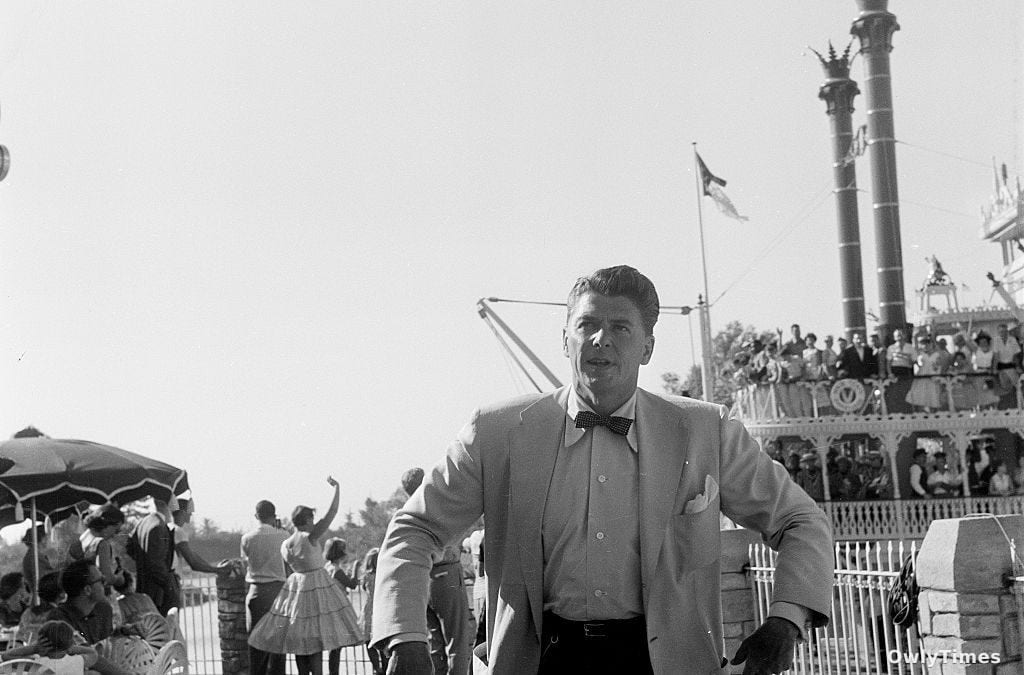

The strategic genius of 20th-century American conservatism was not found in policy white papers, but in the deliberate construction of a national identity rooted in curated nostalgia. When Ronald Reagan stood in an Anaheim "Old West" town on July 17, 1955, co-hosting the opening of Disneyland alongside Walt Disney, Art Linkletter, and Bob Cummings, he was doing more than promoting a theme park. He was participating in a masterclass of political branding, anchoring a future-oriented ideology to a sanitized, mythologized version of the American frontier.
The Mythmaking Engine of Orange County
The rise of Orange County from a vast agricultural expanse into a powerhouse of right-wing politics serves as the ultimate case study in the power of narrative over geography. Historically relegated to the status of "flyover country" between Los Angeles and San Diego, the region was transformed by the very institution that sought to commodify American history. By building a park that promised both the innocence of the past and the technological marvels of a future—specifically the year 1986, as imagined in Tomorrowland—Disney provided the blueprint for a political movement that thrived on the same duality.
Who benefits from this fusion of myth and policy? For Richard Nixon and Reagan, the answer was clear: they gained a captive audience eager for an "exceptional" national identity that bypassed the messy realities of the present. The loser, predictably, was the historical record itself. By prioritizing the "feel" of history over its actual context, these leaders were able to invoke a traditionalist aesthetic to justify significant policy shifts, such as Nixon’s dismantling of post-war federal programs while simultaneously calling for a "New American Revolution."
Designing the Political Landscape
The juxtaposition of the 13-star flag in an Anaheim lot with the futuristic promises of nuclear-powered progress created a template for the American politician as a performer. Historian Beverly Gage, author of This Land is Your Land: A Road Trip Through U.S. History, notes that these figures were uniquely adept at using their Hollywood backgrounds to embody a wholesome, all-American ethos. This was not a coincidence; it was a strategic choice to project stability during an era of rapid social change.
The contradiction here is stark: the politicians who most effectively utilized the imagery of an enduring, unchanging America were often the same ones driving the most radical transformations in how the state functioned. Just as Disney’s park was built on land that had little connection to the actual frontier it depicted, the political careers of Southern California’s two most famous presidents were built on the construction of an American myth that served their specific electoral interests.
The Legacy of the 250th Anniversary
As the United States approaches its 250th anniversary, the influence of these early Southern California experiments remains a vital, if under-examined, force in our current political climate. The success of the "Disneyland model"—where the consumer, or voter, is invited to participate in a curated version of the country’s narrative—continues to shape how we interpret our collective identity. Whether this approach to governance will continue to hold sway depends on the next reading of public engagement with historical sites and museums across the country, as the nation prepares to reconcile its curated myths with its actual record.





