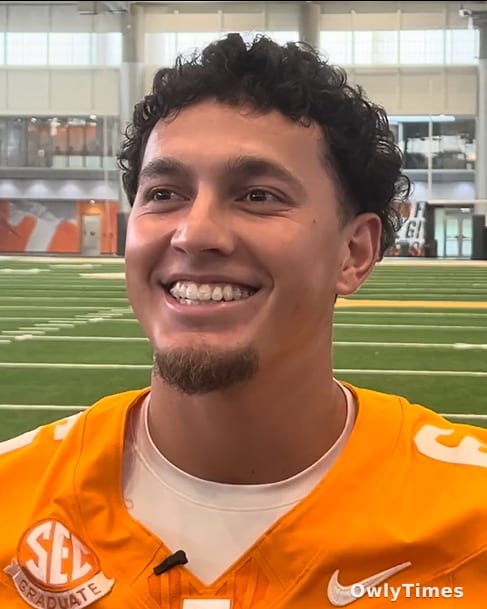

The fluorescent lights of the Knox County Courthouse seemed to dim a little on Friday, not from a power outage, but from the quiet deflation felt across Tennessee football. Just weeks after a temporary restraining order offered a glimmer of hope, Joey Aguilar, the veteran quarterback who arrived in Knoxville promising stability, learned his quest for a final season with the Volunteers was over. The judge’s denial of his preliminary injunction isn’t just a setback for Aguilar; it’s a stark illustration of the NCAA’s increasingly complex and often contradictory approach to athlete eligibility in the age of the transfer portal and evolving legal challenges.
The Shifting Sands of Eligibility
This isn’t a simple story of a player wanting one more year. Aguilar’s case, while ultimately unsuccessful, was inextricably linked to the broader battles being waged by players like Diego Pavia of Vanderbilt, whose lawsuit against the NCAA argued that time spent at junior colleges shouldn’t count against an athlete’s four seasons of eligibility. Pavia’s fight, and to a lesser extent Trinidad Chambliss’ successful medical redshirt claim at Ole Miss, exposed a fundamental tension within the NCAA’s rules: how do you reconcile the traditional four-year clock with the realities of players transferring, redshirting, and navigating the disruptions of events like the COVID-19 pandemic? Aguilar’s seven years in the system – including a redshirt year and a canceled season – highlighted the absurdity of a system that can penalize players for circumstances largely outside their control. He’s accumulated impressive stats – 80 touchdowns and 34 interceptions across his FBS career, averaging 8.2 yards per attempt – but the NCAA’s rigid structure deemed those years insufficient for another shot.
Original reporting: Yahoo Sports.
The timing is particularly poignant. Tennessee is entering its fifth consecutive season searching for a settled quarterback situation, coming off an 8-5 season and still feeling the afterglow of their 2022 College Football Playoff appearance. The competition will likely fall to George MacIntyre, Faizon Brandon, and Ryan Staub, a trio representing varying degrees of experience and potential. Brandon, a five-star recruit ranked No. 9 overall in the 2026 class, carries the weight of expectation, while Staub, arriving from Colorado with limited game action (three touchdowns, four interceptions in five appearances), represents a gamble on untapped potential. The contrast is sharp: Aguilar, a proven commodity with a demonstrated ability to lead an offense (3,565 passing yards and 24 touchdowns in his single season at Tennessee), is heading to the NFL Combine, while the Vols gamble on unproven talent.
Beyond the Field: A System Under Strain
The NCAA’s decision isn’t just about Joey Aguilar; it’s about the message it sends to athletes navigating a landscape transformed by Name, Image, and Likeness (NIL) deals and the freedom of the transfer portal. The organization is simultaneously attempting to maintain control over eligibility while facing increasing legal pressure to treat athletes as employees with greater rights. The fact that Aguilar’s case hinged on the Pavia lawsuit, rather than his own specific circumstances, underscores the reactive nature of the NCAA’s approach. They’re responding to legal challenges, rather than proactively addressing the systemic issues that create these situations in the first place. The denial of Aguilar’s injunction, despite the temporary reprieve granted earlier, feels less like a reasoned judgment and more like a reaffirmation of the status quo.
The financial implications are also significant. A veteran quarterback like Aguilar provides immediate stability and leadership, potentially boosting ticket sales and donor contributions. Now, Tennessee is forced to rely on younger, less experienced players, introducing an element of uncertainty that could impact the program’s trajectory. While the impact isn’t quantifiable, the loss of a proven player inevitably ripples through the program’s financial ecosystem. The NCAA’s continued insistence on strict eligibility rules, even in the face of compelling arguments for flexibility, raises questions about their priorities: are they truly focused on athlete welfare, or are they primarily concerned with maintaining control over a multi-billion dollar industry?
What Happens Now? The Future of College Football Eligibility
Aguilar can appeal the decision, but the appellate court isn’t obligated to hear his case. His immediate future appears to be focused on the NFL Combine, where he’ll attempt to translate his college success into a professional career. But the broader implications of this ruling will linger long after he’s left Knoxville. The NCAA is facing a reckoning. The Pavia lawsuit, and others like it, are forcing them to confront the inherent inequities of their eligibility rules. Will they continue to defend a system that increasingly feels arbitrary and unfair? Or will they embrace a more flexible approach that recognizes the evolving realities of college athletics?
The question isn’t just about whether players deserve another year of eligibility; it’s about the fundamental principles of fairness and athlete empowerment. As the legal battles continue and the transfer portal becomes increasingly crowded, the NCAA must decide whether it will adapt to the new landscape or risk becoming increasingly irrelevant. The fate of players like Joey Aguilar – and the future of college football itself – hangs in the balance. Will we see a future where athletes have more agency over their careers, or will the NCAA continue to cling to a system that prioritizes control over the well-being of those who play the game?

