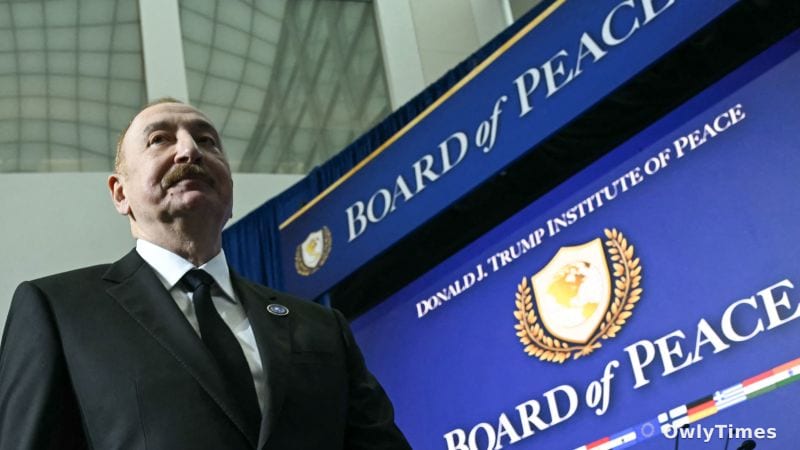

The Calculus of Impunity: Azerbaijan, US Security, and a Familiar Pattern
The immediate fallout from Thursday’s altercation outside a Washington, D.C. hotel – where security personnel protecting Ilham Aliyev, President of Azerbaijan, allegedly attacked peaceful protesters – is not the injuries reported (five, including one concussion, according to Adil Amrakhly of the Charter of the American Organization of Azerbaijani Political Refugees). It’s the calculated risk assessment that prompted the use of force on US soil, and the subsequent silence from key US government entities. This wasn’t a spontaneous overreaction; it was a demonstration of power, testing the boundaries of diplomatic immunity and signaling a disregard for domestic protest, particularly when focused on the Aliyev regime’s human rights record. The timing, immediately following Donald Trump’s inaugural Board of Peace meeting, suggests an attempt to leverage the perceived goodwill of the event – and the host nation’s political climate – to project an image of unchallenged authority.
A Delicate Balance: US Interests and Azerbaijani Leverage
The official response – or lack thereof – from the US government is the more telling element. The Metropolitan Police Department acknowledged the incident but made no arrests. The US Secret Service, present at the scene due to the hotel’s inclusion within their security perimeter for the Board of Peace event, deferred to the State Department, which then offered no comment. This layered evasion isn’t accidental. Azerbaijan is a strategically important partner for the US, particularly in energy security, serving as an alternative to Russian gas supplies. The US has also relied on Azerbaijan as a transit route for NATO forces in Afghanistan. To publicly condemn the actions of Aliyev’s security detail risks damaging these relationships, a calculation Washington appears willing to make. Who benefits? Clearly, the Aliyev regime, which reinforces its narrative of strength and control, both domestically and internationally. Who loses? The credibility of US commitment to free speech and human rights, and the safety of dissidents operating within the United States.
This piece references the CNN report.
Echoes of Ankara: A Precedent of Unpunished Aggression
The incident isn’t isolated. It bears a striking resemblance to the 2017 attack on protesters outside the Turkish Embassy in Washington, D.C., during a visit by Recep Tayyip Erdoğan. In that case, Turkish security officials physically assaulted demonstrators, and the subsequent legal proceedings resulted in dropped charges for eleven of the fifteen indicted bodyguards. The parallel is crucial. Both Azerbaijan and Turkey have demonstrated a willingness to export their authoritarian tendencies onto American soil, and both instances have been met with a muted response from the US government. This creates a dangerous precedent: a tacit acceptance that the security details of certain foreign leaders operate outside the bounds of US law when protecting their principals. The Azerbaijani embassy’s claim that guards “had no choice” but to respond to a “violent attempt” to enter the protected area directly mirrors the justifications offered by Turkish officials in 2017, and is directly contradicted by protester accounts, including that of Rahim Yagublu, who stated he was “only chanting slogans while they were hitting me.”
The Ripple Effect: Intimidation and Fear Within Azerbaijan
The consequences extend beyond the immediate physical harm to protesters. Adil Amrakhly reports that family members of the demonstrators, still residing in Azerbaijan, have faced political intimidation – questioning by police and pressure at their workplaces – in the wake of the incident. This is a classic tactic of authoritarian regimes: punishing dissenters through their families. Rahim Yagublu expressed fears for his father, Tofig Yagublu, a political prisoner sentenced to nine years for criticizing the government, suggesting potential torture or even death in retaliation. The attack in Washington, therefore, isn’t merely about suppressing protest abroad; it’s about reinforcing control at home by demonstrating the regime’s reach and ruthlessness. The nine-year sentence handed down to Tofig Yagublu last year, documented by Freedom Now, underscores the systematic repression of dissent within Azerbaijan, a context vital to understanding the desperation driving the Washington protest.
The Next Move: Will Washington Draw a Line?
The political chess move to watch next isn’t whether the State Department will eventually issue a statement – it’s whether the Biden administration will alter its security protocols for foreign leaders with documented histories of suppressing dissent. Will the US Secret Service continue to provide a security perimeter that effectively shields foreign security details from accountability? More importantly, will Congress initiate hearings to investigate the incident and examine the broader issue of diplomatic immunity and the protection of protesters? The silence from Washington isn’t simply a diplomatic oversight; it’s a strategic decision with potentially far-reaching consequences for the future of free speech and political activism on US soil. The question is whether the US is willing to prioritize its strategic interests with Azerbaijan over its stated commitment to human rights and the protection of those who challenge authoritarian regimes.





