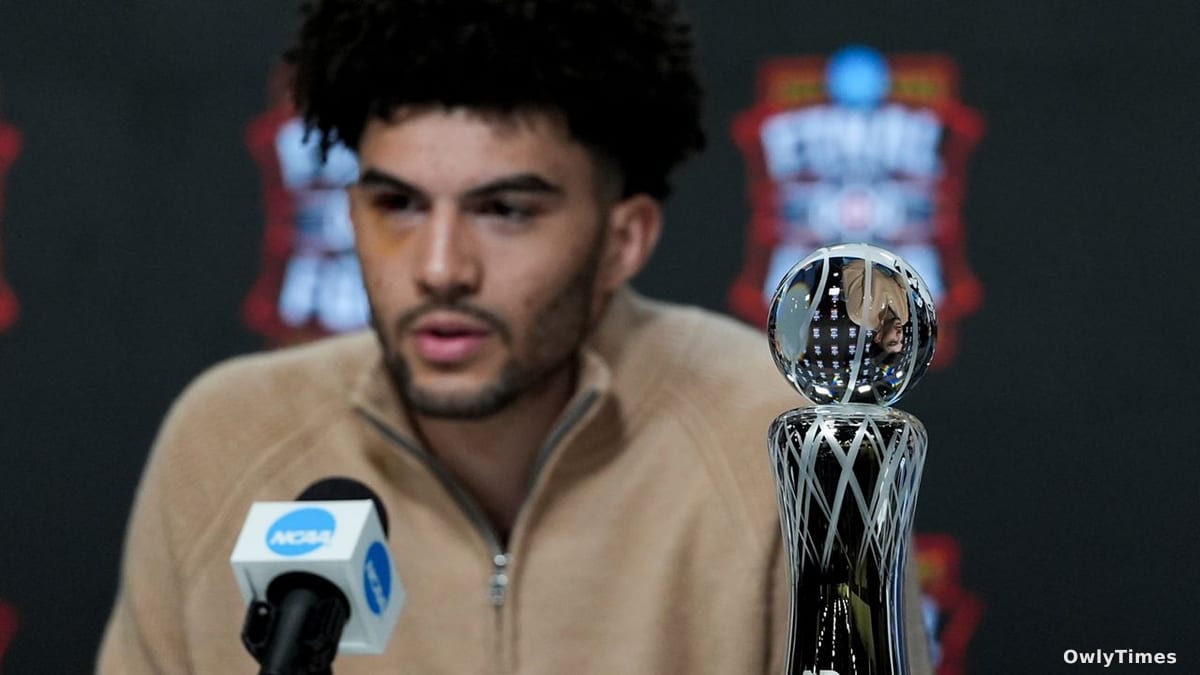

Is the future of college sports less about athletic prowess and more about emotional resilience – and the ability to withstand online harassment? The narrative surrounding Cameron Boozer, Duke’s star freshman and newly-minted AP National Player of the Year, isn’t simply about a facial injury sustained during a heartbreaking March Madness loss to UConn. The real story here isn't the fractures to his face – it's the layered impact of physical trauma, the weight of expectation, and the shockingly casual cruelty of the internet age, all converging on a 19-year-old.
Boozer revealed he suffered “a couple of fractures” to his face after an elbow from UConn’s 7-foot-1 center Eric Reibe during the Elite Eight game on March 29th. He remarkably played through the pain, scoring 27 points despite the injury and swelling around his right eye. While the decision to forgo surgery and allow the fractures to heal naturally is a testament to his physical toughness, it’s a footnote to the larger picture. The fact that he could play through it, and did, is becoming increasingly expected of these highly-touted athletes, blurring the line between dedication and exploitation. This isn’t about a single player’s grit; it’s about a system that often prioritizes performance over well-being.
The immediate aftermath of UConn’s stunning comeback victory – fueled by Braylon Mullins’ last-second 3-pointer – revealed a darker side of fandom. Boozer’s twin brother, Cayden, became the target of vicious online abuse after committing a late turnover. The vitriol wasn’t directed at a strategic error, but at a young man grappling with a devastating loss alongside his brother. Cameron Boozer’s response – emphasizing team unity and the need to “take on the chin and learn and grow” – is admirable, but it shouldn’t be necessary. We’re asking these athletes to be emotionally armored against both physical blows and the relentless negativity of strangers online. The Basketball Writers Association also recognized Boozer with a national player of the year award, a hollow honor given the circumstances.
Source material: Spectrum News.
This incident highlights a growing tension within college athletics. The multi-billion dollar industry thrives on the spectacle of peak performance, yet offers increasingly limited protection for the athletes themselves – not just from physical injury, but from the psychological toll of intense pressure and public scrutiny. The NCAA’s attempts at name, image, and likeness (NIL) deals have opened new revenue streams for players, but haven’t addressed the fundamental issues of athlete welfare. A fractured face heals; the scars of online harassment can linger far longer. Consider that Duke, as the NCAA Tournament’s No. 1 overall seed, was one of only three teams to defeat Michigan all year, yet they weren’t even playing for a championship while Michigan dominated their path to the final. The focus has shifted from the game itself to the surrounding drama.
The fact that Boozer was presenting awards at the Final Four while still visibly injured and emotionally raw speaks volumes. He’s being asked to embody grace and sportsmanship while simultaneously processing a painful defeat and defending his brother against online attacks. This isn’t a unique situation; it’s a pattern. The pressure cooker of high-stakes college basketball, amplified by social media, is creating a breeding ground for both athletic excellence and emotional vulnerability. Expect to see a surge in athletes openly discussing mental health challenges, and a growing demand for stronger protections against online abuse. The next step won’t be about better helmets or more athletic trainers – it will be about enforceable policies that hold social media platforms accountable for the toxicity they enable.

