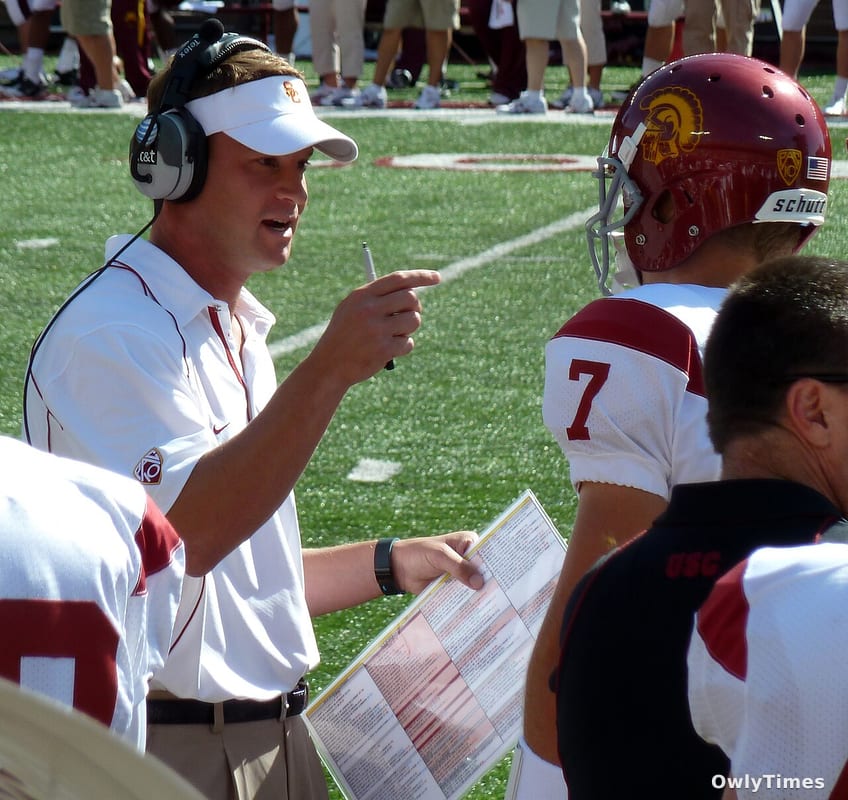

The air crackles with speculation, not just on the field, but in the hushed corridors of college athletic departments as a season hangs in the balance. We’ve seen it play out dramatically: a coach, still leading their team, caught in a weeks-long "dalliance" with a rival institution, as Lane Kiffin experienced with LSU while coaching Ole Miss late in the 2025 season. Or the starker, more brutal reality of Lincoln Riley leaving Oklahoma for Southern California on Sunday, November 29, 2021, less than 12 hours after a loss cost the Sooners a College Football Playoff spot. These are not just isolated incidents; they are vivid snapshots of a college sports landscape teetering on the edge of its own chaotic success. This pervasive uncertainty, where loyalty is a fleeting commodity and seasons feel perpetually in flux, is precisely the human drama the proposed SCORE Act seeks to address, aiming to restore a semblance of order to a system many feel has veered wildly off course.
The Mid-Season Exodus: When Coaches Become Commodities
The churn of the coaching carousel has become a central, often devastating, plot point in college athletics, leaving student-athletes blindsided and programs scrambling. The SCORE Act, set to again be on the United States House of Representatives agenda Monday, May 18, directly confronts this issue. Its latest amended version, made available Monday, May 11, on the rules portion of the House website, includes crucial language designed to "dramatically alter the timeline of hiring coaches during the season." Specifically, it seeks to establish "parameters for the manner in which an institution (or any person on behalf of an institution) may engage in public or private communication with respect to the employment of, or solicit, recruit, or enter into an employment contract or other arrangement with, any coach employed by another institution with respect to a varsity sports team, if such rules prohibit an institution...from engaging in any such communication...during a season of competition of the varsity sports team of such coach."
This isn't merely about administrative tidiness; it’s about the very fabric of team morale and athlete experience. As Brian Kelly, who himself left Notre Dame for LSU two days after the Irish concluded their regular season in 2021, eloquently put it on the USA TODAY Sports college football podcast on May 6, 2026: "The timing stinks, ok? If we could all just say, 'Hey, (athletics directors), you can't make any decisions on coaches until after this time.' It'd be easy on our lives. Trust me, you don't like walking in on your team after they've already been told you're leaving. That's not fun." His words cut to the heart of the matter: the human cost of a system where coaches can depart mid-stride, leaving young athletes in emotional and competitive limbo.
NIL's Wild West and the Quest for Guardrails
Beyond the headlines of coaching drama, the SCORE Act dives deep into the complex, often opaque world of Name, Image, and Likeness (NIL) compensation. The proposal aims to define and regulate NIL, introducing a potential "pool limit" – a dollar amount "calculated and published by an interstate intercollegiate athletic association" that serves as the "annual maximum amount that a (member) institution may provide, in total, to student athletes, including in the form of name, image and likeness or direct payment." This move signals a profound shift from the current free-for-all, attempting to inject a measure of financial sustainability and equity.
A key component of this regulation is the redefinition of "associated entity/entities," a critical area in the ongoing House Settlement revenue-share and NIL era. The Act outlines an individual as "associated" if they are "known or should be known" to an athletics department and its employees because they help "promote or support varsity sports teams or student athletes" or create NIL agreements "solely for the student athletes of such institution." This aims to curb practices like the "warehousing NIL rights" controversy, exemplified by the recent binding decision on Monday, May 11, where a third-party arbitrator sided with the College Sports Commission (CSC) against Nebraska, ruling that Playfly Sports was an "associated entity" and that proposed NIL deals had violated rules against warehousing, as they lacked material services or products. This part of the bill is a direct response to the perceived abuses within the NIL framework, seeking to protect student-athletes from predatory agents and "bad actors" while ensuring fair play.
The Hidden Toll: Realignment, Travel, and Student-Athlete Well-being
The SCORE Act isn't just about financial and hiring ethics; it's a holistic attempt to safeguard the student-athlete experience amidst unprecedented upheaval. NCAA President Charlie Baker, a vocal proponent of the act, published an op-ed in The Hill on May 7, 2026, urging its advancement. He argues the act "protects student-athletes without making them employees," citing NCAA data indicating student-athletes do not wish to become full-time employees. Baker stresses that current spending levels are unsustainable, warning that "Less than 1 percent of college sports programs nationwide generate meaningful revenue," and an employment mandate would lead to "widespread program cuts — with women’s sports, Olympic sports, historically Black college and university programs, and Division II and III bearing the brunt."
Furthermore, the Act seeks to address the often-overlooked burden of recent conference expansions and realignment. It tasks leaders with examining the length of collegiate sports seasons, capping the maximum number of competitions, and scrutinizing the travel now required. Consider the very real impact: Stanford's women’s basketball team, now an ACC member, faced conference games at North Carolina, North Carolina State, Syracuse, Pittsburgh, Miami, and Boston College during the 2025-26 season. Or Southern California football, now in the Big Ten Conference, endured 2025 contests at Purdue, Illinois, and Notre Dame within a grueling five-game stretch. This level of travel is not merely inconvenient; it fundamentally impacts academic performance, physical recovery, and mental well-being, pushing student-athletes to their limits.
A Reckoning for College Sports: The SCORE Act's Broader Stakes
The SCORE Act, in its third formal attempt to pass through the House of Representatives, represents a critical juncture for college sports. It's a legislative effort to bring sanity and sustainability back to a multi-billion-dollar industry struggling with its identity. From establishing a minimum one-year residency before transferring to advocating for academics and progress toward a degree as critical components, the Act attempts to re-center the "student" in student-athlete.
This isn't just another bill; it’s a cultural statement. It’s an acknowledgment that the unchecked commercialization, while bringing immense revenue, has also created untenable pressures and ethical dilemmas. As the United States House of Representatives prepares to revisit the SCORE Act on Monday, May 18, the outcome will signal more than just policy changes. It will offer a profound indication of whether college athletics is prepared to self-regulate, to protect its most valuable assets—the student-athletes—and to preserve the unique blend of amateurism and elite competition that has long defined its place in the American cultural landscape. The future of college sports, as we know it, hangs in the balance.