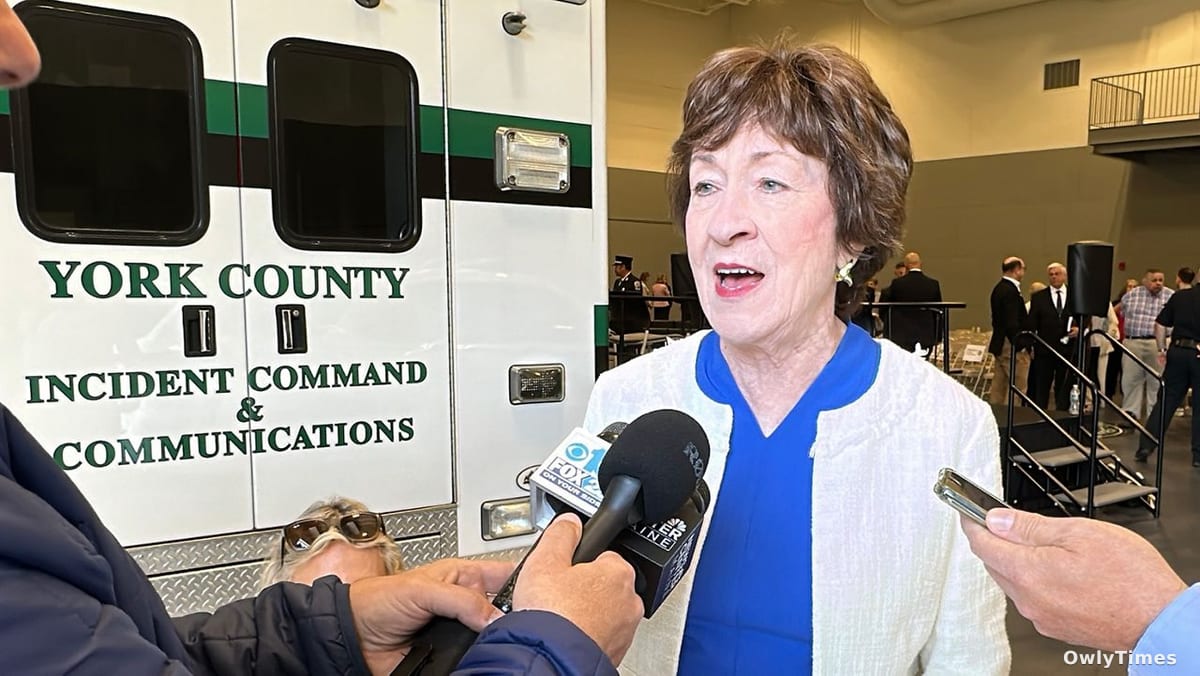

The strategic calculus for Susan Collins’ sixth-term reelection bid centers on a pivot from partisan combat to the reliable delivery of federal resources. By positioning herself as the architect of Maine’s infrastructure gains—evidenced by her presence at the York County Regional Training Center—the Republican incumbent is betting that local tangible results will outweigh the nationalized ideological fervor that often characterizes modern Senate contests. The sudden withdrawal of Janet Mills from the race has not simplified this math; instead, it has replaced an establishment-backed candidate with Graham Platner, a challenger whose anti-establishment rhetoric creates a new set of risks and opportunities for the Republican incumbent.
The Shift from Institutionalism to Outsider Populism
The exit of Janet Mills on Thursday fundamentally alters the campaign’s trajectory. At 78, Mills offered a traditional, if elderly, profile that Senate Minority Leader Chuck Schumer and the Democratic establishment believed could unseat the incumbent. In her stead stands Platner, a 41-year-old military veteran and oyster farmer who has actively campaigned against the very party leadership that recruited Mills.
Who benefits from this transition? The Democratic establishment, represented by Schumer’s team, loses their preferred vehicle for flipping a seat, but they gain a candidate who has already secured the backing of the progressive wing, including Vermont Sen. Bernie Sanders. However, the party faces a coordination problem: Matt Bennett, co-founder of the center-left group Third Way, suggests that Platner’s emergence makes the path to victory objectively steeper. For Collins, the benefit is the removal of a high-profile governor, but the cost is a shift toward a populist opponent who is less tethered to the party orthodoxy she has spent her career navigating.
The Power of the Purse as a Campaign Shield
Collins, 73, currently chairs the powerful appropriations committee, a position she leverages to solidify her base through project-specific funding. During the dedication ceremony in Alfred on Friday, she highlighted her role in securing $3.4 million in federal funding for the $24 million regional training facility. This is a classic political play: using federal authority to address localized needs, thereby creating a record of service that transcends party labels.
This strategy mirrors the historical reliance on the "incumbency advantage," where the ability to direct capital into one's home district serves as a buffer against national electoral headwinds. While Platner criticizes party leadership, Collins is betting that the voters of Maine prioritize the tangible, multi-million dollar infrastructure projects over the abstract grievances of an outsider candidate.
Contradictions in the Democratic Coalition
The tension between Platner and the Democratic establishment is palpable. While Allison Biasotti, a spokesperson for Chuck Schumer, framed the party’s recruitment efforts as a necessary mission to regain a Senate majority, Platner’s public comments suggest a different reality. By telling MS NOW's “Morning Joe” that his criticisms of party leadership remain unchanged despite his newfound status as the presumptive nominee, Platner is attempting to thread a difficult needle. He is trying to maintain the grassroots energy of his campaign while accepting the institutional support of a party he has spent his time attacking.
The political chess move to watch next is the degree to which Democratic donors and national committees integrate into the Platner campaign. If Schumer’s team fully embraces the candidate they initially bypassed, it will signal that the objective of taking back the Senate has superseded the party’s internal friction. If the financial and logistical support remains tepid, the next reading of campaign finance disclosures will show whether Platner’s "outsider" status is a viable electoral strategy or a recipe for a diminished turnout in November.





