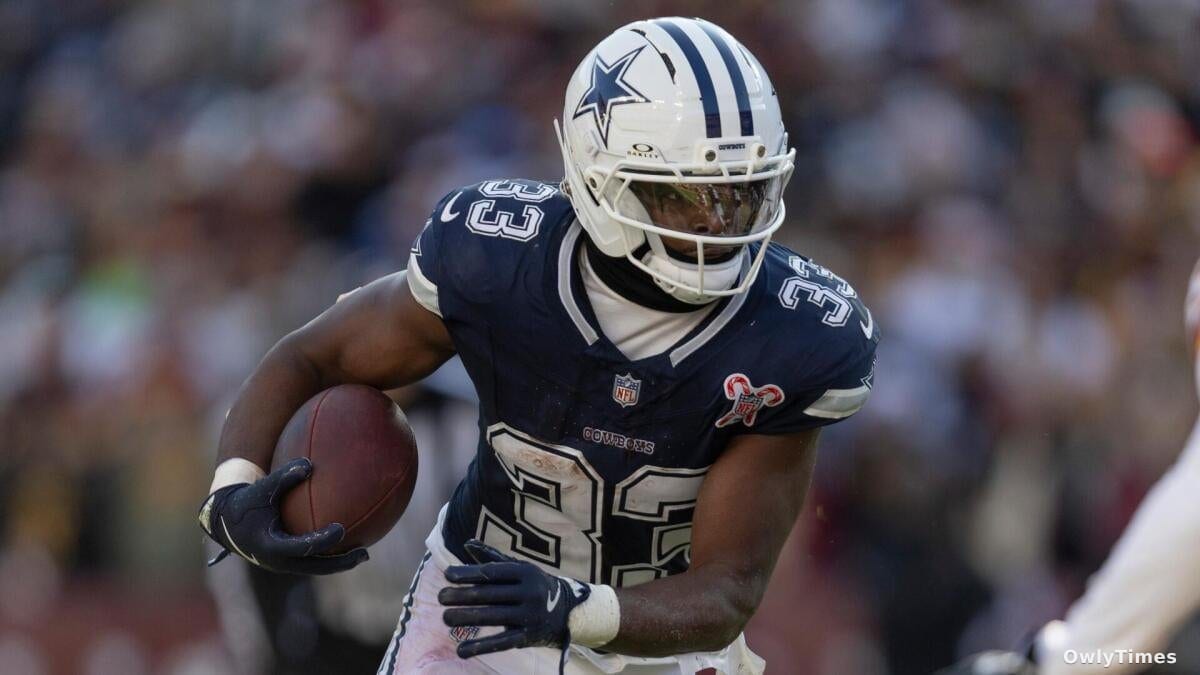

The air in Dallas feels different this February, not just with the lingering warmth of a surprisingly mild winter, but with a quiet sense of urgency. It’s the kind of tension that hangs thickest around The Star, the Cowboys’ headquarters, as the clock ticks down to free agency. But it’s not the looming departure of a star that’s dominating the conversation right now – it’s the successful retention of one. Javonte Williams, the running back who resurrected his career in Dallas, just signed a three-year, $24 million deal, a move that speaks volumes about how the Cowboys are building, and what they’re willing to pay for proven production. The deal, reported first by CBS Sports’ Jonathan Jones, includes $16 million guaranteed, a significant vote of confidence in a player who, just a year ago, was looking for a fresh start.
The Running Back Renaissance in Dallas
For years, the NFL has been trending away from prioritizing running backs, viewing them as replaceable commodities in a passing league. The Cowboys, however, seem to be bucking that trend. In 2025, Williams exploded for 1,201 rushing yards and 11 touchdowns – career highs – proving his value as a workhorse. This wasn’t just about yardage; it was about timing. Dak Prescott had a career year, and Williams provided a consistent, reliable outlet, adding 35 receptions for 137 yards and two touchdowns. The $24 million deal, while substantial, is actually below the average for top-tier running backs, currently hovering around $12 million annually. The Cowboys clearly saw the value in securing Williams before he hit the open market, where his price tag could have easily soared. This isn’t simply about football; it’s a statement about valuing players who demonstrably contribute to a winning formula, even if that formula feels increasingly old-school.
Based on the original CBS Sports report.
The Pickens Predicament: A Test of Dallas’s Priorities
With Williams locked up, the focus now shifts to George Pickens, the wide receiver who quickly became Prescott’s favorite target in his first season with the Cowboys, racking up 1,429 receiving yards and nine touchdowns. Pickens is understandably seeking a contract commensurate with his performance, aiming for the lucrative territory occupied by the NFL’s elite receivers. But here’s where things get complicated. The Cowboys already have CeeDee Lamb on a massive four-year, $136 million deal ($100 million guaranteed). Can they realistically afford to pay another receiver at that level? The franchise tag looms as a potential solution for Pickens, costing the Cowboys $28 million for the 2026 season, but that’s a temporary fix, and one that could breed resentment.
Beyond the Contract: The Shifting Power Dynamic
This isn’t just about dollars and cents; it’s about the evolving power dynamic between players and teams. The NFL Players Association has been vocal about the need for running backs – and other undervalued positions – to receive fair market value. The Cowboys’ willingness to invest in Williams could be seen as a small victory in that ongoing battle. However, the potential standoff with Pickens highlights a larger issue: the financial constraints imposed by the salary cap and the difficult choices teams must make when balancing present needs with long-term sustainability. The Cowboys, under Jerry Jones and Stephen Jones, have a history of making splashy moves, but they also have a reputation for being fiscally conservative.
What Happens Next at The Star?
The next two weeks will be critical. Will the Cowboys prioritize retaining Pickens, potentially restructuring Lamb’s contract to create cap space? Or will they allow him to test free agency, relying on Lamb and a developing corps of receivers? The answer will reveal a lot about the Cowboys’ long-term vision. This situation isn’t just about the Cowboys; it’s a microcosm of the league-wide struggle to balance the demands of star players with the realities of the salary cap. Will other teams follow Dallas’s lead and reinvest in the running back position? Or will the trend towards pass-heavy offenses continue to devalue this once-essential role? The Cowboys’ decisions in the coming weeks will undoubtedly influence the conversation, and potentially, the future of football.

