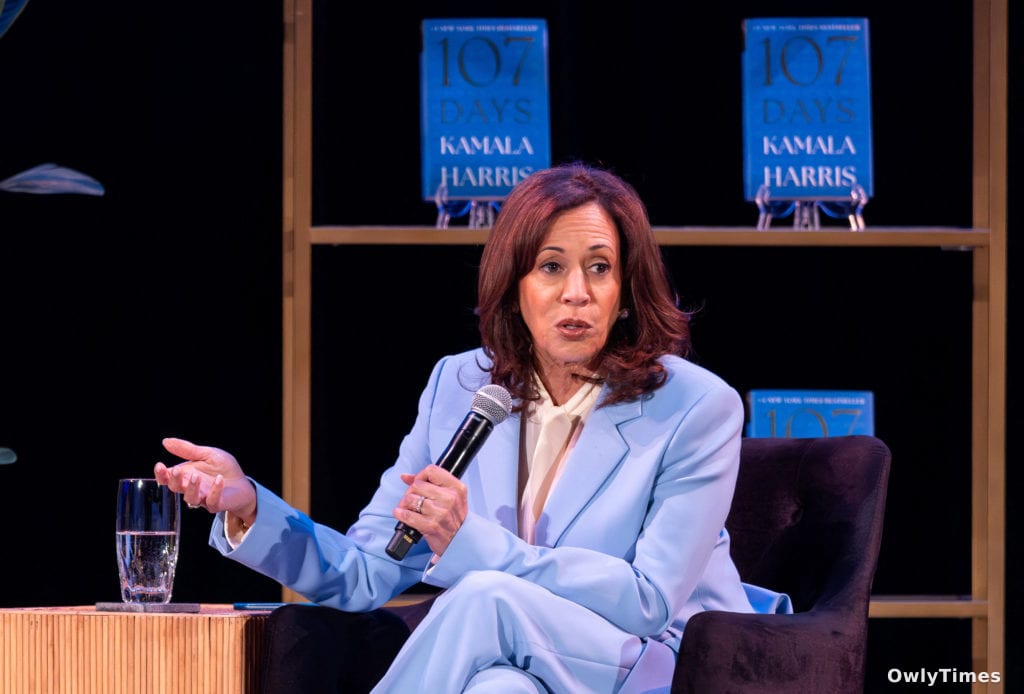

The strategic pivot behind the Democratic National Committee’s post-election autopsy is a classic exercise in institutional survival: define the failure narrowly enough to protect the party establishment while sacrificing the specific tactical choices of the candidate. By framing the 2024 defeat as a failure of execution rather than a crisis of ideology, the party leadership is attempting to reset the narrative before the next primary cycle gains momentum. The central tension here lies in the attempt to reconcile a loss of traditional working-class support with a campaign strategy that arguably prioritized base consolidation over broad-spectrum persuasion.
The Geography of Political Neglect
The Democratic National Committee report released this Thursday points to a stark strategic oversight: the decision to essentially cede rural voters to the opposition. According to the PBS NewsHour report, Vice President Kamala Harris "wrote off rural America" during her bid for the White House. This admission is not merely a critique of travel schedules or ad buys; it is an acknowledgment of a structural abandonment that allowed the opposition to consolidate deep margins in non-urban districts.
Who benefits from this diagnosis? Party strategists who favor a return to a "big tent" coalition stand to gain by using this autopsy to push for a shift in resources away from coastal hubs. Conversely, the losers are the architects of the 2024 campaign, whose focus on specific demographic turnout metrics is now officially classified as a liability. By naming this specific geographic failure, the DNC creates a clear mandate for future candidates to re-engage with the rural electorate or risk further marginalization.
Firepower and the Optics of Aggression
Beyond geography, the autopsy highlights a failure in the psychological warfare of the campaign. The report asserts that Harris failed to deploy sufficient "negative firepower" against Donald Trump. In political terms, this is a critique of the campaign’s inability to effectively define the opponent in the eyes of the electorate. While the Harris campaign spent heavily on messaging, the report suggests this spending lacked the requisite edge to shift the needle among undecided or lukewarm voters.
This dynamic echoes the historical precedent of the 1988 presidential race, where the campaign of Michael Dukakis was similarly criticized for failing to preemptively counter the "Willie Horton" narrative that defined his candidacy in the eyes of many voters. Much like the 1988 cycle, the 2024 outcome suggests that a failure to control the negative narrative of an opponent creates a vacuum that the opposition will inevitably fill. The DNC’s critique acknowledges that in modern media environments, a candidate who does not actively dismantle their opponent's brand risks being consumed by it.
The Mechanics of Internal Accountability
The report acts as a firewall for the broader party infrastructure by keeping the focus on Harris’s individual tactical choices. By focusing on the "negative firepower" deficit, the DNC avoids a deeper examination of whether the party’s broader policy platform was the primary driver of the electoral gap. This is a common maneuver in American politics, where post-mortem reports are often designed to redirect blame toward specific campaign managers rather than questioning the party’s long-term ideological trajectory.
The next signal to watch will be the allocation of funding and personnel for upcoming state-level contests in 2025. Whether the DNC shifts its budget toward the rural field offices suggested by this report will reveal if this autopsy is a genuine shift in doctrine or merely a temporary containment strategy. The degree to which the party empowers rural organizers will be the ultimate indicator of whether this "autopsy" translates into a substantive shift in the party’s power dynamics or remains an academic exercise in blame-shifting.





