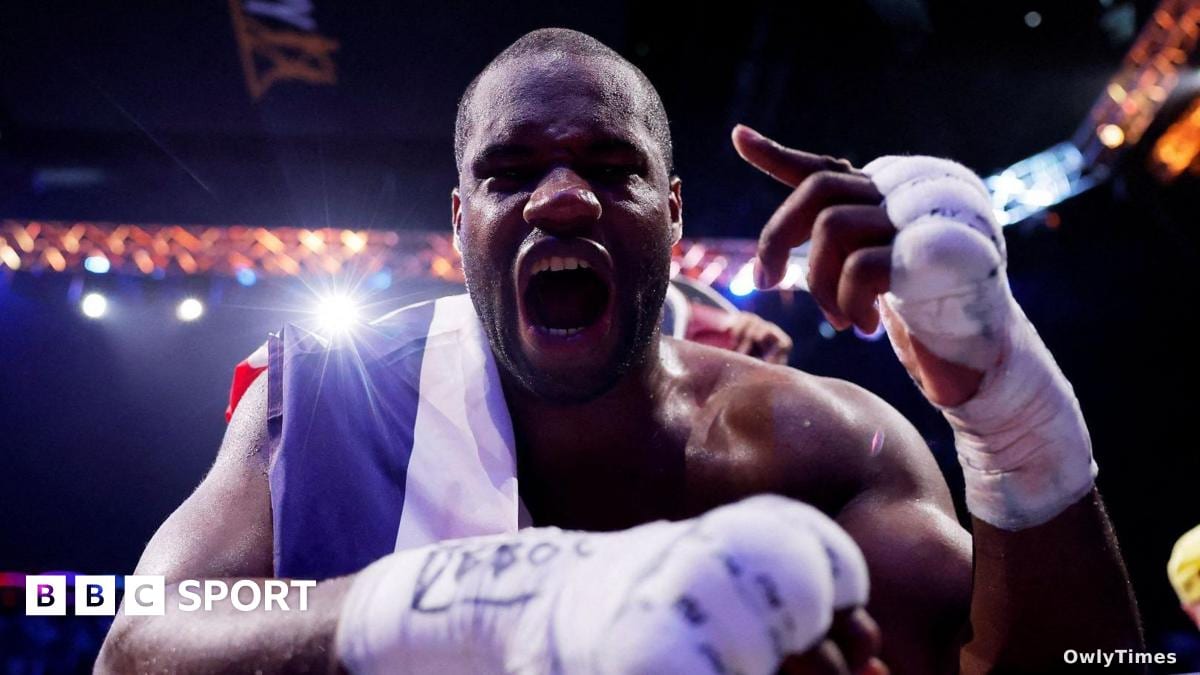

The "Don't Blink" tagline plastered across the promotional materials for Saturday’s heavyweight clash was never meant to be taken quite so literally. Yet, when Daniel Dubois crashed to the canvas within 10 seconds of the opening bell in Manchester, the entire Co-op Live Arena held its collective breath. For years, the narrative surrounding the 28-year-old has been one of fragility—a fighter who, according to his detractors, folds when the pressure mounts. When he hit the floor again in the third round, it seemed the old script was repeating itself, confirming every cynical prediction about his temperament.
From Binman Taunts to Champion Grit
The tension leading up to the bout was thick with personal barbs. During fight week, Fabio Wardley had suggested that if Dubois weren't a boxer, he would be a "binman," a comment that underscored the disdain some held for Dubois’s perceived lack of heart. Much of the 18,000-strong crowd had arrived expecting to see the Wardley fairytale continue, buoyed by the challenger's charisma and the champion's apparent discomfort under the spotlight.
Instead, the night became a masterclass in composure. Between those early knockdowns, Dubois didn't unravel; he winked at his corner, a silent signal that he remained in control of his faculties. By the time he stopped Wardley in the 11th round of this British heavyweight classic, Dubois hadn't just secured a victory—he had dismantled a years-long reputation for quitting. As trainer Don Charles later remarked, "No human being on this planet could ever question this kid."
The Heavyweight Double Standard
The scrutiny Dubois has faced is uniquely intense, shaped heavily by a defeat to Joe Joyce and two losses to Oleksandr Usyk. These setbacks created a public perception of a fighter lacking discipline or mental toughness. Yet, this treatment highlights a broader, uncomfortable truth about the sport’s culture. While stars like Anthony Joshua and Tyson Fury are often celebrated for their media savvy, Dubois is frequently ridiculed for his social awkwardness and refusal to participate in the "manufactured theatre" of fight promotion.
Dubois, who was home-schooled and has known little outside the boxing gym, clearly struggles with the performative side of the industry. He walked out of interviews during fight week, bristling at questions about his past. The irony is that the same traits—his quietness and lack of interest in fame—are precisely what allowed him to block out the noise of the 18,000-strong arena. When he finally spoke after the fight, he was articulate and gracious, suggesting that his previous "guarded" nature was less a character flaw and more a reaction to a system that demands a persona he simply does not possess.
A Transitional Era for the Heavyweights
At 28, Dubois is already a two-time world champion, hitting that milestone at a younger age than both Joshua and Fury. This achievement places him at the center of a shifting heavyweight landscape. While a rematch with Wardley remains a possibility given the back-and-forth intensity of their encounter, the real question is how Dubois navigates the elite tier of the sport moving forward.
Usyk, who has already defeated him twice, is currently moving toward a fight with Rico Verhoeven and has signaled a limited window remaining in his own career. Dubois has the luxury of time, with at least eight years potentially left in his prime to chase the legacies of his predecessors. The next reading of the division's landscape—specifically how the sanctioning bodies and rival promoters react to this latest win—will show whether Dubois is truly the new standard-bearer for the weight class or if this victory was merely a brutal, albeit brilliant, outlier.