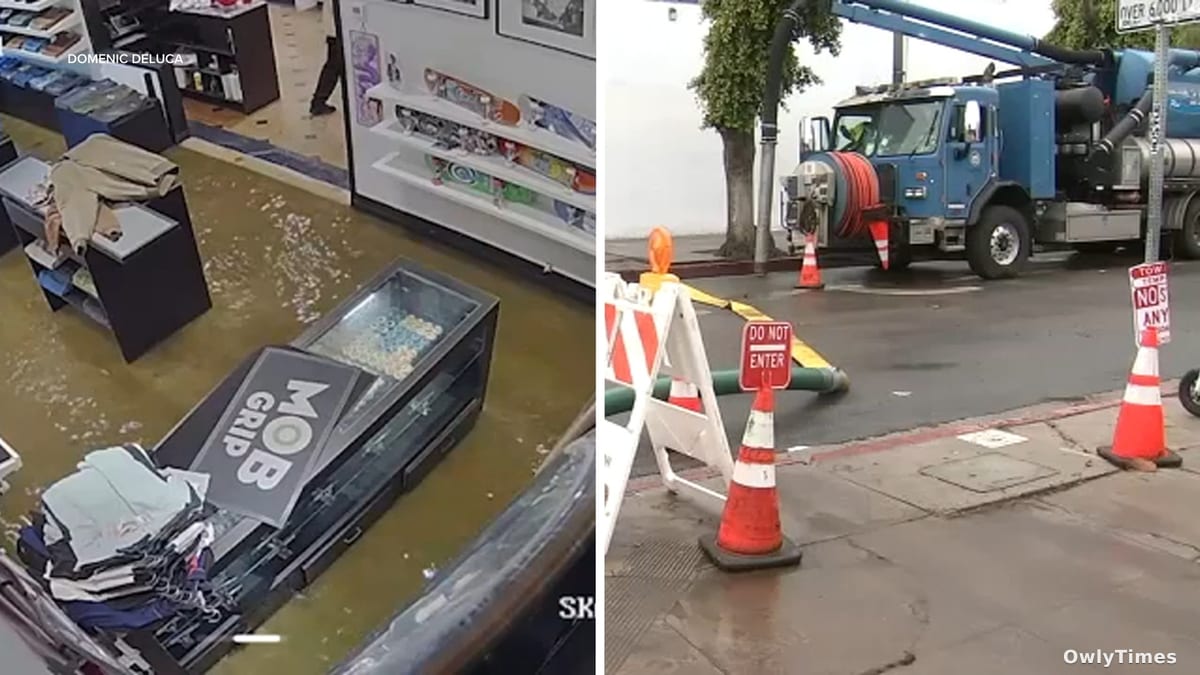

$75,000. That’s the estimated average loss per business along Melrose Avenue in the Fairfax District following Monday’s flash floods, a figure that underscores a critical failure not of natural disaster preparedness, but of capital allocation. While Los Angeles officials pre-positioned city equipment – large vacuum trucks – to mitigate flooding in a known hotspot, the inaction during the event itself transformed a preventable inconvenience into a significant financial blow for local businesses. This isn’t simply a story of bad luck; it’s a case study in how ostensibly proactive measures can become performative spending when disconnected from real-time execution.
The immediate impact is clear: Yaffa, owner of Posers Hollywood, reported her entire store flooded within 30 minutes, while Aron Askor of Media Wine and Spirits described a foot of standing water with “no movement, no drainage.” Domenic DeLuca, of Brooklyn Projects, quantified the damage at 4-5 inches of water throughout his store, rendering size medium to extra-large clothing unsellable. These aren’t isolated incidents; multiple businesses experienced similar losses, collectively representing a substantial economic disruption in a key retail corridor. Comparing this to the $2.3 million allocated citywide for flood control infrastructure in the 2024 fiscal year, the concentrated damage on Melrose raises questions about the effectiveness of resource distribution.
Drawn from abc7.com.
The core of the issue lies in the disconnect between pre-positioning assets and actively deploying them. The city’s strategy hinged on the vacuum trucks, intended to clear standing water before it entered businesses. However, as DeLuca’s account – and his surveillance footage – reveals, the trucks sat idle while water inundated stores. This isn’t a matter of equipment malfunction, but of personnel deployment. The city’s proactive spending of $2.3 million on flood control yielded a negative return when the crucial operational component – trained personnel to operate the equipment during the event – was absent. This mirrors a pattern observed in other infrastructure projects: a focus on visible investment without sufficient attention to ongoing maintenance and operational readiness.
The delayed response – the eventual opening of a manhole cover to facilitate drainage – highlights the reactive nature of the city’s intervention. While effective in the moment, it came after the damage was already done. This delay is particularly concerning given the Fairfax District’s history of flooding. Data from the Los Angeles County Flood Control District shows that Melrose Avenue has experienced at least five significant flooding events in the past decade, suggesting a predictable risk that should have warranted a more robust and responsive operational plan. The city’s current approach appears to prioritize optics – demonstrating preparedness – over actual mitigation.
The immediate financial fallout for businesses like Brooklyn Projects is significant, with DeLuca facing losses equivalent to donating his entire stock of medium to extra-large clothing. But the broader implications extend to the city’s reputation for supporting small businesses and its ability to effectively manage infrastructure. As another storm approaches, the city is now deploying sandbags – a reactive measure that addresses the symptom, not the cause. What this means for your wallet: expect potential price increases at Fairfax businesses as they absorb these losses, and consider whether the city’s current flood control strategy is truly protecting your investments in the local economy. The critical question now is not whether the city can spend money on flood control, but whether it can spend it effectively – and whether businesses will see a tangible return on that investment before the next downpour.





