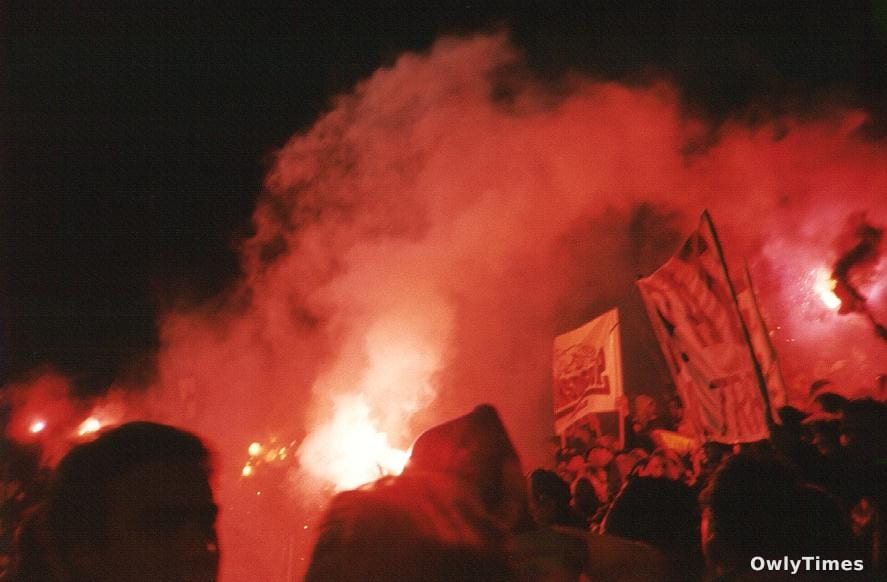

The scent of leather and anticipation hung thick in the Florentine air last night, a stark contrast to the chill that’s gripped the Serie A season for Fiorentina fans. While Valentine’s Day brought a sweet 2-1 victory at Como, a flicker of hope in a largely frustrating domestic run, the real romance for La Viola might be unfolding under the lights of the UEFA Conference League. As they prepared to face Jagiellonia Bialystok at the Stadio Artemio Franchi, building on their commanding 3-0 first-leg win, it wasn’t just a place in the last 16 at stake – it was a question of where Fiorentina’s identity now resides.
The Weight of European Ambition
For a club steeped in history, a team that once challenged for Serie A titles and reached the Champions League final in 1957, consistently finding themselves in the shadow of Italy’s elite feels…wrong. Fiorentina’s recent domestic form – three losses in eleven games in 2026 isn’t catastrophic, but it’s hardly the trajectory of a team destined for Champions League qualification. This is where the Conference League, often dismissed as the “third-tier” competition, becomes unexpectedly vital. It’s a lifeline, a stage to prove something, not just to Europe, but to themselves. The 3-0 victory in Poland wasn’t just about the scoreline; it was a statement. A team capable of such dominance away from home should be competing higher up the Italian table.
Source material: Yahoo Sports.
The starting lineups told a story of cautious optimism. Lezzerini in goal for Fiorentina, a backline anchored by Pongracic, and a midfield featuring Mandragora and Fabbian – a blend of experience and emerging talent. Jagiellonia, meanwhile, fielded Abramowicz in goal, hoping to contain the Italian attack led by Piccoli and Fazzini. But beyond the names on the sheet, the dynamic is crucial. Jagiellonia, representing the Polish Ekstraklasa, is a team fighting for respect, a David facing a Goliath even in its current, somewhat diminished state. This isn’t simply a mismatch of talent; it’s a clash of footballing cultures, of expectations, and of what success looks like.
Beyond the Headlines: The Shifting Landscape of European Football
The Conference League itself is a relatively new phenomenon, launched in 2021 by UEFA. It was designed, ostensibly, to give more clubs from smaller nations a pathway to European competition. But it’s also become a proving ground for teams like Fiorentina, clubs wrestling with financial realities and the increasing dominance of the “super clubs” backed by global investment. The financial gap in European football is widening, making it harder for historically significant teams to compete consistently at the highest level. The Conference League offers a realistic, albeit less glamorous, route to silverware and the prestige that comes with it. A win here isn’t just about a trophy; it’s about securing future revenue, attracting sponsors, and maintaining a competitive edge.
Consider the broader context: in 2023, the total revenue generated by UEFA club competitions exceeded €4.6 billion. The Champions League accounted for the lion’s share, but the Europa League and Conference League are increasingly important revenue streams, particularly for clubs outside the traditional powerhouses. Fiorentina’s participation, and potential success, in the Conference League isn’t just a sporting endeavor; it’s a business decision. The 2-1 win against Como on February 14th, while a morale boost, generated a fraction of the potential revenue a deep Conference League run could provide.
The Kean Factor and the Search for Identity
The image of Moise Kean celebrating a goal at the Artemio Franchi, captured by Gabriele Maltinti of Getty Images, is emblematic of this struggle. Kean, a player with undeniable talent but a sometimes-turbulent career, represents Fiorentina’s attempt to rebuild, to find a new generation of stars. His performance, and the performances of players like Dodo and Gosens, will be critical to their European ambitions. But it’s not just about individual brilliance. It’s about forging a collective identity, a style of play that reflects the club’s history and its aspirations. Fiorentina needs to decide what kind of team it wants to be: a European contender, a domestic force, or something in between.
The comfortable first-leg lead against Jagiellonia allows Fiorentina some breathing room, but complacency would be a fatal mistake. The Polish side, despite the disadvantage, will be motivated to prove themselves on European soil. The question isn’t just whether Fiorentina will win, but how they will win. Will they dominate with the same attacking flair they displayed in Poland, or will they adopt a more cautious approach? Will they use this match as an opportunity to experiment with tactics and give playing time to younger players, or will they prioritize securing the result at all costs? The answers to these questions will reveal a lot about Fiorentina’s long-term vision.
What happens next for Fiorentina isn’t just about the Conference League. It’s about whether they can leverage European success to revitalize their domestic campaign, and whether they can navigate the increasingly complex financial landscape of modern football to reclaim their place among Italy’s elite. Will this be the turning point, the moment Fiorentina rediscovered its ambition, or just another fleeting moment of European distraction? That’s the story to watch.