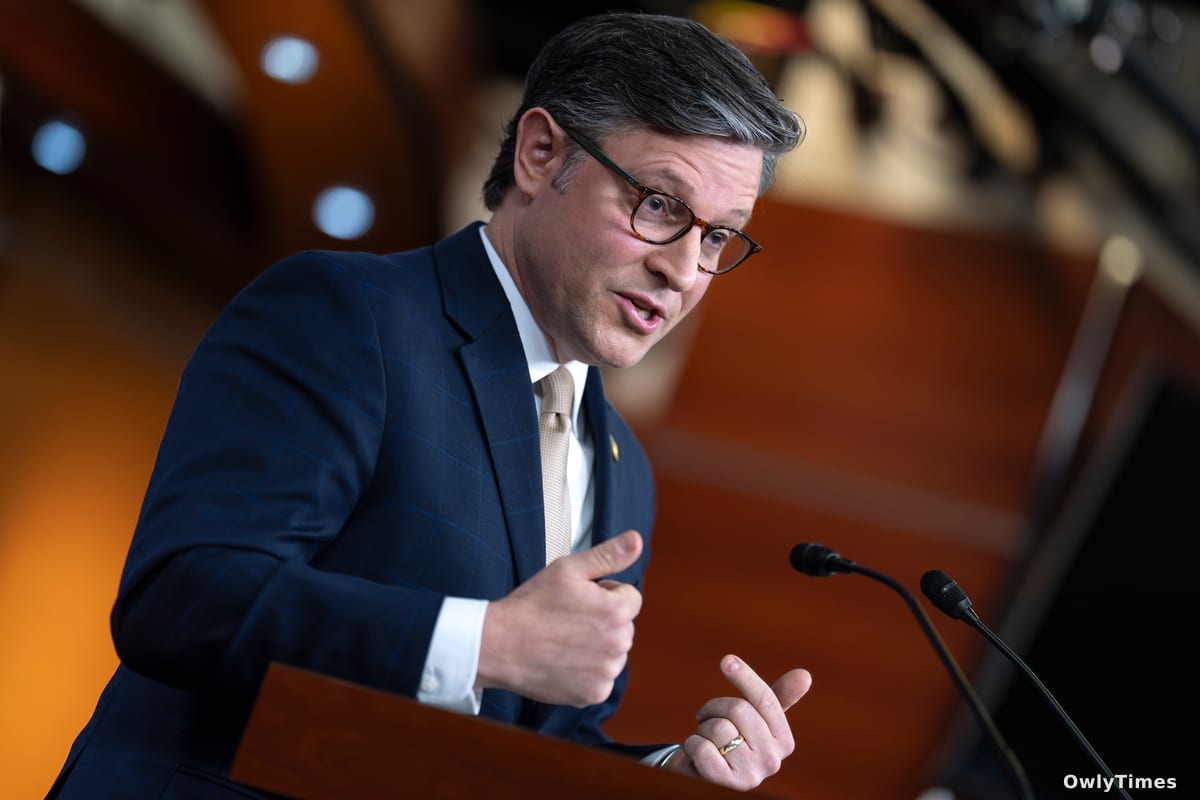

Speaker of the House Mike Johnson, R-La., is attempting to navigate the narrowest of legislative channels: securing a national security pillar while placating a rebellion within his own ranks. By reintroducing a renewal for Section 702 of the Foreign Intelligence Surveillance Act (FISA), Johnson is calculating that the looming April 30 expiration date will force the hand of holdouts who previously tanked the bill. The strategic gamble here is that by branding a three-year extension as a "reform" package—complete with new reporting requirements and criminal penalties for abuse—he can provide enough cover for wavering members to vote "yes" without granting the warrant requirement that privacy hawks demand.
The primary beneficiaries of this legislative push are federal intelligence agencies, which view the power to intercept electronic communications of foreign nationals as an indispensable tool for identifying threats. Conversely, the losers in this calculus are the privacy-focused coalition of Democrats and Republican hardliners who have long sought a judicial check on the FBI’s ability to search the data of Americans caught in the 702 dragnet. With nearly 350,000 foreign targets currently under surveillance, the sheer volume of "incidental" American data collection remains the central point of friction that Johnson’s latest proposal fails to structurally address.
The Illusion of Compromise
Johnson’s latest proposal attempts to bridge a divide that has paralyzed the House for weeks. While the bill introduces a requirement for the FBI to submit monthly explanations for reviews of American information to an oversight official, it stops short of the specific court-ordered warrant requirement that sank earlier efforts. Glenn Gerstell, former general counsel at the National Security Agency, describes the move as a strategic gesture—an attempt to provide the appearance of reform without fundamentally altering the operational capacity of the intelligence community.
However, the opposition is not buying the pivot. Elizabeth Goitein of the Brennan Center for Justice at New York University characterized the bill as a "straight reauthorization" rather than a substantive compromise. This highlights the fundamental tension of the moment: the intelligence community’s insistence that a warrant requirement would "overburden law enforcement," pitted against a growing bipartisan skepticism regarding the FBI’s ability to "self-police" and manage the data of U.S. citizens without external oversight.
Tensions Among the Ranks
The political maneuverings extend far beyond a simple vote count. Representative Jim Himes, D-Conn., had been pushing for a bipartisan, inclusive process, yet Johnson’s decision to move forward with a bill that largely ignores those collaborative efforts suggests a pivot toward a party-line strategy. This move has left even those who might be open to a middle ground, such as Representative Jamie Raskin, D-Md., actively lobbying against the proposal. Raskin’s opposition memo highlights the core contradiction: the FBI is effectively being asked to self-report abuses in a system that still permits searching American communications without judicial review.
Simultaneously, Johnson faces a flank attack from his own right. Representative Scott Perry, R-Pa., a former chair of the Freedom Caucus, has signaled that the current revisions do not go far enough to satisfy concerns regarding accountability for past surveillance overreach. The internal Republican divide mirrors the historic struggle between the "security state" consensus that defined post-9/11 policy and the modern populist movement that views these same institutions as inherently untrustworthy.
The Path to the Floor
The immediate test for Johnson’s strategy occurs when the House Rules Committee meets on Monday morning. This session will serve as the primary indicator of whether the Speaker has successfully coalesced enough support to clear the path for a floor vote. If the committee fails to advance the bill, it would suggest that the opposition—spanning from Raskin’s constitutional concerns to Perry’s demands for total accountability—has enough leverage to force a more radical rewrite of the surveillance statute before the April 30 deadline.





