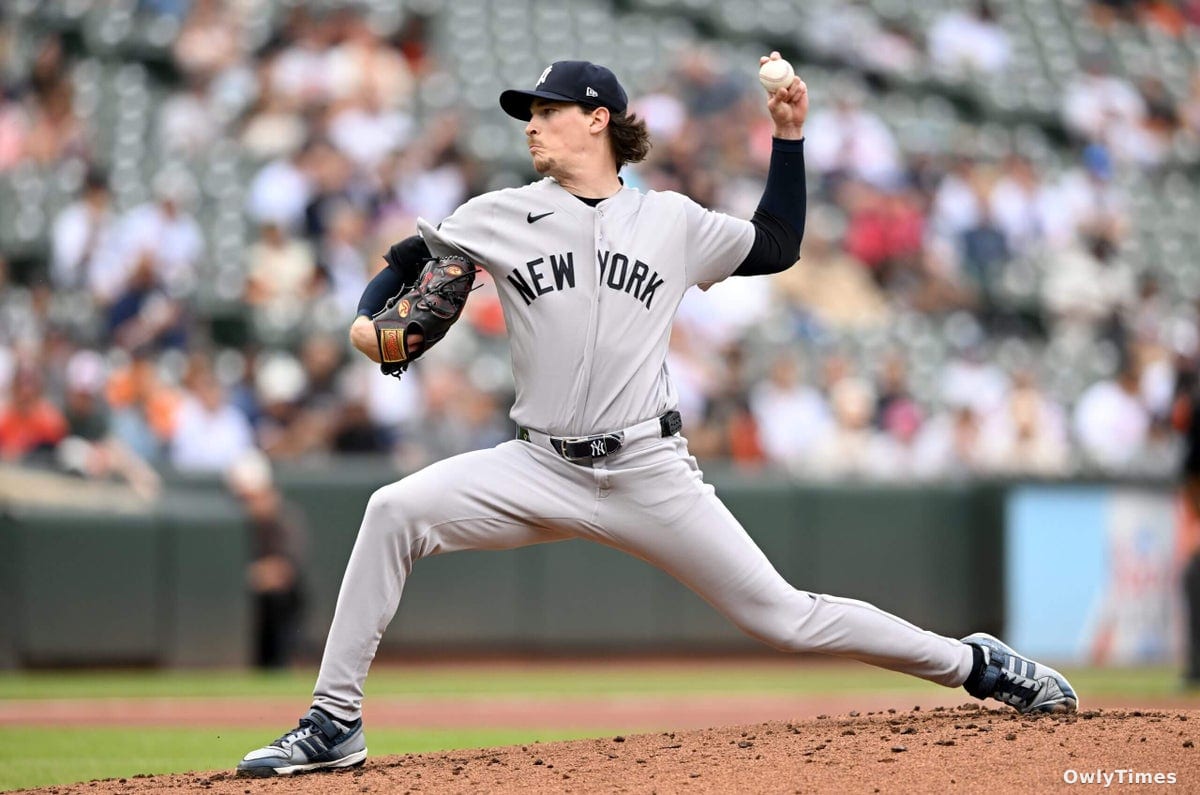

The roar of the crowd at Yankee Stadium on Wednesday night gave way to an uneasy hush as Max Fried, the formidable left-hander, abruptly exited the New York Yankees’ 7-0 loss to the Baltimore Orioles. He had thrown just 61 pitches, and the initial announcement from the Yankees—posterior soreness in his left elbow—was more than just a medical update. It was a carefully chosen phrase that, to a seasoned orthopedic surgeon, spoke volumes about the delicate dance between player health, team expectations, and the specter of a career-altering injury.
The Subtle Language of Injury Reports
When a pitcher of Fried’s caliber, a 32-year-old who underwent Tommy John surgery in 2014, leaves the mound, every word in the diagnosis is scrutinized. Dr. Laith Jazrawi, chief of sports medicine at NYU Langone, noted the specific use of "posterior soreness" to The Athletic, suggesting it was a deliberate choice. “They probably said that (posterior) because he’s had (a) previous Tommy John, and they didn’t want it to be confused with his prior Tommy John surgery,” Jazrawi explained in The Athletic report. This nuance highlights the immense pressure on athletes and organizations to manage public perception, even as they confront the physical realities of the game. Fried himself described feeling hyperextension, a sensation like "bang[ing] the back of that elbow, tricep area," yet expressed optimism he'd be back "sooner rather than later." Manager Aaron Boone echoed this sentiment, stating he was “not that concerned” after speaking with Fried.
Beyond Posterior Soreness: A Doctor's View
But beyond the headlines and optimistic statements, the reality of a pitcher's elbow is complex. Dr. Jazrawi, who has not treated Fried, acknowledged that posterior soreness isn’t “atypical” for pitchers, particularly those who have previously undergone ulnar collateral ligament reconstruction (commonly known as Tommy John surgery). However, he also outlined a "bazillion reasons" for elbow pain, ranging from triceps tendonitis to loose bodies or bone spurs—the latter often a result of the "sheer force" exerted on the elbow. While doctors will undoubtedly examine Fried's UCL, Jazrawi noted that the ligament is "usually pretty good" for players post-Tommy John. Yet, he didn't shy away from the underlying tension: "Could the ligament be failing again, like it failed the first time? Absolutely." This reveals the constant tightrope walk high-performance athletes face, where every ache could signal a minor setback or a catastrophic re-injury.
The High Stakes of a Pitcher's Arm
Fried’s exit comes at a pivotal time for the Yankees, who, despite mostly good health save for Giancarlo Stanton’s calf strain, are building a pitching rotation defined by massive investments and remarkable comebacks. Fried, along with Gerrit Cole and Carlos Rodón, represents the Yankees’ trio of starters on nine-figure contracts. The team's reliance on these arms is immense, making any injury a significant concern, not just for the current season but for the long-term strategic outlook of the franchise. Fried's performance this year, while strong overall with a 2.91 ERA through nine starts, has shown subtle shifts: walks are slightly up, strikeouts slightly down, and his average fastball velocity dipped to 93.8 mph from 94.8 mph in 2025, the year he earned his third All-Star nomination and finished fourth in the American League Cy Young Award vote with a 19-5 record and 2.86 ERA over 32 starts. These small metrics underscore the fragility of elite pitching.
A Season of Comebacks and Concerns
Fried's tests on Thursday in New York City will provide crucial answers. The Yankees have been buoyed by strong interim performances from Cam Schlittler, Will Warren, and Ryan Weathers, but the rotation's core strength hinges on its veteran anchors. The human drama here is palpable: the drive of an athlete to push through pain, the team’s calculated risks in multi-million dollar contracts, and the ever-present shadow of a career-threatening injury. This isn't just about a pitcher leaving a game; it's a vivid reminder of the physical toll exacted by the pinnacle of professional sports. The next couple of weeks will be telling, not least because the Yankees anticipate Gerrit Cole will finish his own Tommy John surgery rehabilitation and return to the rotation, adding another layer of high-stakes expectation to an already compelling narrative of resilience and recovery in the Bronx.

