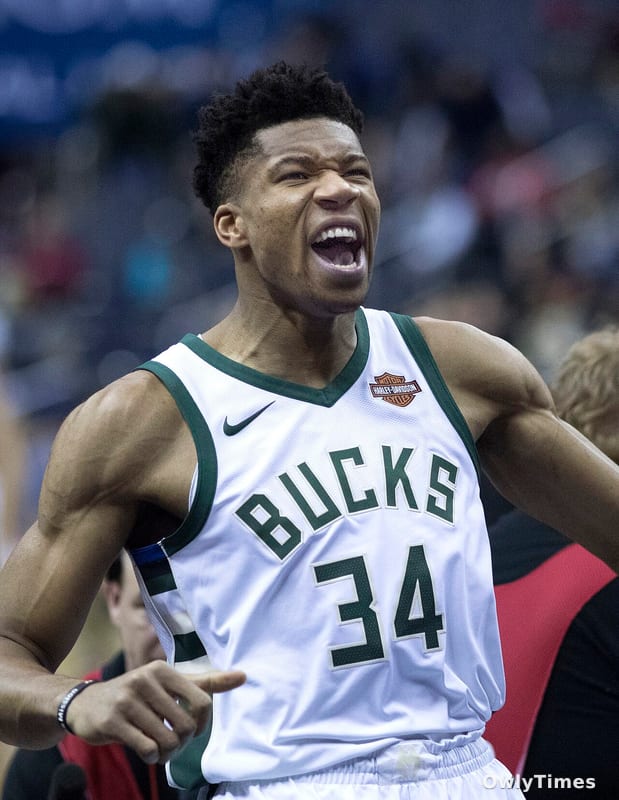

The air in Milwaukee felt thick with something beyond playoff disappointment Friday night, something closer to betrayal. Giannis Antetokounmpo, usually a beacon of stoicism, stood before reporters an hour before a nationally televised game against the Boston Celtics and, with a barely contained fury, accused the Milwaukee Bucks of disrespecting his desire to play. It wasn’t just a disagreement over medical clearance; it was a public dismantling of the relationship between a franchise player and the organization that built its recent success around him. This isn’t simply a story about a star’s injured knee, it’s a stark illustration of the power dynamics shifting in the NBA, where player agency is colliding with team control in a way we haven’t seen since the early days of free agency.
A Rift Beyond the Injury Report
The specifics are, at first glance, familiar. Giannis Antetokounmpo suffered a left knee hyperextension and bone bruise on March 15th, sidelining him for the past several weeks. The Bucks, with a dismal 30-47 record and already eliminated from playoff contention, reportedly want him to shut it down for the season, prioritizing long-term health. But Giannis, who has appeared in only 36 games this season – a significant drop from his usual 65-70 game average – vehemently disagrees. “I’m available to play today. Right now. I’m available. Do I look like I’m not available?” he challenged, his frustration palpable. The core of the issue isn’t whether he can play, but whether the Bucks are genuinely prioritizing his competitive spirit, or simply managing risk in a lost season. This isn’t about load management; it’s about a fundamental clash of wills.
Original reporting: Yahoo Sports.
The situation escalated rapidly when Antetokounmpo claimed the team “ghosted” him after he expressed his desire to return. According to Antetokounmpo, his initial conversation with coach Doc Rivers and general manager Jon Horst was straightforward – he wanted to play. After that, he alleges, no one approached him with a plan or discussed his status. This claim is now under investigation by the NBA, prompted by reports from Shams Charania of ESPN, who revealed potential inconsistencies in the Bucks’ statements regarding Antetokounmpo’s health. The league confirmed the investigation on Saturday, adding another layer of complexity to an already volatile situation. The NBA’s statement that the Bucks scheduled three-on-three scrimmages for Antetokounmpo last week, which he declined, further muddies the waters, seemingly contradicting his assertion of being healthy enough to play.
The NBPA Weighs In: A League-Wide Reckoning?
This isn’t happening in a vacuum. The National Basketball Players Association (NBPA) has already signaled its displeasure, a move that speaks volumes about the broader implications of this dispute. The NBPA, under the leadership of Tamika Tremble, has been increasingly vocal about protecting player rights and challenging what they perceive as overreach by team management. Doc Rivers’ dismissive response – “He’s just not healthy” – only served to inflame the situation, highlighting the disconnect between the coach’s assessment and Antetokounmpo’s self-evaluation. The tension here isn’t just about Giannis; it’s about setting a precedent. If teams can unilaterally decide to sideline healthy players, even superstars, it undermines the very foundation of player empowerment that has shaped the modern NBA.
The financial stakes are also significant. Antetokounmpo has one guaranteed season left on his contract, worth $58.5 million for the 2026-27 season, with a player option for 2027-28 at $62.8 million. His future with the Bucks, once seemingly secure, is now shrouded in uncertainty. The Bucks’ struggles this season, coupled with this public rift, raise serious questions about their ability to retain their superstar. The team’s decision to trade away key players like Jrue Holiday and Damian Lillard – moves intended to maximize their championship window – now appear to have backfired spectacularly. They’ve created a situation where their most valuable asset is openly questioning his commitment to the franchise.
Beyond the Headlines: A League at a Crossroads
What’s unfolding in Milwaukee is a symptom of a larger cultural shift within the NBA. The league is grappling with the consequences of prioritizing player health and safety, while simultaneously navigating the demands of a multi-billion dollar entertainment industry. The NBA’s player participation policies, designed to prevent “load management” and ensure competitive integrity, are proving to be increasingly difficult to enforce, especially when a player feels their competitive drive is being stifled. This isn’t just about basketball; it’s about the fundamental human need for agency and control. Giannis Antetokounmpo isn’t simply fighting for the right to play; he’s fighting for the right to define his own career, on his own terms.
The NBA’s investigation will likely reveal inconsistencies and potentially lead to sanctions for the Bucks. But the real question isn’t whether the Bucks violated a specific rule, it’s whether they fundamentally misunderstood their star player. As we head into a crucial offseason, with several other superstars facing contract decisions and potential trade scenarios, the league will be watching closely. Will other players follow Antetokounmpo’s lead and publicly challenge team decisions? Will teams become more collaborative in their approach to player health and management? Or will we see a further escalation of this power struggle, potentially leading to more fractured relationships and a more uncertain future for the NBA? The answer to that question will determine not just the fate of the Milwaukee Bucks, but the very character of the league for years to come.

