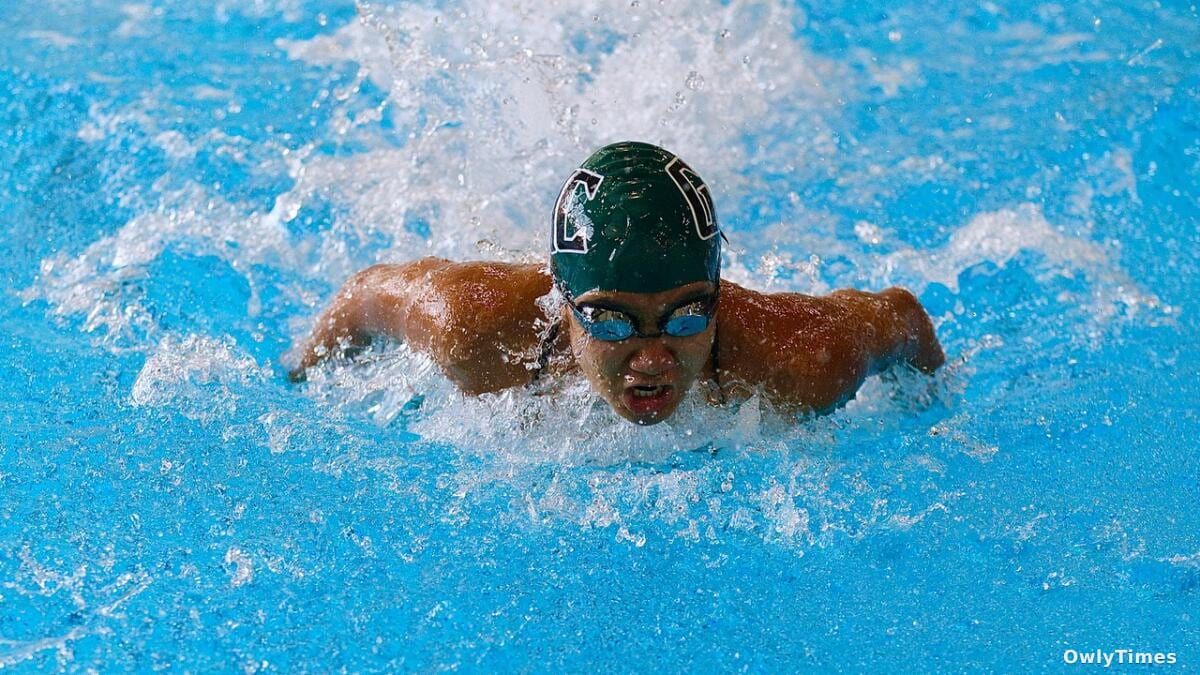

The water at East Los Angeles College was churning with more than just competition on Friday; it was rippling with the weight of a legacy in motion. As the Granada Hills Highlanders swept the boys’ and girls’ City Section swimming championships, the atmosphere felt less like a standard high school meet and more like a coronation. For the girls, scoring 458 points, this victory marked their fourth consecutive title, a testament to a program that has mastered the art of long-term consistency in a sport often defined by the fleeting nature of four-year student-athlete cycles.
The Architecture of a Dynasty
Under the guidance of coach Joshua Cheng, the Highlanders have become the gold standard for regional dominance. Now in his fifth year at the helm, the former Cleveland High swimmer has built a culture that thrives on internal competition as much as external rivalries. The numbers tell a story of clinical execution: the boys’ squad racked up a staggering 512 points, securing their third straight title and fourth total championship. When a team finishes with such a wide margin—the girls’ 458 points dwarfed runner-up Cleveland’s 226—it highlights a structural depth that few high school programs ever achieve.
The narrative of this dynasty is perhaps best embodied by Ryan Zheng. The Princeton-bound captain closed out his high school career with a flourish, winning the 200 and 500 freestyles for the third consecutive year. His performance in the 200 freestyle, clocking in at 1:41.75, wasn't just a win; it was an improvement over his 1:42.23 effort from the previous year’s finals at Valley College. For athletes like Zheng, the pressure to repeat is immense, yet the consistent ability to shave seconds off one's own record speaks to a disciplined, year-round commitment that mirrors the intensity of collegiate athletics.
Beyond the Podium
While the team trophies highlight the collective, the individual races captured the human drama of the sport. Isabella San Jose emerged as a standout, claiming victory in the 200 individual medley in 2:08.64 and adding a win in the 100 breaststroke at 1:04.66. Meanwhile, the rivalry between GALA’s Jordyn Hale and co-captain Elaina Brier—who is committed to UC Santa Cruz—provided a vivid reminder that even in a team-dominated event, the individual duel remains the heartbeat of the sport. Hale’s successful defense of her 50 freestyle crown in 24.14 seconds, slightly faster than her 24.00 mark last year, showcased the razor-thin margins that decide these championships.
The resilience of these athletes was tested by the unpredictable nature of the sport, as seen when the Highlanders' 200 medley relay team faced a disqualification after officials ruled Kenny Brier left early. Yet, rather than fracturing, the team’s response was indicative of their overall "unity," as described by Cheng. The ability to absorb a setback and continue to dominate the point standings is what separates a strong team from a dynasty. This cohesion is the true engine behind the Highlanders' success, transforming individual talent into a singular, relentless force.
The Weight of Expectation
As the chants of "One more!" echoed from the pool deck, it became clear that for Granada Hills, the objective is no longer just to win, but to chase history. The girls’ squad is now two titles away from matching the school-record six consecutive championships achieved between 1995 and 2000. While the scoreboard currently favors the Highlanders, the next reading of the City Section competitive landscape will reveal whether the gap between Granada Hills and challengers like Palisades—which finished second for the fourth year in a row—will continue to widen or if the field can find a way to dismantle the current status quo. For now, the dynasty remains unchallenged, sitting exactly where they believe they belong: at the top.

