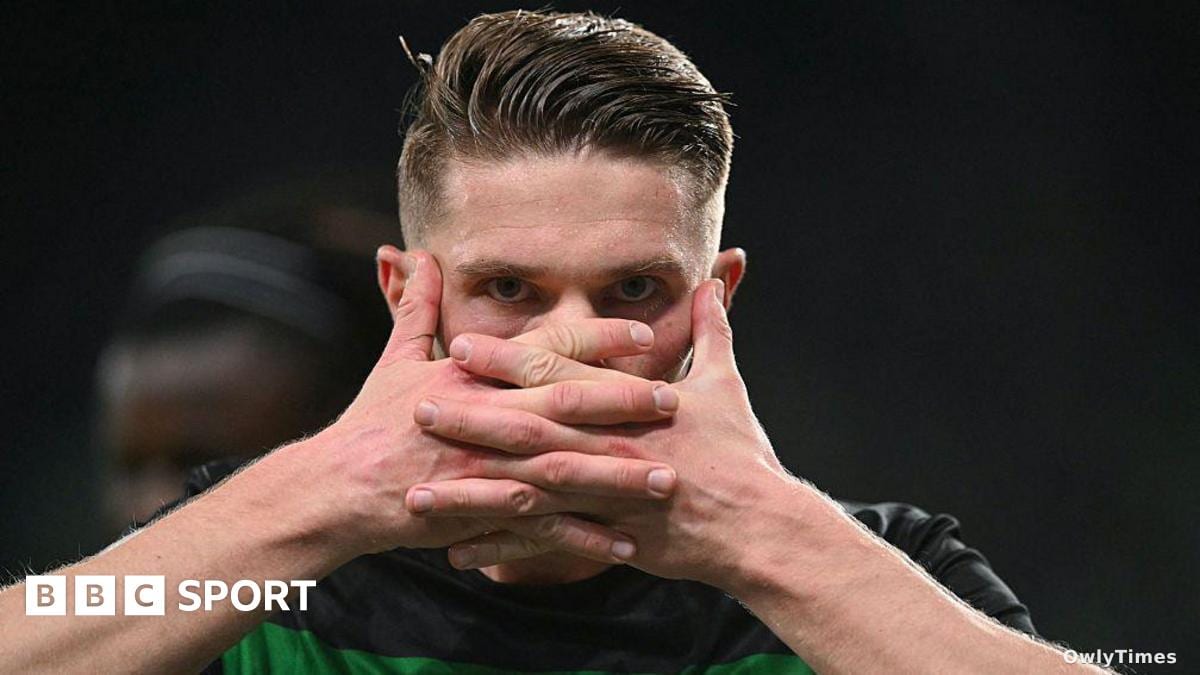

The chipped paint on the stadium wall seemed to vibrate with anticipation last May. Viktor Gyokeres, fresh off leading Sporting CP to back-to-back Portuguese league titles, was on his way to the team bus when he saw it: a fan-made sign, already calling for a statue in his honor. He paused, a genuine smile breaking across his face, and offered a simple message to the celebrating crowd: “I love you all.” That moment, a snapshot of pure adoration, feels impossibly distant now, overshadowed by a summer of fractured loyalty and a Champions League quarter-final reunion with the club he so recently electrified. Tuesday night, as Sporting host Arsenal, it won’t just be a clash of footballing titans; it will be a reckoning with the complicated realities of ambition, gratitude, and the modern game.
This isn’t simply a story about a player returning to a former club. It’s a microcosm of the shifting power dynamics within European football, where even historically dominant leagues like the Premier League exert a gravitational pull on talent from developing nations. Sporting’s improbable run to the Champions League quarter-finals – the first in the Champions League era – isn’t just a sporting achievement; it’s a testament to shrewd financial management and a remarkably effective scouting network operating in the shadow of football’s financial giants. While seven of the eight teams remaining in the competition rank among the world’s top 15 in revenue, Sporting doesn’t even crack the top 30, according to Deloitte’s Football Money League. Their success is built on identifying undervalued talent, maximizing player potential, and then, inevitably, facing the challenge of keeping those stars from being poached by wealthier clubs.
This piece references the the BBC report.
The Gyokeres case exemplifies this struggle. Arriving from Coventry City in 2023 for around 20 million euros, a sum considered risky at the time, he exploded onto the Portuguese scene, scoring 97 goals in 102 matches. Only three players in Portuguese history – Fernando Peyroteo, Eusebio, and Mario Jardel – boast a better goals-per-game ratio. “He was one of the best, if not the best, deals in their history,” says Ricardo Sa Pinto, a Sporting legend and former Portugal international. The club’s financial health, posting a profit for four consecutive seasons totaling 82.3 million euros, allowed them to make the investment, but couldn’t guarantee they’d retain their prize asset. The allure of the Premier League, the promise of a “different level” as Gyokeres himself put it, proved too strong.
The manner of his departure, however, left a bitter taste. Failing to report for pre-season, missing training sessions, and refusing to return to Lisbon created a public standoff. It wasn’t a clean break, and the question of how Sporting fans would receive him on Tuesday hung heavy over the summer. A recent CNN Portugal/Mais Futebol poll revealed a surprisingly forgiving fanbase, with 50% advocating for an ovation. Yet, forgiveness doesn’t erase the feeling of being used, of a player prioritizing personal ambition over the collective success that had initially defined his time in Lisbon. Rui Borges, Sporting’s manager, attempts to frame the situation as a natural progression in Gyokeres’ career, emphasizing that the club “respected that.” But the underlying tension is palpable.
Beyond the headlines of transfer sagas and Champions League ambitions, Sporting’s story is a compelling case study in sustainable club management. They’ve stabilized at the board level, fostering a cohesive decision-making process and a strong relationship with the media. The introduction of VAR has also leveled the playing field in Portuguese football, addressing a long-standing perception of bias. This stability, coupled with a consistently effective scouting network – evidenced by successful signings like Ivan Fresneda, Maxi Araujo, and Ousmane Diomande – has allowed them to replace departing stars without a significant drop in performance. Sa Pinto points to their Europa League semi-final run in 2012, where they defeated a heavily favored Manchester City, as proof of their ability to overcome the odds.
But can they overcome Gyokeres? His impact on Sporting was undeniable, as Sa Pinto bluntly states, “Without Gyokeres, it wouldn't have been the same Sporting.” The question isn’t just whether they can win the tie against Arsenal, but whether Sporting can demonstrate that their success isn’t solely reliant on individual brilliance. Tuesday night will be a test of their collective spirit, their tactical resilience, and their ability to silence the narrative that their fairytale run was built on borrowed time. Will the fans offer the ovation many expect, or will the lingering resentment of his departure overshadow the memories of his goals? More broadly, will Sporting’s model of sustainable growth prove viable in an era increasingly dominated by state-backed clubs and financial disparity? That’s the question the footballing world will be watching for, long after the final whistle blows at the Estadio Jose Alvalade.