
Beyond the Bonus: How ‘Industry’ Uses Clothing to Decode Power and Status
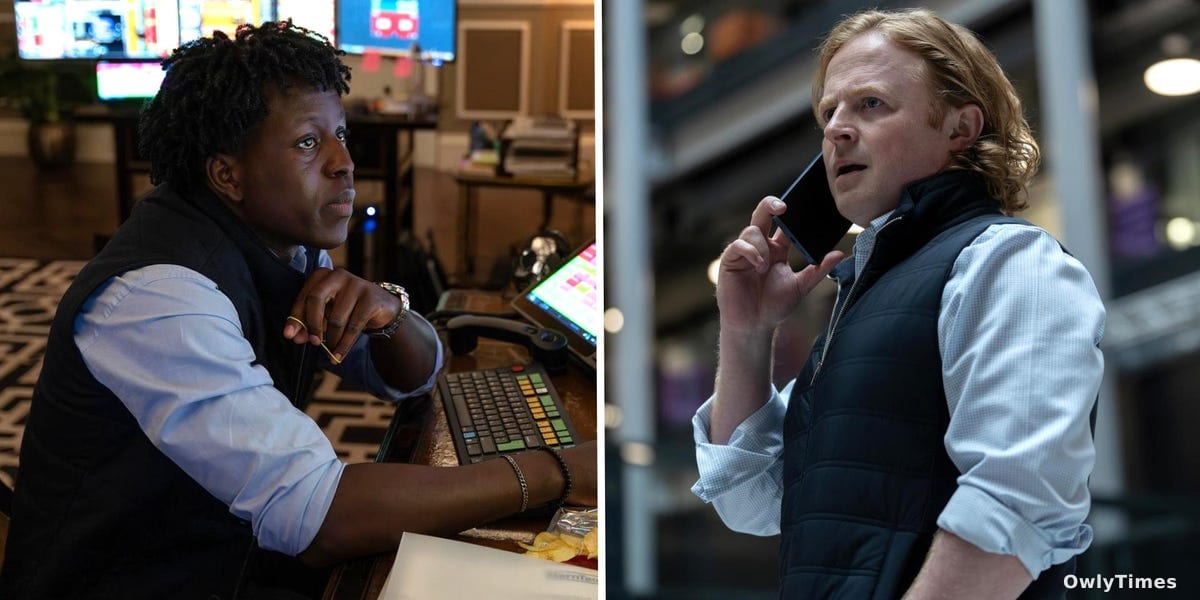
The cutthroat world of HBO’s “Industry” isn’t just about complex financial instruments and all-night trading sessions. It’s a world acutely aware of signaling, and, as the show’s meticulous costume design reveals, those signals are often communicated not through what you say, but what you wear. A seemingly minor detail – the vest, or “gilet” as costume designer Laura Smith prefers – has become a surprisingly potent symbol of status, background, and ambition within the show’s hyper-competitive financial landscape. This isn’t merely about aesthetic choices; it’s a shrewd observation about the performative nature of power in the modern workplace, and a reflection of how deeply ingrained class distinctions remain.
Based on the original Business Insider report.
Background & Context: The Evolution of Financial Dress Codes
The focus on clothing as a marker of status in “Industry” taps into a long history of dress codes within the financial world. Traditionally, investment banking favored conservative tailoring – suits, ties, and polished shoes – projecting an image of stability and trustworthiness. This was a deliberate attempt to emulate the established aristocracy and signal belonging to an exclusive club. However, the rise of hedge funds and the tech industry introduced a more relaxed, yet still carefully curated, aesthetic. The fleece vest, initially a practical outdoor garment, became a symbol of this new breed of financier: comfortable, agile, and less concerned with traditional formalities.
What’s particularly interesting is how “Industry” doesn’t present these styles as simply evolving organically. The show highlights the conscious choices characters make about their clothing, and how those choices are interpreted by others. This isn’t just about following a trend; it’s about actively constructing an identity and attempting to navigate a complex social hierarchy. The show’s attention to detail builds on a trend in prestige television – from “Succession” to “Billions” – where costume design functions as a crucial layer of storytelling, revealing character motivations and power dynamics that dialogue alone cannot convey.
Decoding the Gilet: Old Money vs. New Money
Laura Smith’s deliberate choices regarding vest styles are central to this analysis. The distinction between the “classically old money” vests worn by characters like Lord Norton (Andrew Havill) – a $320 Schöffel vest representing enduring quality and understated luxury – and the more technical, branded vests favored by those climbing the ranks is significant. This isn’t simply about price point; it’s about a different philosophy of consumption. Old money prioritizes longevity and subtle craftsmanship, while new money often seeks visible displays of success.
The show further differentiates between the vest choices of those working in different sectors. Kwabena (Toheeb Jimoh), working in private wealth, sports a gilet specific to Mayfair, while Kenny (Conor MacNeill), a Pierpoint alum, wears a vest that consciously references his past. This detail, a callback to his time at Pierpoint, is a subtle but powerful reminder of his trajectory and the networks he’s cultivated. The significance here is that clothing isn’t just about personal preference; it’s about belonging to a specific tribe and signaling your allegiance. Even the decision not to wear branded merchandise, as seen with Whitney (Max Minghella), becomes a statement of independence and ambition.
What This Means: Implications for Perception and Power
The meticulous attention to clothing in “Industry” has real-world implications. It underscores the pervasive influence of visual cues in professional settings, and how easily perceptions can be shaped by appearance. While overt dress codes may be loosening, the pressure to conform to unspoken norms remains strong, particularly in industries like finance where image is paramount. This is especially true for those attempting to break into established circles.
For the public, the show offers a fascinating glimpse into a world often shrouded in secrecy. It demystifies the subtle codes of conduct that govern behavior within these institutions. For the industry itself, “Industry” serves as a mirror, reflecting back the anxieties and aspirations of those who inhabit it. The show’s popularity suggests that these anxieties resonate deeply. And for policymakers, the show highlights the potential for systemic biases to be reinforced through seemingly innocuous cultural practices. The emphasis on appearance can exacerbate existing inequalities, creating barriers to entry for those who don’t fit the mold.
Looking Ahead: The Future of Financial Fashion
As “Industry” continues, it will be crucial to observe how these sartorial signals evolve. Will the emphasis on “quiet luxury” intensify, or will new trends emerge? Will characters continue to use clothing to strategically navigate the power dynamics of the financial world? One potential storyline could explore the tension between authenticity and performance – how characters attempt to reconcile their true selves with the image they project.
Furthermore, the show’s exploration of company merchandise offers a compelling avenue for future analysis. The divide between those who embrace branded clothing and those who reject it could become a more pronounced symbol of internal conflict within organizations. Ultimately, “Industry” isn’t just a show about banking; it’s a show about the complex interplay between identity, power, and the clothes we wear. And in a world increasingly obsessed with image, those dynamics are more relevant than ever.