
Are we really surprised the US military is scrambling to defend against drones? The narrative coming from Washington is one of belated awakening, of lessons learned from Ukraine finally sinking in. The real story here isn't a sudden realization of the drone threat – it’s a decade of underinvestment and political finger-pointing masking a consistent failure to prioritize a demonstrably evolving battlefield. We’ve been “thinking seriously” about counter-drone technology for ten years, as Mark Cancian of the Center for Strategic and International Studies points out, yet found ourselves caught flat-footed when Iran unleashed a swarm.
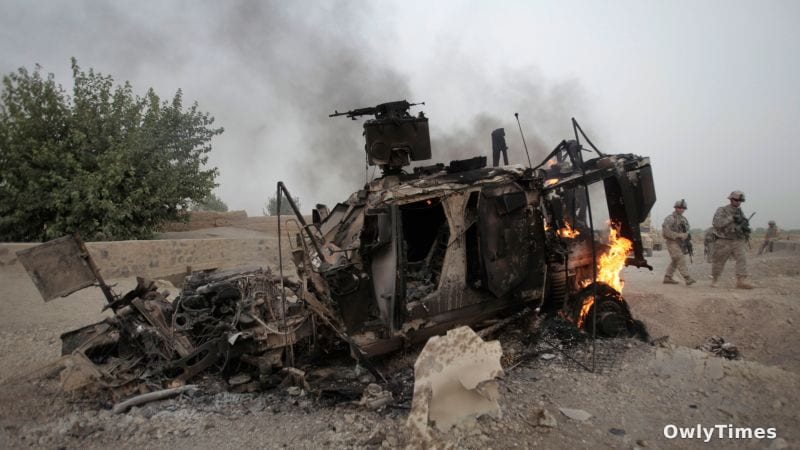
The echoes of the early days of the Iraq War are deafening. Back then, it was improvised explosive devices (IEDs) that redefined the battlefield, accounting for half of combat casualties in Iraq by 2006 and roughly 30% in Afghanistan. Now, it’s one-way drones, responsible for the majority of the roughly 200 US troop injuries sustained in recent operations, eight of which were serious. The pattern is chillingly familiar: a new, asymmetric threat emerges, the US military reacts with urgency and spending, and then, seemingly, complacency sets in until the next crisis. Chairman of the Joint Chiefs of Staff Gen. Dan Caine and Defense Secretary Pete Hegseth recently briefed lawmakers, admitting US air defenses can’t intercept all incoming drones – a stunning admission given the years of warnings.
The immediate response has been a flurry of purchases. The Army has acquired 10,000 Merops and 13,000 Bumblebee counter-drone systems in the last two months, a significant investment totaling over $262 million through the newly formed Joint Interagency Task Force-401. But quantity doesn’t equal preparedness. It’s unclear how many of these systems were already deployed, or how quickly they can be effectively integrated into existing defenses. This isn’t about a lack of technology, it’s about a lack of foresight. George Barros of the Institute for the Study of War described the national security community as “aghast” that the US hadn’t better internalized the lessons from Ukraine, where drones have fundamentally altered the nature of warfare. That’s not a compliment; it’s an indictment.
The blame game is already in full swing. Pentagon spokesperson Sean Parnell squarely blames the Biden administration for ignoring “the battlefield evidence” and failing to adequately fund and prioritize drone defense. While partisan squabbling is predictable, it obscures a deeper issue: a systemic reluctance to fully commit to adapting to evolving threats until they become unavoidable catastrophes. The current administration, through Hegseth’s “Drone Dominance” initiative, is attempting to course-correct, but the damage – and the casualties – have already been done. The irony is thick: the building struck in Kuwait, killing six US soldiers, was designed to withstand IEDs, offering little protection against a threat from above.
This article draws on reporting from CNN.
This isn’t simply a technological problem; it’s a bureaucratic and political one. A US official, speaking on background, lamented the slow pace of congressional appropriations, particularly resistance to multi-year purchasing agreements. The military, they said, has been “pushing as hard and as fast as they can,” but is hampered by a system designed for fighting yesterday’s wars, not tomorrow’s. Even within the military, there’s a sense of frustration, with some referring to Secretary of the Army Dan Driscoll – dubbed the “drone guy” by President Trump – as a lone voice advocating for aggressive investment in counter-drone technology.
The dynamic will be relentless. As Cancian predicts, we’ll see a constant cycle of measure, counter-measure, and counter-counter-measure, mirroring the IED experience. Iran and other adversaries will analyze US responses and adapt their drone tactics accordingly. The US will then be forced to react again, perpetually playing catch-up. The question isn’t if the next generation of drones will render current defenses obsolete, but when. Watch for a significant escalation in congressional debate over defense spending in the next six months, specifically focusing on the allocation of funds for rapidly deployable, adaptable counter-drone systems. The real test won’t be the money spent, but whether the US military can break the cycle of reactive adaptation and proactively prepare for the next airborne threat.





