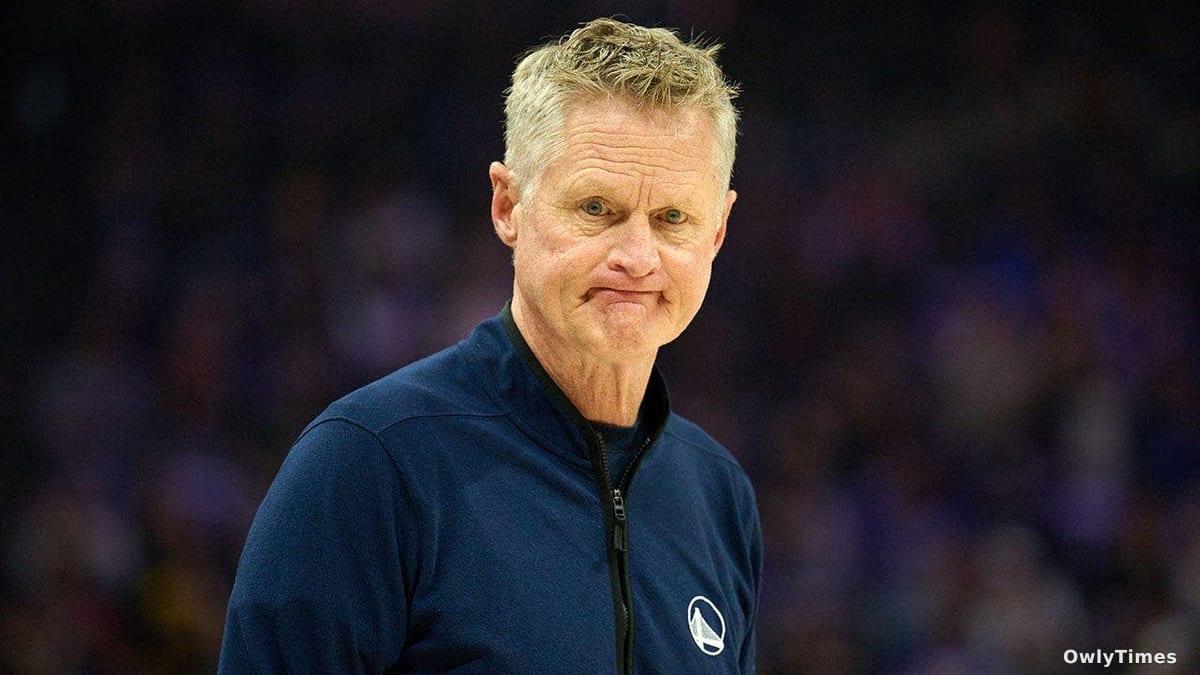

The sideline at the Chase Center has become an increasingly volatile stage, and for Steve Kerr, the heat is rising. Long celebrated as the architect of a modern dynasty, the Golden State Warriors head coach now finds himself at the center of a different kind of drama—one that pits the legacy of four championships against the friction of an increasingly polarized locker room and front office. While the surface narrative suggests he is on life support in his current role, the reality is far more complex than a simple win-loss record.
The Myth of the Third-Base Triple
Critics of the current regime, such as Outkick’s Dan Dakich, have long argued that Kerr’s success is built on a foundation laid by his predecessor, Mark Jackson. The argument suggests that Kerr stepped into a luxury vehicle he didn't build, famously characterizing his arrival as starting on third base while "thinking he hit a triple." It is a stinging critique for a man who has undeniably presided over one of the greatest runs in NBA history. Yet, for all the talk of internal friction, the industry remains divided on whether his tenure is truly nearing a terminal point or if he is simply navigating the inevitable exhaustion of a long-term professional marriage.
The Martyrdom Narrative vs. Corporate Reality
A recent report from ESPN senior NBA writer Marc Spears ignited a firestorm, suggesting that Kerr’s outspoken stance on social justice, gun violence, and racism has led to him being "stifled" within the organization. When pressed by host Mark Willard on 95.7 The Game to identify who was doing the stifling, Spears opted for a telling silence, offering only a smile. This ambiguity has fueled speculation that the organization, including owner Joe Lacob, may be growing weary of the constant political spotlight. Nick Friedell of The Athletic bolstered this sentiment, noting that league and team sources indicated Kerr’s political candor has caused internal frustration throughout the season.
The irony here is palpable. For years, Kerr has utilized his platform to advocate for causes ranging from the Democratic National Convention—where he appeared on August 19, 2024, alongside Steph Curry—to his vocal criticism of Donald Trump. However, his silence on controversial international issues, such as his 2019 refusal to comment on China, has left him vulnerable to charges of hypocrisy. When a coach becomes a mouthpiece for partisan politics, the line between personal conviction and organizational liability blurs.
Why the Fans Are Tuning Out
Beyond the front office, there is a tangible exhaustion among the fanbase. For many, the arena was once a sanctuary from the relentless churn of the news cycle; today, it feels like an extension of it. When figures like Kerr weigh in on complex issues like ICE policies—often with rhetoric that has required later walk-backs—it alienates segments of the audience who simply want to see the ball move, not a stump speech. The tension between the "shut up and dribble" sentiment and the modern athlete’s desire to influence social change has created a rift that even the most successful coaches struggle to bridge.
Ultimately, if Kerr’s time in the Bay Area does conclude, it will likely be a matter of professional attrition rather than political persecution. In the high-stakes world of professional sports, performance usually provides immunity for almost any personal or public transgression. The next reading of team internal sentiment and on-court performance will show whether the organization views Kerr as a unifying leader or a distraction that has finally outweighed his championship pedigree.

