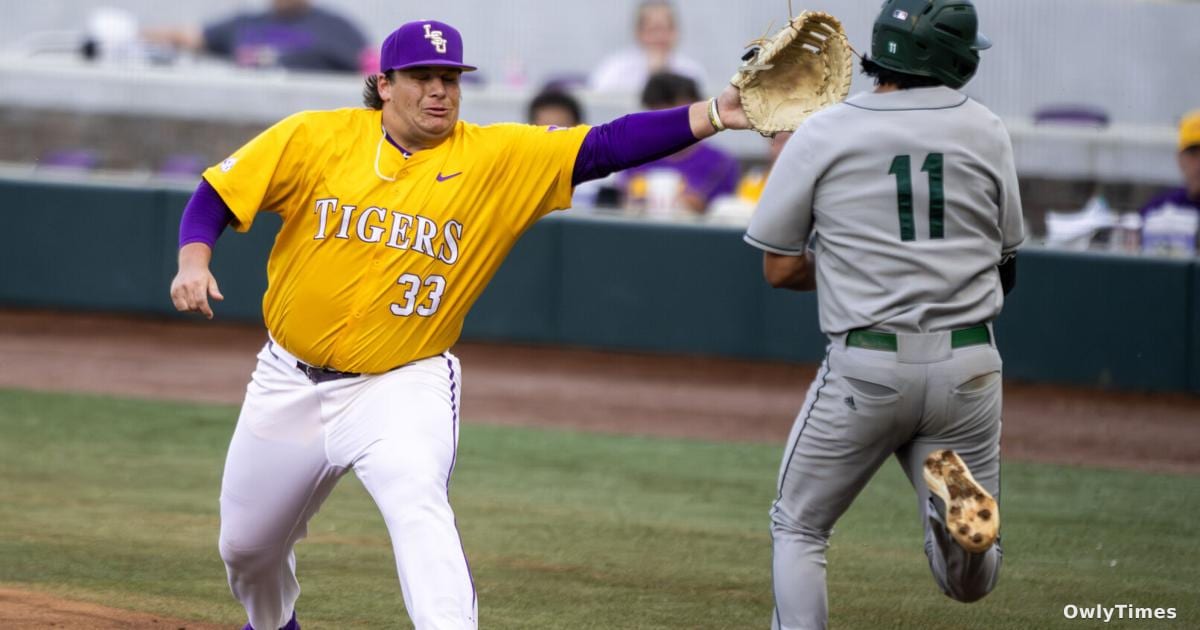

The air in Alex Box Stadium hung thick with expectation on Sunday, March 8th, 2026. Not the buoyant expectation of a dominant LSU performance, but a growing, uneasy tension. Legendary coach Skip Bertman, a specter of past glories, was present, a silent witness as Sacramento State systematically dismantled the home team’s offense. The final score – Sacramento State 6, LSU 1 – wasn’t just a loss; it was a jarring disruption of the narrative surrounding college baseball’s perennial powerhouse, a narrative built on SEC dominance and national championship aspirations. It was a moment that hinted at a shift, a quiet tremor in the foundations of the sport’s established order, and it spoke to something larger than just one weekend series.
This wasn’t supposed to happen. LSU, consistently ranked among the nation’s top programs, entered the series as heavy favorites. They boasted a roster brimming with talent, including first baseman Zach Yorke and centerfielder Derek Curiel, and played before a passionate home crowd. Yet, Carson Timothy, Sacramento State’s pitcher, held them to a single run over 6.2 innings, a performance that wasn’t just statistically impressive, but psychologically damaging. Consider this: LSU’s team batting average entering the series was .295, among the highest in the SEC. Over the three games, that number plummeted to .212 against Sacramento State’s pitching staff. This isn’t simply a case of a hot pitcher; it’s a systemic failure of a highly-regarded offense to adjust, to overcome, to respond.
The images from the game tell a story beyond the box score. Yorke, usually a reliable fielder, misplaying a routine fly ball in the third inning, a dropped strike three that allowed a run to score. Jay Johnson, LSU’s head coach, locked in a heated argument with the umpire, a visible manifestation of the frustration boiling over on the LSU bench. These aren’t isolated incidents; they’re symptoms of a team unraveling under pressure, a team accustomed to imposing its will, suddenly finding itself on the receiving end. The photos of Sacramento State players celebrating, of Trevor Wilson exulting after the final out, aren’t just snapshots of victory; they’re visual evidence of a power dynamic shifting.
Reporting from theadvocate.com informs this analysis.
But to frame this as simply an upset would be a disservice to the broader context. College baseball is undergoing a quiet revolution, fueled by the transfer portal and increasingly sophisticated scouting. Programs like Sacramento State, historically overshadowed by the SEC giants, are now able to assemble competitive rosters with a blend of homegrown talent and experienced transfers. The NCAA’s relaxed transfer rules, intended to empower student-athletes, have inadvertently leveled the playing field, allowing mid-major programs to poach talent from power conferences. Sacramento State’s roster featured several players who previously played at Power Five schools, players seeking more playing time or a different program fit. This isn’t about LSU being “bad”; it’s about the competitive landscape becoming demonstrably more challenging.
The implications extend beyond Baton Rouge. LSU’s struggles, and the rise of programs like Sacramento State, are forcing a reckoning within the SEC. For years, the conference has operated under the assumption of inherent superiority, attracting the best recruits and dominating the national rankings. But that dominance is no longer guaranteed. The financial disparities between SEC programs and their mid-major counterparts remain significant – LSU’s athletic budget is over $200 million, dwarfing Sacramento State’s $40 million – but the ability to acquire talent is becoming increasingly democratized. The question now isn’t just if a mid-major program can win a national championship, but when. And LSU’s humbling weekend at the hands of Sacramento State serves as a stark warning: complacency is a luxury no program can afford. The era of SEC invincibility may be drawing to a close, replaced by a more unpredictable, and ultimately more compelling, era of college baseball. Will LSU, and the rest of the SEC, adapt to this new reality, or will they become relics of a bygone era? That’s the story to watch as the 2026 season unfolds.

