
$21 Million Per Flight, Unlocked: Lufthansa’s 787 Business Class Certification Finally Clears, Signaling a Shift in Premium Air Travel
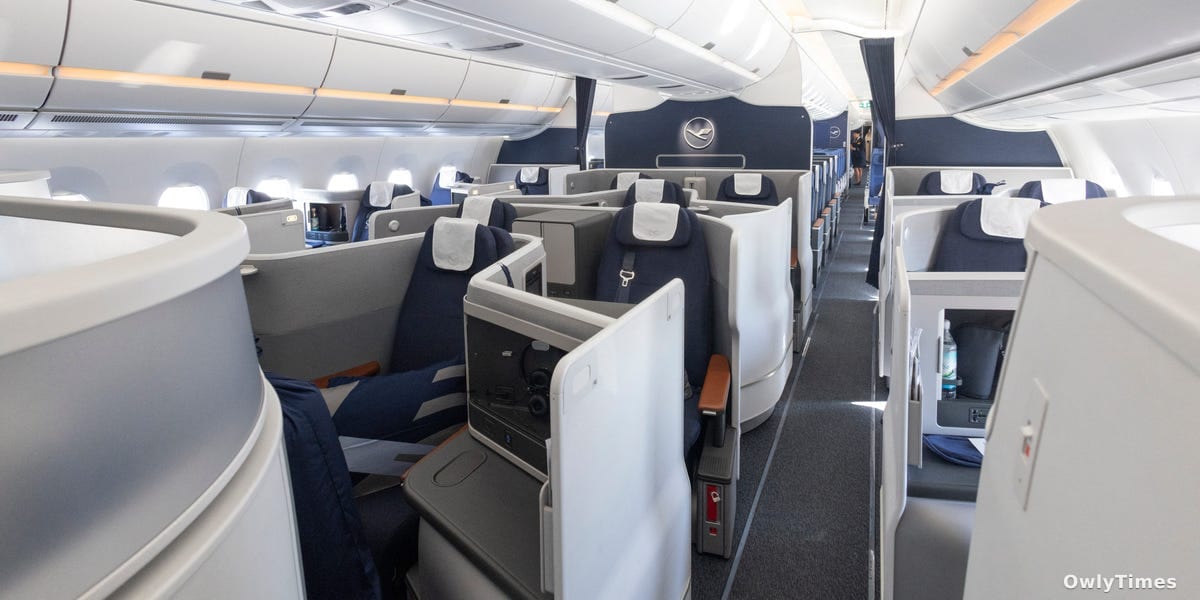
For 16 months, Lufthansa flew its newest Boeing 787 Dreamliners with up to 85% of its premium cabin unsold. That equates to roughly $21 million in potential revenue lost per flight, calculated by multiplying the 24 unsold seats by an average business class fare of $8,750 – a figure consistent with Lufthansa’s long-haul routes and competitor pricing. Now, after a protracted certification battle with regulators, the German flag carrier can finally begin selling tickets for its highly anticipated Allegris business class on the 787, a move that underscores the complex interplay between aircraft design, safety standards, and the lucrative world of premium air travel.
Source material: Business Insider.
The core issue wasn’t a flaw in the Allegris cabin itself – lauded for its five distinct seat configurations offering varying levels of privacy and comfort – but rather the geometry of the 787 Dreamliner. Unlike the Airbus A350, where Allegris debuted in May 2024, the 787’s fuselage presented a tighter usable footprint and different contouring. This seemingly minor difference created a major hurdle: demonstrating to aviation authorities that passengers could safely and quickly evacuate from every seat, regardless of its staggered or partially enclosed design, in an emergency scenario. The delay highlights a growing tension between airlines’ desire for innovative cabin layouts and the stringent, non-negotiable requirements of aircraft safety certification.
The financial implications for Lufthansa were substantial. While the airline continued to operate the 787s, limiting sales to only the four front-row Business Class Suites meant a significant underutilization of a key revenue stream. This occurred during a critical period for Lufthansa, which is executing a multi-billion dollar fleet overhaul and striving to restore profitability after years of challenges including maintenance issues, aircraft shortages, and labor disputes. The decision to retrofit existing Airbus A380s with an already-certified business class seat, rather than risk a similar certification process with Allegris, further illustrates the cost and complexity of this situation.
By mid-April, Lufthansa expects to increase the number of sellable business class seats on its 787s to 25, with three remaining blocked in the second row. While the airline hasn’t explicitly confirmed full certification, the opening of bookings for the expanded cabin suggests a significant step forward. The pricing structure reflects the tiered nature of the Allegris experience: the standard “Classic” seats are available with the premium fare, while access to the coveted first-row suites, “Privacy” seats, “Extra Space” seats, and “Extra Long Bed” options require additional fees. This tiered approach, while maximizing revenue potential, also introduces a new layer of complexity for passengers navigating the booking process.
Lufthansa’s fleet expansion plans are ambitious, with eight Allegris-equipped Dreamliners currently in service and 29 expected by the end of 2027. These aircraft are slated to serve key routes from Frankfurt to destinations including Rio de Janeiro, Shanghai, and New York, signaling a strategic bet on the demand for premium travel in these markets. However, the 747 double-deckers present a new challenge: a split business class configuration, with the lower deck featuring Allegris and the upper level retaining the original cabin. This patchwork approach, while pragmatic, could create inconsistencies in the passenger experience and potentially dilute the brand identity of the Allegris cabin.
What this means for your wallet: Expect to see increased competition on long-haul routes as Lufthansa fully deploys its Allegris-equipped 787s. While premium fares may remain high, the increased capacity could lead to more availability and potentially, targeted promotions. The key question for consumers is whether the enhanced comfort and privacy offered by Allegris – and the associated price tag – will justify the upgrade over competing business class products. Watch closely for Lufthansa’s load factors on these routes in the coming months; a consistently high occupancy rate will signal that the investment in Allegris, and the arduous certification process, were ultimately worth the cost.





