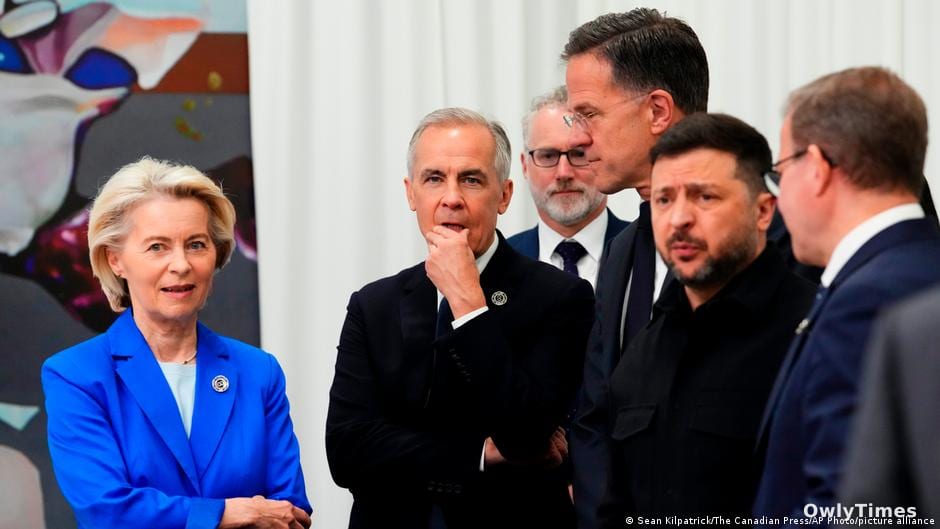

The declaration by Canadian Prime Minister Mark Carney at the Davos summit on May 23, 2026, that the existing global order is effectively dead serves as a cold-eyed assessment of a transition already underway. By framing the current geopolitical shift not as a clash of democratic versus autocratic ideals, but as a structural pivot between fossil fuels and electrification, Carney is defining the parameters of a new, resource-driven reality. This move is a strategic attempt to re-center the conversation on energy sovereignty, forcing nations to recognize that the security architecture of the 21st century will be built on the grid rather than traditional military alliances.
The Bifurcation of Global Power
The "second Cold War" described in the DW analysis suggests a world where geopolitical alignment is dictated by energy infrastructure. In this paradigm, who benefits and who loses is determined by how quickly a nation can decouple from legacy fuel systems. Countries that have anchored their economies to established carbon-based trade networks now face the highest risk of disruption, while those leading the transition to electrification gain significant leverage in the emerging power hierarchy. Much like the Cold War era, where economic blocs were solidified by trade and security pacts, today's states are being forced to choose between competing technological and energy ecosystems.
The Strategic Dilemma for Middle Powers
As the relative influence of the United States wavers and the regional dominance of China expands, "middle powers" find themselves in a precarious position. Their strategic calculus involves a delicate balancing act: maintaining historical security ties to the West while managing the economic gravity of an increasingly integrated Asian market. The central contradiction here is that these nations require the stability of the rules-based order that Carney declared finished, yet they are simultaneously forced to build independent energy capacities to survive the very instability that order’s decline creates. The path toward autonomy is heavily constrained by existing economic dependencies, making a unified "third way" for these middle powers more of a theoretical aspiration than a current political reality.
Constraints on Diplomatic Autonomy
The ability of middle powers to forge a new path is not merely a diplomatic choice but a function of internal political and energy constraints. For many, the infrastructure required for large-scale electrification demands massive capital investment and long-term stability—two things that are currently in short supply on the global stage. While these nations may seek to reduce their dependence on the two dominant superpowers, the physical requirements of modernizing their grids often necessitate deeper involvement with either Western technology or Chinese manufacturing. This creates a feedback loop where the pursuit of independence paradoxically reinforces reliance on the very systems they seek to escape.
Watching the Energy-Geopolitics Pivot
The political chess move to watch next will be the specific policy shifts in national energy procurement budgets as governments attempt to reconcile their stated goals of independence with the reality of global supply chains. As these states release their updated energy security reports, the degree to which they prioritize domestic electrification over traditional fossil fuel imports will serve as a primary indicator of their geopolitical trajectory. This transition will be measured by the next public updates to national power grid investment figures, which will reveal whether middle powers are truly decoupling from the superpower binary or merely rearranging their dependencies.





