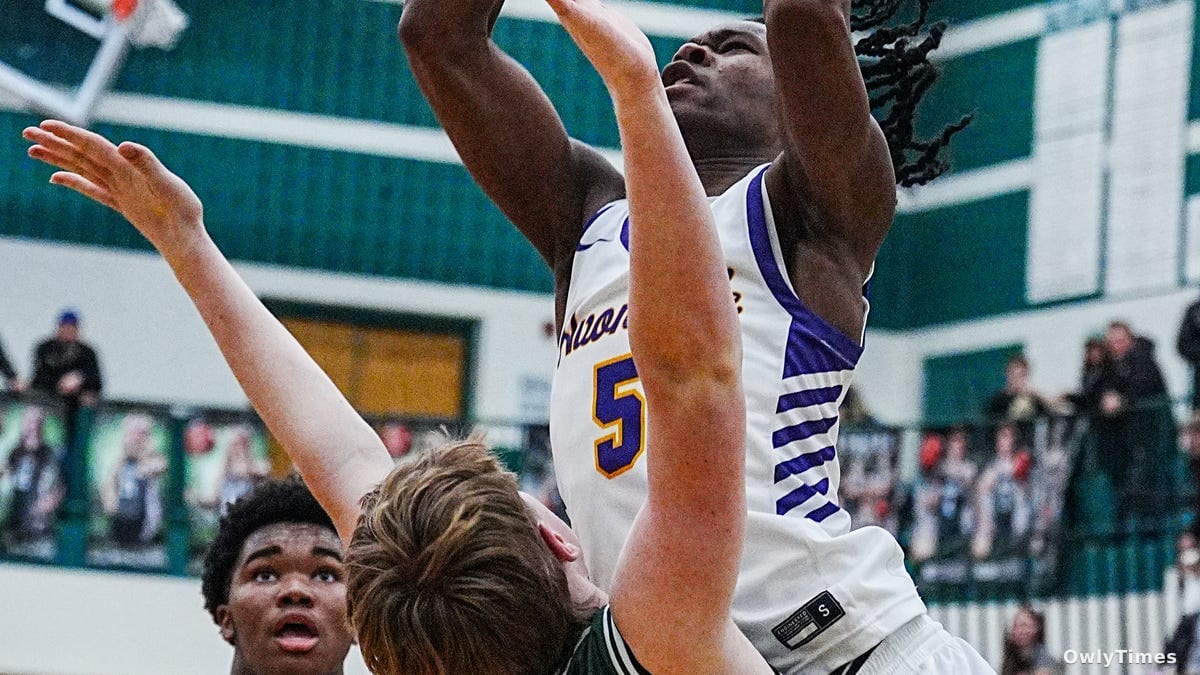

The gymnasium air in Avondale, Michigan still likely smells faintly of victory and floor wax. It’s late March, and the echoes of squeaking sneakers and roaring crowds are fading, but the impact of the 2025-26 high school boys basketball season is just beginning to crystallize. The Detroit Free Press recently released its All-North honorees, a list that, on the surface, is a celebration of athletic achievement. But beyond the headlines of names and schools, this year’s selections reveal a shifting landscape in Michigan high school basketball – one increasingly defined by the rise of program consistency and the quiet power of individual dedication in a hyper-competitive environment.
The Weight of the Captain’s Band
Jakobe Liford of Avondale, named captain of the All-North first team, embodies this shift. It’s not simply his skill – though clearly significant – that earns him the honor. It’s the context. Aaron Fox, Avondale’s coach, also received recognition, a pairing that speaks volumes. In an era where coaching changes are frequent and player transfers are increasingly common, Avondale’s sustained success under Fox, coupled with Liford’s leadership, represents a rarity. The All-North teams are dominated by players from established programs like Brother Rice (with Jordan McDaniel and Greg Grays Jr. both earning first-team nods) and Country Day (Christian Cast also on the first team), schools that consistently funnel talent to the next level. This isn’t a coincidence; these programs invest in infrastructure, coaching development, and a culture of commitment that attracts and nurtures top players. The question becomes: how do schools without those resources compete?
Drawn from freep.com.
Beyond the Powerhouses: Emerging Talent and Regional Shifts
The second and third All-North teams offer a glimpse beyond the established order. Players like Eden Vinyard from Ferndale and Da’ron Mason from Bloomfield Hills demonstrate that talent isn’t confined to the traditional basketball hubs. Ferndale, historically a strong program, continues to produce high-level players, while Bloomfield Hills is emerging as a force to be reckoned with. The inclusion of players from schools like Pontiac A&T (Lewis Lovejoy on the first team and De'Vontae Grandison receiving an honorable mention) also signals a potential resurgence in basketball within the Pontiac school district. This regional diversification is crucial. For years, the Detroit metropolitan area has been the undisputed center of Michigan high school basketball. Now, we’re seeing pockets of excellence develop in the suburbs and beyond, fueled by dedicated coaches and increasingly sophisticated training regimens.
The Honorable Mentions: A Story of Depth and Dedication
Perhaps the most telling part of the Free Press selections isn’t the first team, but the extensive honorable mention list – a staggering 48 names. This isn’t simply a gesture of inclusivity. It reflects the sheer depth of talent across the North region. Players like Gavin Abbott of Lamphere, Hayden Barrow of Clarkston, and Qualaeb Ross of Avondale may not have made the top three teams, but their recognition speaks to the high level of competition. It also highlights the sacrifices these athletes make – the countless hours spent in the gym, the dedication to academics, and the commitment to their teams. These are the players who embody the spirit of high school sports, and their stories deserve to be told. The sheer volume of honorable mentions – nearly double the number of players on the three All-North teams – suggests a talent pool that is expanding, not shrinking.
What This Means for the Future of Michigan Basketball
The 2025-26 All-North selections aren’t just a list of names; they’re a snapshot of a sport in transition. The dominance of established programs underscores the importance of investment and consistent coaching. The emergence of talent from smaller schools demonstrates that potential can be found anywhere. And the sheer depth of the honorable mention list reveals a growing pool of dedicated athletes. But here’s the crucial question: as recruiting becomes increasingly sophisticated and the pressure to specialize intensifies, will these smaller programs be able to sustain their success? Will the emphasis on early specialization stifle the development of well-rounded athletes? The future of Michigan high school basketball hinges on finding a balance between nurturing elite talent and fostering a love of the game at all levels. The Free Press selections offer a valuable starting point for that conversation, but the real story is still unfolding on the courts and in the gyms across the state.

