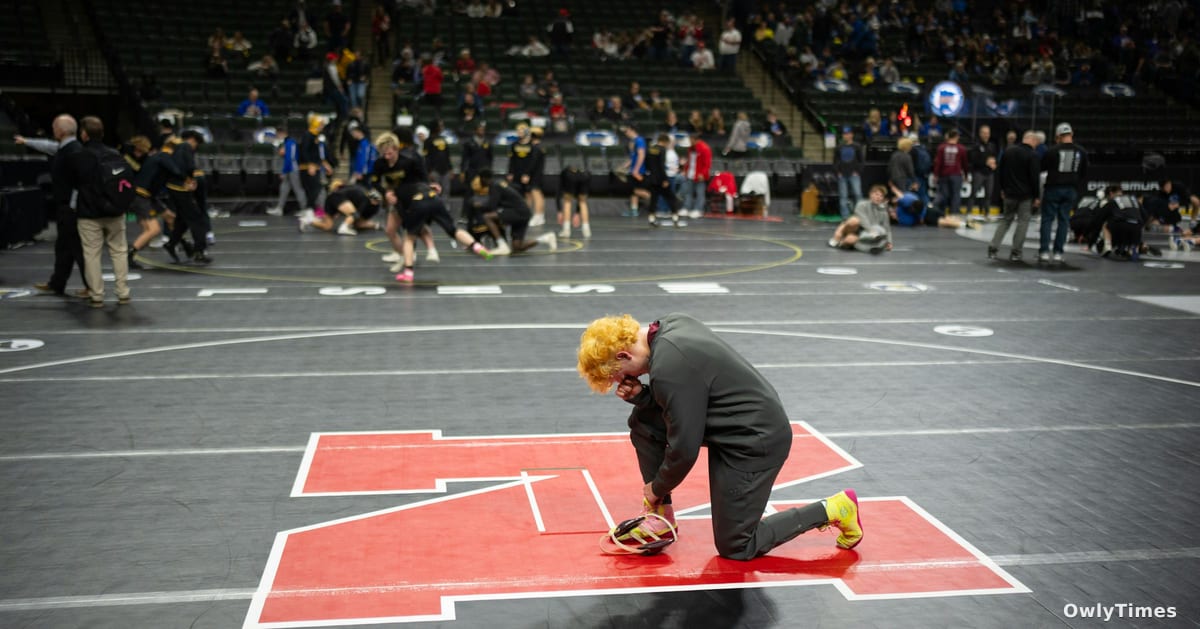

The fluorescent lights of Grand Casino Arena seemed to amplify the silence as Skyler Girdley, a sophomore from Brainerd High, walked toward the wrestling mat. It wasn’t the roar of the crowd, or the weight of expectation, that felt most palpable in that moment, but the sheer isolation. He wasn’t stepping in for a teammate nursing an injury, or filling a last-minute void. He was deliberately thrown into the fire – a strategic sacrifice, perhaps – to face John Murphy of St. Michael-Albertville, a two-time state champion with a two-year undefeated streak and a future already mapped out in the University of Minnesota’s wrestling program. Girdley, normally a backup, wasn’t expected to win. He was expected to compete in the face of overwhelming odds, and in doing so, reveal something about the quiet courage that defines the individual athlete.
The Weight of Singular Responsibility
The narrative around high school sports often emphasizes teamwork, the collective striving towards a common goal. We celebrate the winning basket, the game-saving tackle, the perfectly executed relay. But beneath the surface of these shared victories lies a stark reality: some athletes face a pressure cooker unlike any other. Unlike football or basketball, where a missed shot can be absorbed by the team, individual sports offer no such buffer. There’s no one to blame but yourself, no teammate to share the burden of failure. This isn’t about a lack of support; it’s about the fundamental nature of the competition. Skyler Girdley didn’t lose as part of a team; he faced John Murphy as a solitary figure, his performance the sole determinant of success or defeat. He lost the match, pinned, but walked off the mat having won something far more significant – a confrontation with his own vulnerability.
Original reporting: varsity.startribune.com.
This dynamic isn’t unique to wrestling. It’s the same pressure felt by a gymnast on the balance beam, a diver poised on the platform, a cross-country runner hitting the final stretch. “It’s just you,” Girdley explained afterward, distilling the essence of individual competition. “You against him.” It’s a sentiment echoed by NyahSymone Britt, a senior gymnast from Hopkins who recently claimed the vault title and placed fourth in the all-around at the state meet. Britt described the “very nerve-racking” experience of having “all eyes on you,” a sensation that can induce a physical tremor. Her success, and the success of athletes like her, isn’t just about physical prowess; it’s about mastering the art of self-reliance under intense scrutiny.
Beyond the Scoreboard: A Mirror to Modern Anxiety
The increasing emphasis on individual achievement in society – the “personal brand,” the relentless pursuit of self-optimization – arguably amplifies the pressure faced by these young athletes. We live in an age where failure is often stigmatized, where vulnerability is seen as weakness. The high school state tournament, then, becomes a microcosm of this broader cultural anxiety. These aren’t just games; they’re public displays of resilience, tests of character played out on a very visible stage. Consider the numbers: participation in youth sports has steadily increased over the past few decades, with a corresponding rise in the intensity and specialization of training. According to the Aspen Institute, over 45 million children participate in organized sports in the US, yet rates of anxiety and depression among young athletes are also on the rise. While correlation doesn’t equal causation, the connection is worth exploring.
The strategic decision by Brainerd’s coaches to move their regular 189-pounder to a higher weight class, effectively sacrificing a potential win to give Skyler Girdley a chance, speaks to a complex calculus. Was it purely tactical? Or was there an element of character-building at play? Perhaps the coaches recognized that the experience, regardless of the outcome, would be invaluable for Girdley’s development. This raises a crucial question: are we, as a society, prioritizing winning above all else, or are we recognizing the importance of fostering resilience and courage in the face of adversity?
The Future of Pressure: What’s Next for Young Athletes?
NyahSymone Britt’s description of the physical and emotional toll of competition isn’t a tale of woe, but a testament to the strength required to excel. She isn’t advocating for less pressure, but for a greater understanding of its impact. The conversation needs to shift from simply celebrating victories to acknowledging the vulnerability inherent in individual performance. What resources are available to these athletes to help them navigate the psychological challenges? Are coaches adequately equipped to address mental health concerns? Are parents fostering a healthy perspective on competition, or are they inadvertently adding to the pressure?
The story of Skyler Girdley and NyahSymone Britt, and countless others like them, isn’t just about high school sports. It’s a reflection of the pressures facing a generation grappling with unprecedented levels of scrutiny and expectation. As we move forward, we need to ask ourselves: are we creating an environment that supports the holistic development of young athletes, or are we simply demanding more and more, without providing the tools they need to thrive – not just as competitors, but as human beings? Will we see a greater emphasis on mental wellness training alongside physical conditioning, or will the pursuit of athletic excellence continue to come at a hidden cost?