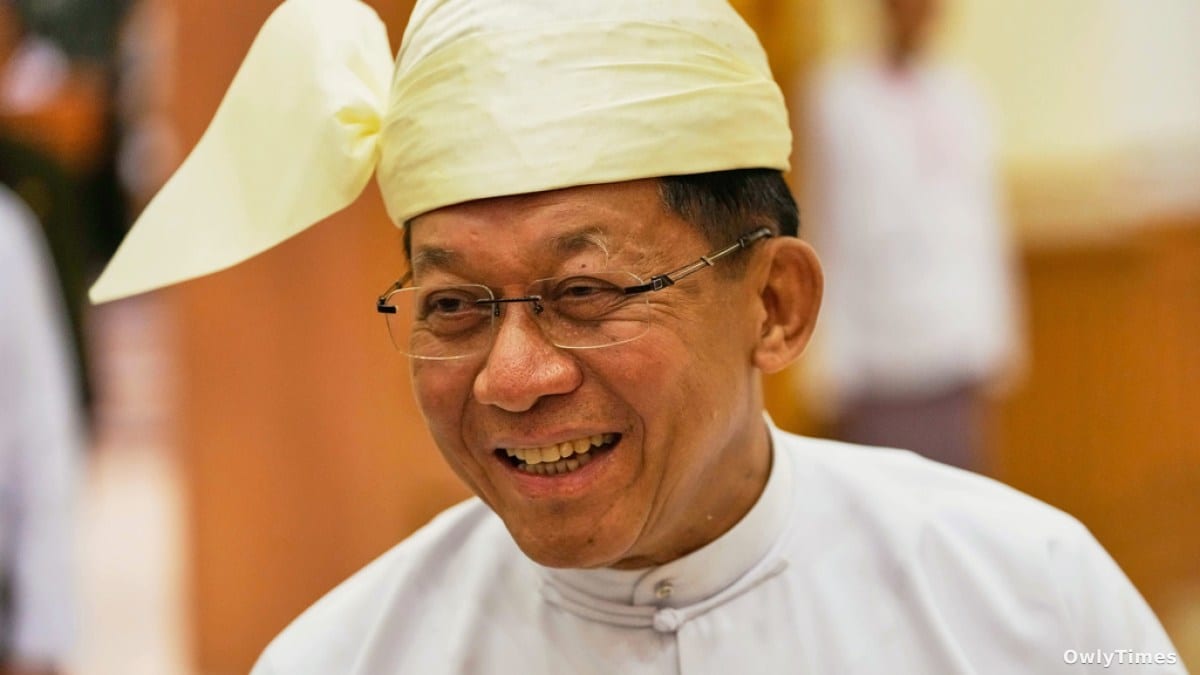

The recent elevation of Min Aung Hlaing to the presidency is less a transition of power than a tactical repositioning, designed to provide a veneer of constitutional legitimacy to a regime increasingly isolated on the global stage. By forcing a parliamentary vote earlier this month to formalize his role, the general—who spearheaded the 2021 coup—is attempting to trade the raw authority of a military junta for the diplomatic utility of a head of state. This move mirrors historical precedents where authoritarian leaders sought to stabilize domestic volatility by rebranding military rule through the machinery of a captured legislature.
The Strategy of the 100-Day Ultimatum
The strategic calculus behind the president's latest peace overture is transparent. By setting a 100-day window for rebel groups to enter negotiations, with a final deadline of July 31, the regime aims to create a binary narrative: either the resistance groups acquiesce to the military’s terms, or they are cast as the aggressors rejecting a path to peace. It is a classic move to shift the burden of conflict onto the opposition, attempting to fracture the broad, fragile alliances that have defined the civil war over the last five years.
Who benefits from this maneuver? The military junta gains a temporary PR victory that may appeal to neighboring nations eager for regional stability, regardless of the internal democratic deficit. Conversely, the military loses credibility with the very groups it hopes to neutralize. By framing the discussions around the pre-2021 Nationwide Ceasefire Agreement (NCA), the administration signals a refusal to acknowledge the fundamental shift in the country’s political landscape since the ouster of Aung San Suu Kyi’s civilian government.
Resistance Groups Signal Unwavering Opposition
The rejection of this offer by key stakeholders suggests that the junta’s leverage is diminishing. The Karen National Union was immediate in its dismissal, stating it has no intention of returning to an NCA framework that it abandoned following the coup. This rejection is echoed by the Chin National Front, whose spokesperson Salai Htet Ni explicitly stated the group’s goal is a federal democratic system entirely independent of military influence.
These responses highlight a critical contradiction in the regime’s strategy. While the military government attempts to use the tools of formal diplomacy to secure compliance, the opposition views the very existence of the current administration as the primary obstacle to peace. Nay Phone Latt, a spokesperson for the National Unity Government, summarized this impasse by characterizing the invitation as a "fake" attempt to extend military subjugation. The failure of previous peace talks, which began in 2022, underscores the futility of these overtures when the core grievances—the military's control of the state and the demand for autonomy—remain unaddressed.
The Limits of Institutional Legitimacy
The international response—limited recognition from a small handful of countries—suggests that the attempt to normalize the regime through a "sham election" has largely failed to achieve its strategic goal of widespread global acceptance. Having previously pardoned over 4,000 prisoners, the regime has attempted various soft-power gestures to soften its image, yet the underlying reality of the civil war continues to dominate the domestic environment.
The path forward for the junta is increasingly narrow. The next reading of the progress on the July 31 deadline will show whether this invitation serves as a genuine opening for de-escalation or merely a pretext for a new, more aggressive phase of the military campaign. Until then, the political chess move to watch is whether the regime attempts to leverage the 100-day clock to justify a renewed offensive against the groups that have now publicly rebuffed their invitation.





