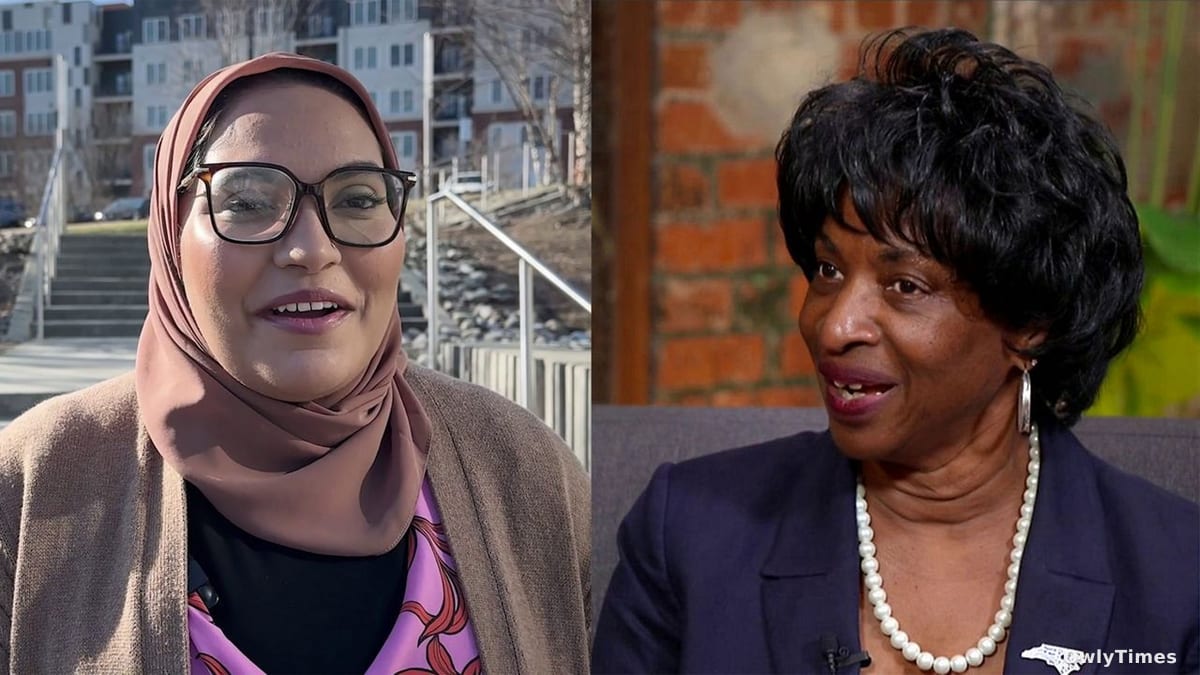

The strategic calculation in North Carolina’s 4th Congressional District isn’t about if a Democrat will win, but which Democrat will represent a newly solidified progressive base. The rematch between incumbent Valerie Foushee and Durham County Commissioner Nida Allam was already poised to be a defining contest for the state’s left flank. The entry of Durham Public Schools substitute teacher Mary Patterson into the race, however, complicates the calculus, introducing a variable that could fracture the progressive vote and force a more nuanced appeal to a broader electorate. This isn’t simply a primary; it’s a test of how effectively different strands of the Democratic coalition can mobilize in a district deliberately engineered for their success.
The redistricting of District 4 is the foundational element of this shift. The removal of traditionally conservative counties – Granville, Person, and Alamance – and the addition of areas in western Wake, Chatham, Durham, and Orange, has demonstrably tilted the district towards the left. Political observers confirm the district is now “a bit more blue,” effectively guaranteeing a Democratic representative. This seemingly secure outcome, however, introduces a new dynamic: the competition shifts from winning the district to defining its ideological direction. Foushee’s concern, as she stated, that “the ability of the people to choose who represents them has pretty much gone away,” isn’t about the risk of losing to a Republican, but about the potential for a diluted Democratic mandate. The real battle is for the soul of the district, and the power to shape its narrative in Washington.
Foushee is positioning herself as a pragmatic progressive, emphasizing her experience navigating the complexities of the minority party. Her focus on “defending democracy” and addressing affordability – housing, healthcare, education – resonates with core Democratic concerns. The personal framing, invoking her grandchildren’s future, is a classic appeal to intergenerational responsibility. But beneath the surface lies a strategic acknowledgement of the limitations of purely progressive policy. Her comment that, in the minority, one must “find points of intersection to get things done,” reveals a willingness to compromise, a trait that could appeal to moderate Democrats but potentially alienate Allam’s base. This is a calculated risk, betting that experience and a reputation for pragmatism will outweigh the appeal of more radical proposals.
Nida Allam, in contrast, is running a campaign explicitly centered on progressive values. Endorsed by Bernie Sanders and a cohort of state and local officials, she’s targeting “young people, communities of color, immigrants” – those “sick and tired of the status quo.” Her emphasis on “affordability” is similar to Foushee’s, but her framing is more explicitly focused on systemic change and the dignity of working families. The fact that she lost the 2022 race by a “small percentage” underscores the viability of her approach in this district. Allam is betting that the redrawn map, combined with increased progressive turnout, will finally deliver her a victory. Her assertion that District 4 is “the most progressive district in North Carolina, if not the South” is a bold claim, but one designed to galvanize her supporters and frame the election as a referendum on progressive leadership.
Based on the original Spectrum News report.
The wildcard in this contest is Mary Patterson. While lacking the name recognition and established networks of her opponents, Patterson presents herself as a relatable, community-focused candidate. Her emphasis on affordable housing, healthcare, and equal pay aligns with the broader Democratic platform, but her appeal rests on authenticity and a direct connection to the everyday concerns of Durham residents. Her statement, “I want them to know that their voice is their vote, and their vote is their voice, and that their choice matters,” is a simple but powerful message, particularly in a district where voters may feel disenfranchised by the perceived dominance of established political figures. While unlikely to win outright, Patterson could siphon enough votes from Foushee or Allam to significantly alter the outcome.
The political chess move to watch next is the response to Patterson’s candidacy. Will Foushee and Allam attempt to consolidate the progressive vote by subtly signaling a willingness to work together, or will they continue to aggressively attack each other, risking a fractured electorate? The answer will reveal not only the dynamics of this primary, but also the broader fault lines within the North Carolina Democratic Party. The question isn’t just who will win District 4, but whether the party can unite behind a single vision for its future.





