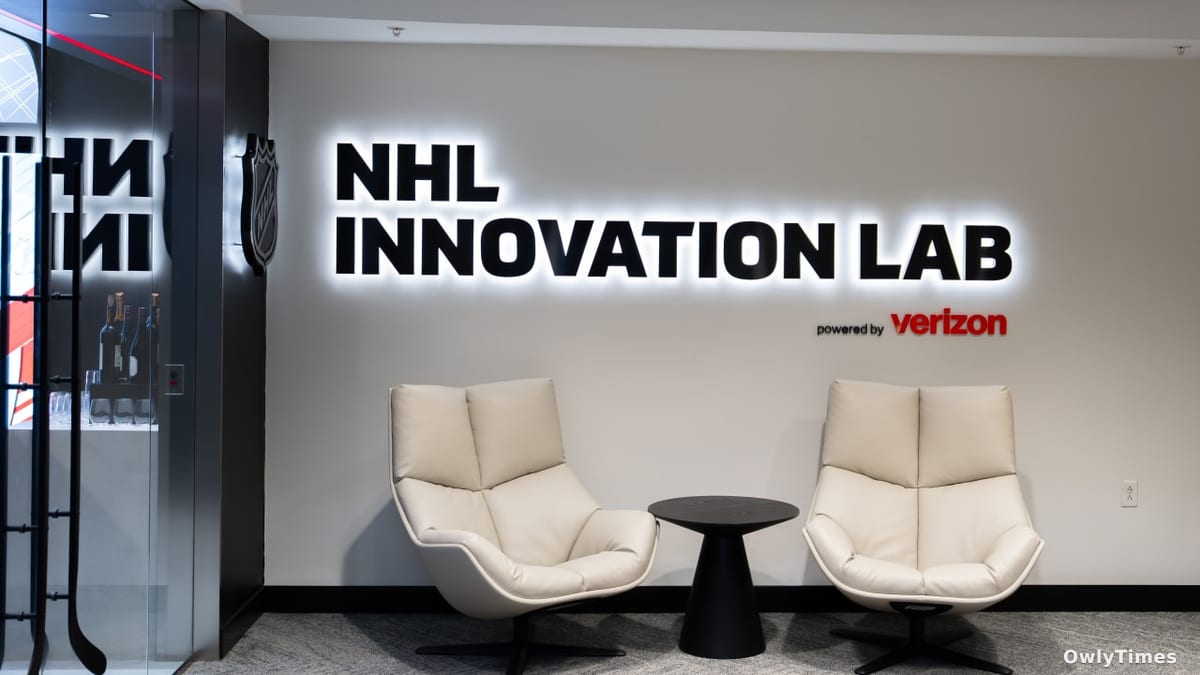

Is the future of sports less about athletic prowess and more about network latency? That’s the question simmering beneath the surface of the newly unveiled NHL Innovation Lab powered by Verizon, a simulated arena environment nestled inside the Prudential Center in Newark, New Jersey. The League, in partnership with Verizon and the New Jersey Devils, is touting this as the next step in fan engagement and on-ice performance. The real story here isn't about flashy new tech demos—it’s about the quiet, fundamental shift happening in how professional sports are delivered, not just played.
The NHL isn’t simply tinkering around the edges; they’re building a dedicated, year-round testing ground for technologies that will fundamentally alter the game experience. Dave Lehanski, NHL Executive Vice President, Business Development and Innovation, frames it as strengthening the game and supporting long-term growth. But look closer. The core of this lab isn’t about better slapshots, it’s about a dedicated Verizon Private 5G Wireless Network and Secure Cloud Interconnect (SCI) solution. This isn’t about if the NHL will use 5G, it’s about building a private network to control the experience, ensuring consistent performance and a secure “express lane” for critical data like near real-time statistics. Consider that the average American sports fan now expects instant access to stats, multiple camera angles, and personalized content – demands that public networks simply can’t consistently guarantee during peak game times.
This isn’t a vanity project. The NHL is the first U.S. professional sports league to establish a facility specifically for this kind of simulated arena testing. They’re not just experimenting with faster video access for coaches on iPads (though that’s part of it), or real-time alerts to officials via Apple Watches using the NHL Watch Comms app. They’re laying the groundwork for a future where artificial intelligence analyzes player performance in real-time, where 4K and 8K content is seamlessly integrated into the broadcast, and where the entire arena experience is hyper-personalized. The inclusion of a 144” x 81” Sony Crystal LED display and 75” BRAVIA XR 8K HDR Mini LED TV, alongside Sony Hawk-Eye technology, signals a clear intention to push the boundaries of visual fidelity and data capture.
See the original nhl.com story for the full account.
The investment is substantial, and the implications extend far beyond the ice. Kyle Malady, CEO of Verizon Business, emphasizes the “dedicated, high-speed, and secure technology foundation” being built. That security piece is crucial. In an era of escalating cyber threats, protecting player data, game strategies, and broadcast feeds is paramount. But the “dedicated” aspect is equally important. The NHL isn’t relying on public infrastructure; they’re building their own, giving them complete control over the network and the data flowing through it. This is a power play, positioning the League to dictate the terms of its digital future.
However, there’s a tension here. While the NHL touts benefits for “every aspect of our game,” the immediate beneficiaries are likely to be the League itself and its broadcast partners. Will these innovations translate into tangible improvements for the average fan beyond sharper visuals and faster stats? The risk is that technology becomes a tool for further monetizing the experience – premium subscriptions for enhanced data streams, personalized advertising based on viewing habits – rather than genuinely enhancing the core enjoyment of the game. The League needs to demonstrate a commitment to accessibility, ensuring that these advancements don’t create a two-tiered fan experience.
Looking ahead, watch for the NHL to begin quietly rolling out elements of this lab’s testing into other arenas. The success of this initiative won’t be measured in press releases, but in whether, by the 2028 season, a noticeable lag in streaming stats or a dropped video feed during a crucial moment feels like a relic of the past. The question isn’t if the NHL will embrace the future of technology, but whether they can do so in a way that enhances the game for everyone, not just those with the deepest pockets and fastest connections.

