
The strategic calculation behind the 2026 Oscar nominations isn’t about celebrating artistic achievement – it’s a reflection of a film industry finally acknowledging a reality it’s been skirting for years: American life is the disaster movie. For the first time in decades, the nominees overwhelmingly eschew conventional realism for what one observer has termed “hysterical surrealism,” a genre perfectly calibrated to an age defined by the lingering shock of Trump, escalating state violence, and a widening chasm between the opulent few and everyone else. This isn’t a stylistic choice; it’s a pragmatic response to a public increasingly unable to process current events through the lens of traditional narrative. Who benefits and who loses from this shift? The industry benefits by tapping into the collective anxiety, offering a safe, mediated space to confront uncomfortable truths. Viewers, arguably, lose the directness of social commentary, but gain a necessary emotional distance.
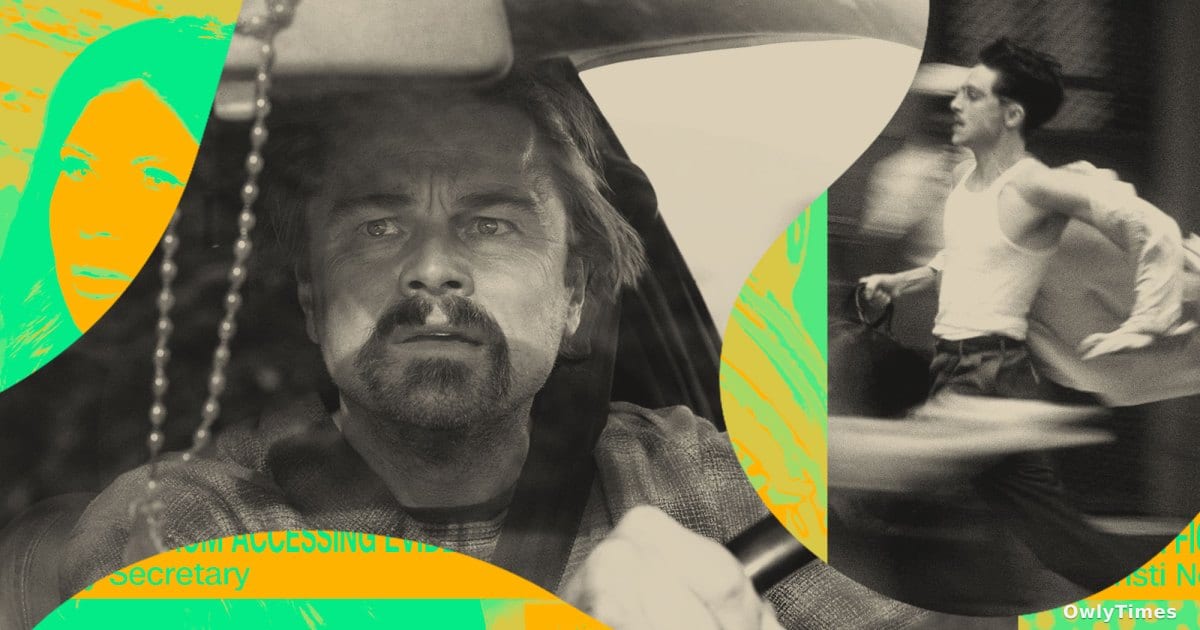
The shift is starkly visible in films like Paul Thomas Anderson’s One Battle After Another, a hyperreal portrait of American political violence. The film’s now-iconic sequence featuring Benicio del Toro’s “Sensei Sergio St. Carlos” aiding migrants – his allies skateboarding across rooftops like chimney sweeps from Mary Poppins – isn’t simply a stylistic flourish. It’s a deliberate destabilization of expectations, mirroring the absurdity of a political landscape where ICE enforcement feels ripped from a dystopian novel. The film’s radicals, dubbed the “French 75,” with names like Teyana Taylor’s “Perfidia Beverly Hills,” aren’t meant to be plausible characters; they’re caricatures, “emanations of an improbable, fantastical style,” as one daughter of Weather Underground members noted in The New York Times. This isn’t a failure of realism, but a rejection of it. The real is already too surreal.
See the original motherjones.com story for the full account.
This embrace of the uncanny isn’t limited to One Battle After Another. Ryan Coogler’s Sinners blends Jim Crow-era Mississippi with contemporary hip-hop dancers and even references to Cleopatra, exploring the exploitation of Black music as a “system of healing.” The film’s commercial success – exceeding $370 million – underscores a key dynamic: audiences are willing to pay to confront uncomfortable truths, provided those truths are presented through a filter of artistic abstraction. This mirrors a historical pattern. Surrealism, as an artistic movement, emerged in the wake of the unprecedented brutality of World War I, offering a way to process trauma that conventional representation simply couldn’t handle. The grotesque slaughter demanded a new visual language, one that acknowledged the breakdown of reason and order.
The parallel to today is unsettlingly clear. We live in an era of “surrealpolitik,” as scholars Vinicius Mariano de Carvalho and John Schoneboom have termed it – a world “increasingly shaped by irrationality, disruption, and the erosion of established norms.” The proliferation of disinformation, the normalization of political violence, and the sheer speed of technological change have created a sense of disorientation that demands a similarly unconventional response. The fact that Charlie Kirk was shot by an assailant who etched Discord memes onto the bullets, and that the Department of Homeland Security routinely releases white supremacist supercuts of police violence, isn’t simply shocking; it’s expected. This is a world where anything bad can happen, and often does.
The contrast with the politically charged, yet ultimately more conventional, films of the 1970s – Rocky, Norma Rae, Alice Doesn’t Live Here Anymore – is telling. Those films aimed for direct emotional resonance, offering relatable narratives of working-class struggle. Today’s nominees, however, operate on a different plane. Bong Joon Ho’s Parasite, with its own blend of dark humor and social commentary, serves as a clear precursor. The current wave of films, including the sci-fi thriller Bugonia and the hyperkinetic period drama Marty Supreme, are defined by a deliberate refusal to offer easy answers or comforting resolutions. Timothée Chalamet’s portrayal of a nervy, ambitious capitalist in Marty Supreme, crashing through hotel floors and hustling ping-pong tournaments, embodies this unsettling energy.
The implications extend beyond aesthetics. The increasing difficulty of discerning fact from fiction – fueled by AI and the relentless churn of “content” – renders conventional realism increasingly suspect. In a world where every state and politician is a purveyor of carefully curated narratives, a degree of artistic distance becomes essential. This isn’t about escapism; it’s about survival. The films nominated for Oscars in 2026 aren’t simply reflecting our anxieties; they’re providing a necessary coping mechanism, a way to process the overwhelming chaos of contemporary life.
The political chess move to watch next isn’t on the red carpet, but in the potential for these films to spark genuine dialogue about the systemic issues they portray. Will the industry capitalize on this moment to advocate for meaningful change, or will it simply bask in the glow of critical acclaim? More specifically, will any of the winners use their platform to directly address the economic and political forces driving the “hysterical surrealism” that defines our age – and, crucially, will they call for a re-evaluation of the power structures that benefit from the status quo? The answer to that question will reveal whether this cinematic shift is merely a reflection of our anxieties, or a catalyst for real-world transformation.





