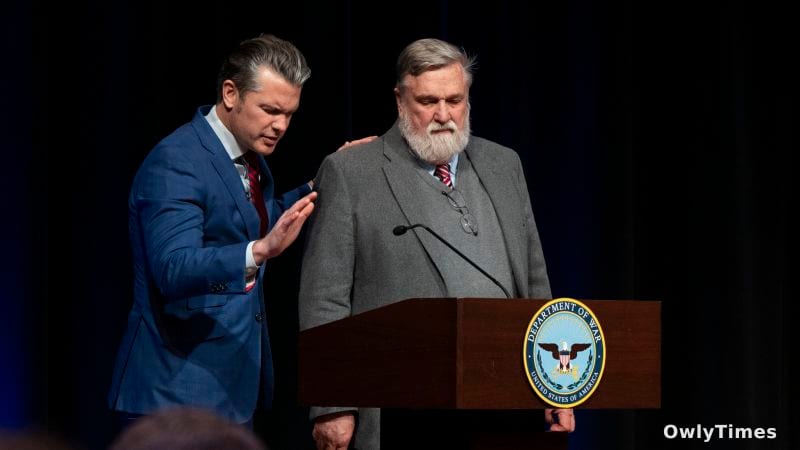

The invitation extended to Douglas Wilson, a pastor openly advocating for the repeal of women’s suffrage and espousing views considered discriminatory towards the LGBTQ+ community, to lead a worship service at the Pentagon wasn’t a spontaneous act of religious outreach. It was a calculated signal, a demonstration of power by Pete Hegseth, the current Defense Secretary, and a strategic alignment with a rising tide of Christian nationalist influence within the Trump administration. The event, broadcast internally within the Department of Defense, wasn’t about faith; it was about consolidating a political base and subtly reshaping the cultural landscape of the military.
The Calculus of Religious Alignment
The timing is critical. The resurgence of overtly religious displays within the Pentagon – monthly prayer services, Bible verses on social media – coincides with Donald Trump’s return to office and a deliberate effort to mobilize his core constituency. This isn’t a departure from established norms, as some critics claim, but a return to a historical precedent, as Wilson himself pointed out, referencing worship services held in the Capitol building during the early republic. However, the crucial difference lies in the nature of the faith being promoted. Wilson’s brand of Calvinist theology, with its emphasis on patriarchal structures and strict social conservatism, is not representative of a broad, inclusive religious sentiment. It’s a specific ideological project, and Hegseth’s endorsement is a clear indication of its growing acceptance within the upper echelons of the DoD. The Pentagon spokesperson, Sean Parnell’s statement acknowledging Hegseth’s appreciation for Wilson’s “writings and teachings” isn’t a defense of religious freedom; it’s an affirmation of ideological alignment.
Who Benefits and Who Loses?
The immediate beneficiaries are the network of MAGA conservatives and Christian nationalist leaders, like Wilson, who have long sought greater influence in public life. Hegseth’s actions provide them with legitimacy and access, signaling to their followers that the military is a welcoming space for their beliefs. This, in turn, strengthens Hegseth’s position within the administration and solidifies his appeal to a key demographic. Conversely, the clear losers are those who value the separation of church and state, and those within the military who may feel alienated or marginalized by this overt display of religious preference. Kris Fuhr, co-founder of the Women in the Service Coalition, rightly identifies the event as “beyond inappropriate,” highlighting the inherent contradiction between Wilson’s views on women and the Army’s stated values. The potential damage extends beyond symbolic offense; Fuhr’s concern that Hegseth’s biases could limit access to talent within the DoD is a serious one.
See the original CNN story for the full account.
A Historical Echo of Moral Regulation
The impulse to morally regulate the military is not new. Throughout American history, various social and religious movements have sought to impose their values on the armed forces, often during times of perceived national crisis. The temperance movement of the 19th century, for example, actively campaigned to ban alcohol from military installations, viewing it as a threat to discipline and morale. Similarly, during the Cold War, anxieties about communist infiltration led to increased scrutiny of the personal lives of military personnel. What distinguishes the current situation is the explicit embrace of a particular theological framework, and the willingness to openly challenge the principle of religious neutrality. Wilson’s advocacy for a Christian theocracy, while perhaps not representative of Hegseth’s personal views, underscores the ideological ambition at play. The claim that past practice justifies present action – Wilson’s invocation of early Congressional worship services – is a common tactic used to normalize controversial policies by appealing to historical precedent.
The Limits of “Vanilla” Messaging
While one attendee described Wilson’s sermon as “pretty vanilla,” avoiding direct political rhetoric, the very act of providing a platform to someone with such demonstrably controversial views is inherently political. The content of the sermon is less important than the signal it sends. Hegseth’s claim of missing the sermon due to another meeting feels deliberately distancing, a calculated attempt to maintain plausible deniability. The Pentagon’s rapid response X account posting photos of Wilson’s attendance, however, contradicts this narrative, demonstrating a clear intention to publicize the event. The Pentagon’s attempt to balance the service with offerings for other religions – Jewish and Buddhist services – feels like a performative gesture, a superficial attempt to deflect criticism while prioritizing the promotion of a specific religious ideology.
The Next Move: Expanding the Network
The political chess move to watch next isn’t whether Hegseth will issue an apology or scale back the prayer services. It’s whether he will actively leverage his position to further expand Wilson’s network of influence within the DoD. Will Wilson’s affiliated schools and organizations receive preferential treatment in military recruitment efforts? Will individuals associated with his church be appointed to key positions within the department? The focus will be on embedding this ideology within the institutional structures of the military, making it less vulnerable to future political shifts. The question isn’t simply about religious freedom; it’s about the strategic use of religion to consolidate power and reshape the cultural landscape of the American military.





