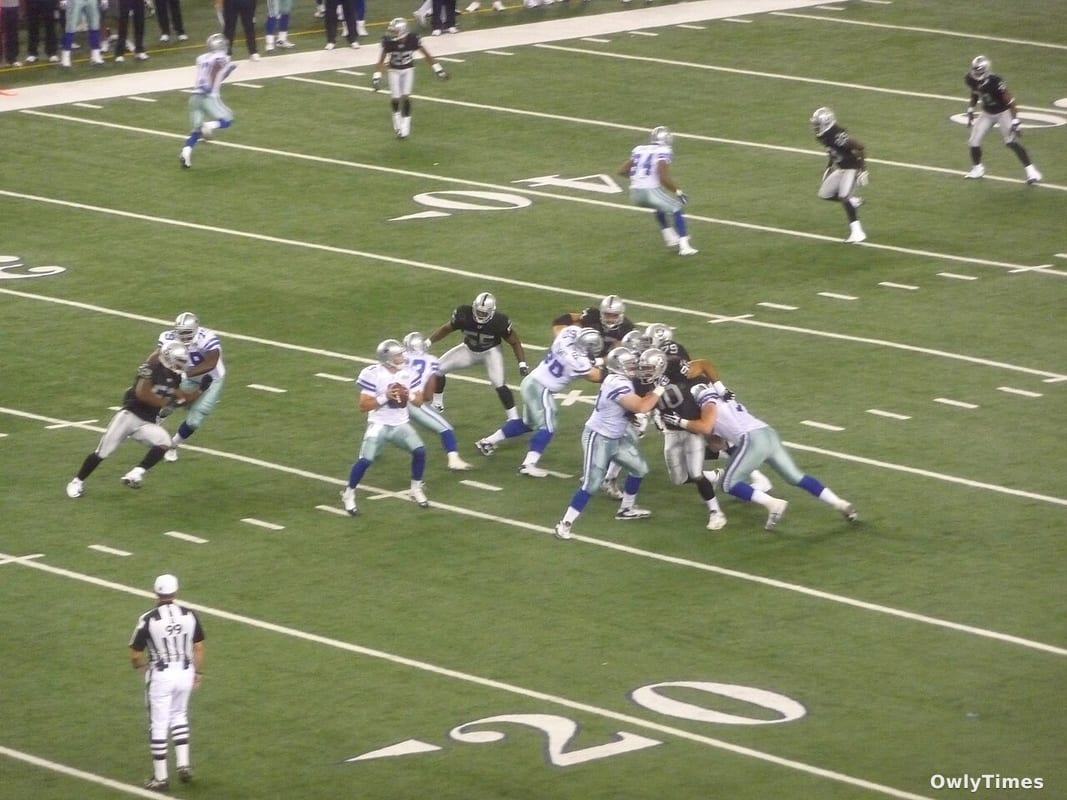

$66 Million Question: The Cowboys’ Defensive Gamble and the Raiders’ Receiver Void
A potential trade floated by ESPN NFL analyst Dan Graziano – involving a swap of Las Vegas Raiders defensive end Maxx Crosby for Dallas Cowboys wide receiver George Pickens and draft capital – isn’t about football, it’s about contract arithmetic. Graziano’s proposal, centering around a 2026 first-round pick (No. 20 overall) and a second-round pick (No. 36 overall) going to Dallas alongside Crosby, highlights a looming $66 million problem for the Cowboys: the cost of retaining both pass rush talent and receiving threats. This isn’t a whimsical thought experiment; it’s a direct consequence of the franchise tag’s escalating price and the Cowboys’ history of near-misses with long-term extensions.
The Franchise Tag Trap and Dallas’s Defensive Priorities
The core of this potential deal lies in the Cowboys’ decision to franchise tag George Pickens, a move projected to cost the team roughly $20 million for the 2024 season. While seemingly a retention tactic, Graziano correctly points out the precedent set by last year’s standoff with edge rusher Micah Parsons, also facing a franchise tag. The Cowboys ultimately avoided a prolonged negotiation with Parsons, but the situation underscored a critical constraint: the team isn’t consistently willing to meet top-of-market demands for key players. Extending Pickens long-term would likely require a contract exceeding $25 million annually, a figure the Cowboys appear hesitant to commit to, especially given their existing salary commitments. This hesitancy, coupled with the need to address defensive vulnerabilities, creates a scenario where trading Pickens – while counterintuitive to fans – becomes a financially rational move.
This article draws on reporting from Yahoo Sports.
Crosby’s Contract and the Raiders’ Sticking Point
The financial equation isn’t solely about Dallas’s reluctance to pay Pickens. Maxx Crosby’s current contract carries an average annual value of approximately $30 million over the next two years. While a significant sum, it offers the Cowboys a defined cost for a proven pass rusher, a position of critical need. The Raiders, however, are reportedly uninterested in parting with Crosby, and he hasn’t signaled a desire to be traded. This resistance isn’t simply about Crosby’s on-field value; it’s about the optics of trading a cornerstone player after he’s demonstrably bought into the team’s culture. The Raiders’ 2023 season saw Crosby emerge as a genuine leader, and trading him would signal a potential reset, a message the organization appears unwilling to send. The Raiders’ need for a receiver is real – they ranked 27th in the league in receiving yards last season – but the price of acquiring a proven commodity like Pickens, plus a first-round pick, may exceed their willingness to disrupt the defensive core.
Beyond the Headlines: The Draft Capital Calculation
The inclusion of the 2026 first-round pick is the linchpin of this trade proposal. For the Cowboys, acquiring a top-20 pick in a future draft provides flexibility – the ability to select a potentially elite receiver, trade down for additional assets, or address other positional needs. The value of draft picks has demonstrably increased in recent years, with teams increasingly prioritizing the cost-controlled production of rookie contracts. The Cowboys, historically reliant on free agency, have shown a willingness to build through the draft under Jerry Jones, making this pick a valuable asset. However, the Raiders must weigh the immediate impact of adding a receiver against the long-term value of retaining that draft capital. The 2026 draft class is currently projected to be strong at the wide receiver position, potentially allowing the Raiders to address their need without sacrificing a premium asset.
What this means for your wallet: The Future of NFL Player Valuation
This proposed trade isn’t just about the Cowboys and Raiders; it’s a microcosm of the broader challenges facing NFL teams in the current collective bargaining agreement. The escalating cost of franchise tags, coupled with the increasing demands of star players, is forcing teams to make difficult choices about resource allocation. The Cowboys’ situation with Pickens highlights the risk of relying on the franchise tag as a long-term solution. For consumers, this translates to potentially more trades involving high-profile players as teams prioritize financial flexibility over retaining talent at any cost. The question now is: will other teams follow suit, prioritizing draft capital and cost control over established stars, and if so, how will this reshape the landscape of player valuation in the coming years?

