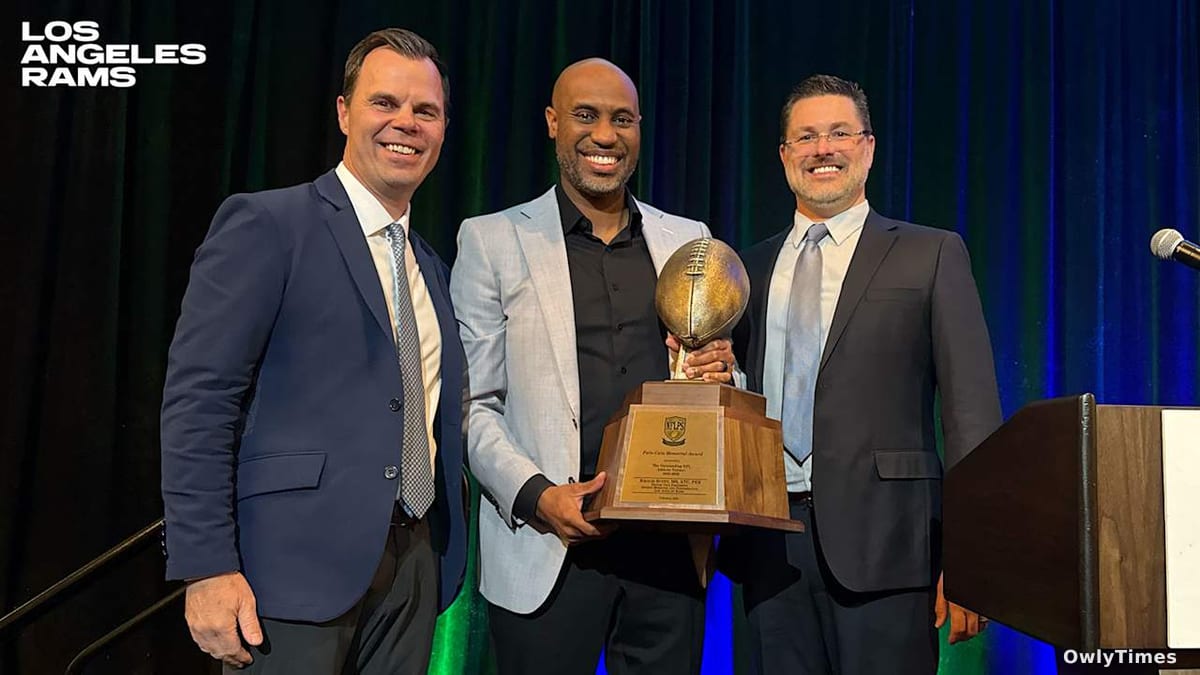

The video played on a loop, a constellation of faces beaming congratulations. But for Reggie Scott, newly crowned NFL Athletic Trainer of the Year, it wasn’t the award itself – the prestigious Fain-Cain Memorial Award presented by the NFL Physicians Society – that held him captive. It was the messages. Messages from Jake Delhomme and Steve Smith Sr., Panthers players from his early days in the league. From Matthew Stafford, Steven Jackson, and even the recently retired Aaron Donald. They weren’t talking about X’s and O’s, or recovery protocols. They were talking about care. About feeling seen, valued, and supported through the brutal physicality of professional football. In a league obsessed with performance, Scott’s award feels like a quiet acknowledgement that the human element isn’t a soft skill – it’s the foundation of everything.
Scott, now the Rams’ senior vice president of sports medicine and performance, entered the NFL in 2003 with Carolina, and received the award for the 2025 season at the NFL Scouting Combine in Indianapolis. The outpouring of gratitude, he told theRams.com, was “a lot of joy and a lot of purpose… confirmation on why I do what I do.” But beyond the personal validation, Scott’s recognition speaks to a larger shift happening within the NFL, a slow but undeniable reckoning with the long-term consequences of a relentlessly demanding sport. For decades, the narrative prioritized toughness, pushing through pain, and minimizing downtime. Now, the league is grappling with the moral and financial costs of that approach, facing mounting scrutiny over player safety and the potential link between football and chronic traumatic encephalopathy (CTE).
Based on the original therams.com report.
The Fain-Cain Award, named for pioneering team physicians Dr. Thomas E. Cain and Dr. Robert H. Fain of the former Houston Oilers, isn’t just about patching up knees and ankles. It honors those who embody “exceptional care, tireless dedication, and an unwavering commitment to player health and safety,” as Bryan “Flea” Engel, president of the Professional Football Athletic Trainers Society (PFATS), put it in a release. This isn’t a new focus, but the emphasis feels different now. The Rams, under Sean McVay, have consistently ranked among the league’s healthiest teams – boasting the second-fewest games missed due to injury with 145 in the 2025 regular season, according to Sports Info Solutions. Analyst Aaron Schatz’s Adjusted Games Lost metric has consistently placed them in the top 10 for injury prevention over the past eight seasons. These aren’t coincidences; they’re the direct result of a system prioritizing preventative care and individualized player management, a system Reggie Scott has spearheaded.
What’s particularly striking is Scott’s emphasis on the “ecosystem” of care. He doesn’t attribute the Rams’ success to a single innovation or cutting-edge technology. Instead, he points to the collaborative spirit between the strength staff, athletic trainers, doctors, nutritionists, and sports scientists. He credits Les Snead, the Rams’ general manager, Tony Pastoors, the chief operating officer, and, crucially, Sean McVay for fostering a culture of alignment. This isn’t just about having the best resources; it’s about creating an environment where players believe in the care they’re receiving, and actively participate in their own recovery and well-being. McVay’s video message – “You are the best in the world at what you do, but more importantly, you’re such a special person” – underscores this point. The coach isn’t praising Scott’s medical expertise; he’s acknowledging the human connection that fuels it.
The NFL’s evolution on player health isn’t without its tensions. The league still faces lawsuits alleging it concealed the risks of concussions, and the inherent violence of the game remains a constant challenge. The financial incentives – billion-dollar television deals and lucrative sponsorships – often clash with the imperative to prioritize player safety. But Scott’s award, and the narrative surrounding it, suggests a growing recognition that long-term sustainability depends on treating players as more than just assets. It’s a recognition that investing in their physical and mental well-being isn’t just the right thing to do, it’s also good for business.
Looking ahead, the question isn’t whether the NFL will continue to prioritize player health – the league has already publicly committed to doing so. The real question is whether that commitment will translate into meaningful change at every level, from youth football to the professional ranks. Will we see a fundamental shift in the culture of the game, one that values long-term health over short-term gains? And, perhaps more importantly, will the next generation of athletic trainers be empowered to prioritize the “human element” – the care, compassion, and individualized attention that Reggie Scott has so brilliantly exemplified – or will they be forced to navigate the same conflicting pressures that have plagued the league for decades? The answer will determine not just the future of the NFL, but the future of professional sports as a whole.

