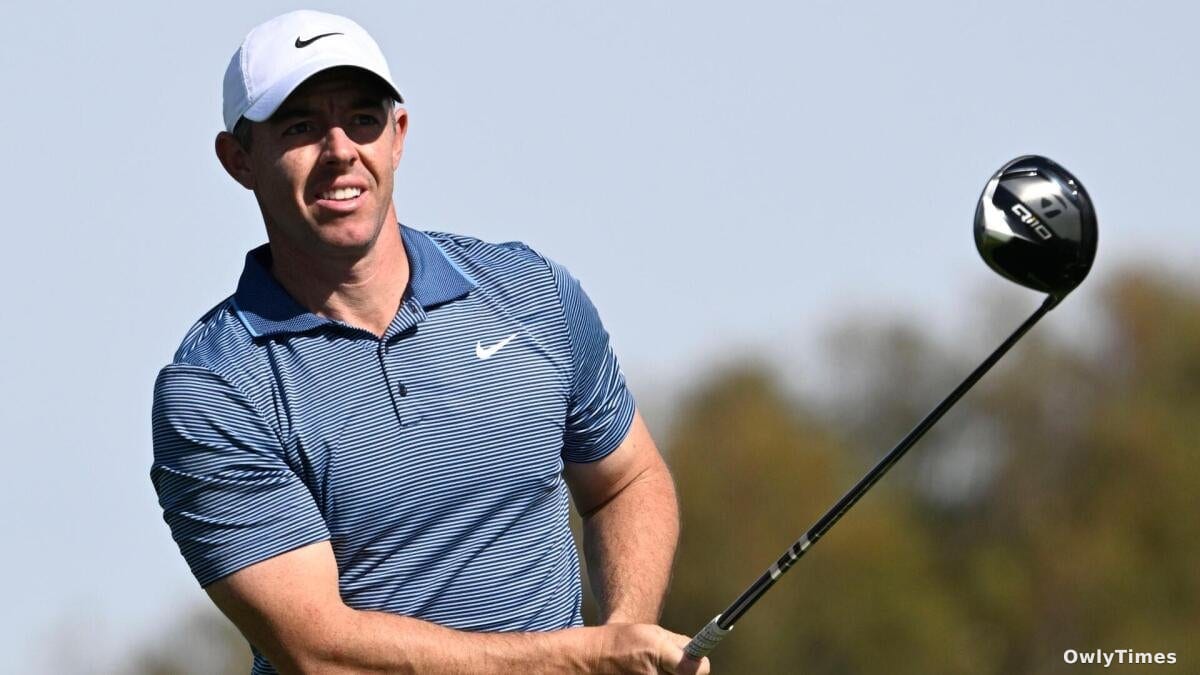

The azaleas are still weeks from full bloom, but the pressure is already thick in the Georgia air. Not from the humidity, not yet, but from the weight of expectation hanging over Augusta National. This isn’t just a golf tournament; it’s a cultural touchstone, a yearly ritual of green jackets and dramatic swings that transcends the sport itself. And as the 2026 Masters approaches, opening on April 9th, the narrative isn’t about who will win, but about whether Rory McIlroy can defy history – and his own body – to finally complete the career Grand Slam. But beyond the headlines of potential victory and lingering disappointment, a more subtle story is unfolding: the increasing reliance on predictive analytics, and the uncomfortable questions it raises about the very nature of sporting achievement.
The odds, as of now, paint a clear picture. Scottie Scheffler leads the pack at +500, a testament to his recent dominance, having secured two of the last four Masters titles. He’s followed by Jon Rahm and Bryson DeChambeau at +1000, both formidable contenders. But McIlroy, despite finally breaking through to win last year’s major, sits further down the list at +1300. It’s a position that reflects not just his past struggles at Augusta – 15 consecutive losses before his 2024 triumph – but a growing concern about his current form. He’s a polarizing figure for bettors, a high-risk, potentially high-reward gamble. The numbers, however, are starting to tell a less optimistic story.
Drawn from CBS Sports.
What’s fueling this skepticism isn’t just the statistical ghosts of Masters past, but a very real, very recent decline in McIlroy’s physical condition. A withdrawal from the Arnold Palmer Invitational due to a back injury, followed by a dismal T-46 finish at The Players Championship – with all four rounds over par – has raised serious questions about his ability to compete at the highest level. It’s a stark contrast to the narrative of a champion finally liberated by his 2024 win, a narrative that now feels precariously balanced. This isn’t simply about a golfer having a bad week; it’s about the fragility of peak performance, and the relentless physical demands of professional golf. The sport, often romanticized for its mental fortitude, is increasingly a battle of biomechanics and recovery.
Enter David Bearman, a former ESPN golf researcher and current SportsLine analyst. Bearman, who correctly predicted Cam Young’s performance at The Players Championship, is advising bettors to “fade” McIlroy, meaning to avoid betting on him in both outright and head-to-head matchups. His reasoning goes beyond the injury reports. “How do you follow up on last year's historical win and completion of the sport's elusive Grand Slam?” Bearman posed to SportsLine. “It wasn’t just a guy who had come close, finally cashing in. It was a guy who had 11 shots at the grand slam and in every way imaginable didn't get there, until last year. You saw it in his emotional release after he won and everything that followed. As much as he “needed” that win to fulfill his career, he does not need it this time around.” He also points to the historical difficulty of back-to-back Masters victories, a feat achieved by only three golfers in history: Jack Nicklaus, Seve Ballesteros, and Tiger Woods.
Bearman’s analysis highlights a fascinating tension: the psychological weight of achievement versus the relentless pursuit of it. McIlroy’s win at the 2024 Masters was, by all accounts, a monumental release. But does that release diminish the hunger, the drive, the very edge that propelled him to victory? The predictive models, informed by years of data and expert insight, suggest it might. This isn’t about dismissing McIlroy’s talent; it’s about recognizing the complex interplay of physical, mental, and historical factors that influence performance. It’s a shift away from gut feelings and towards a more data-driven approach to golf – and to sports betting in general. Bearman has also identified a surprising longshot, currently around 60-1, as his top outright pick, a golfer who missed eight cuts last year but possesses a “perfect course fit.” The details remain exclusive to SportsLine subscribers, but the very existence of such a pick underscores the power of nuanced analysis.
The rise of figures like Bearman, and the increasing sophistication of predictive analytics in golf, reflects a broader trend across professional sports. Teams and bettors alike are investing heavily in data science, seeking to identify undervalued players and predict outcomes with greater accuracy. But this raises a crucial question: are we in danger of reducing athletic achievement to a series of algorithms and probabilities? Is the magic of a clutch putt or a game-winning shot being diminished by the cold logic of data? The 2026 Masters, with its compelling narrative of McIlroy’s quest for continued glory, will be a fascinating test case. Will the numbers prove correct, or will a golfer defy the odds and remind us that sometimes, the human spirit – and a little bit of luck – still matters most? The real story unfolding at Augusta isn’t just about who wins a green jacket, but about what that victory means in an age of increasingly predictive sports. Will we see a new era of data-driven dominance, or will the unpredictable beauty of the game continue to surprise us?