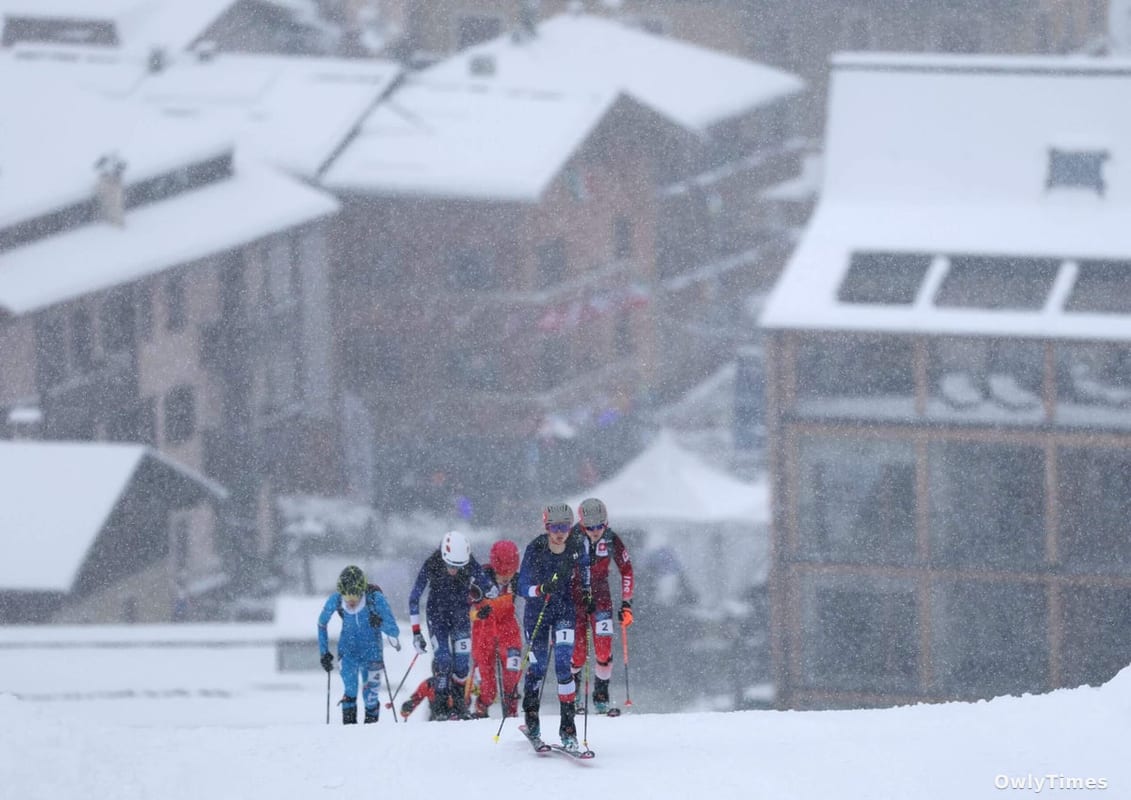

The air in Bormio tasted of snow and something older – a history of hardship and resilience etched into the very peaks surrounding the town. Thursday morning, as the first Olympic ski mountaineering races began, it wasn’t just athletes battling a grueling course; it was a sport clawing its way into the mainstream, a testament to a way of life forged in necessity and stubbornly preserved against the tide of modernization. This wasn’t a polished, corporate-sponsored spectacle; it was raw, visceral, and profoundly human, a “suffer-fest” as France’s Emily Harrop bluntly put it, and a potent reminder that the Olympics, at its best, can still reflect the soul of a place.
For centuries, the Italian Alps weren’t a playground for thrill-seekers, but an obstacle. Winter meant isolation, and skis weren’t tools for recreation, but essential for survival – for traveling between villages, hunting, and even military patrols. The mountains demanded respect, and traversing them required a brutal combination of strength, skill, and sheer willpower. While ski lifts arrived in the early 1900s, offering a more leisurely ascent, a dedicated group in these regions refused to abandon the original challenge. The first ski mountaineering race, held in Italy in 1933, wasn’t about entertainment; it was a continuation of that fundamental relationship with the landscape. It took until 2002 for the first world championships to be held, and now, nearly a century after that first race, skimo – as it’s affectionately known – has finally arrived on the Olympic stage, becoming the Winter Games’ first new sport in 28 years.
Drawn from The New York Times.
The debut wasn’t without its drama. The course, a punishing climb up the Stelvio, demanded everything from competitors. “The lungs, the chest, your quads, your calves,” Australian Lara Hamilton gasped, describing the all-consuming physical toll. But beyond the physical strain, a compelling narrative of second chances and unexpected paths was unfolding. Many of these athletes hadn’t initially set their sights on skimo. Harrop herself first pursued Alpine skiing, feeling “game over” when that dream ended, only to find a new purpose in the mountains. Hamilton had tried – and failed – in cross-country skiing, track and field, and even surfing before discovering her calling. These weren’t athletes groomed for this specific discipline from childhood; they were adventurers, drawn to the challenge and the freedom of the mountains, proving that Olympic glory can be found even after multiple detours.
This influx of multi-sport athletes speaks to a broader trend: a growing disillusionment with hyper-specialization in sports. For years, the pursuit of Olympic success has demanded increasingly early and intense focus on a single discipline, often at the expense of well-rounded development. But skimo, with its demand for endurance, strength, and technical skill, seems to reward those who have explored multiple athletic avenues. Anna Gibson, an American competitor whose story embodies this spirit, was a decorated distance runner in college before being lured into the world of skimo by a trail-running friend. Her journey, culminating in an unexpected World Cup win and an Olympic berth, is a powerful argument for the benefits of a more holistic approach to athletic development. Gibson, ranked 18th of 18 qualifiers, advanced to the semifinals despite a chaotic heat and a bloody finger, a testament to her adaptability and sheer grit. “Nothing Anna does should surprise anyone at this point,” her teammate Cameron Smith observed.
The energy in Bormio was palpable, fueled not just by the competition but by a sense of validation. With no guarantee skimo will return for the 2030 Winter Olympics, the athletes and fans alike were determined to make a statement. The techno music, the dancing, the singing – it was a celebration of a sport that had long been overlooked, a defiant cry for recognition. The gold medals, ultimately claimed by Switzerland’s Marianne Fatton and Spain’s Oriol Cardona Coll, felt like more than just individual victories; they were a collective triumph, a signal that skimo had “finally” arrived in the “major leagues.” But the question now isn’t simply whether skimo will remain an Olympic sport, but how it will evolve. Will it retain its rugged, grassroots spirit, or will it succumb to the pressures of commercialization and professionalization? The future of skimo, and perhaps a glimpse into the future of the Winter Olympics itself, hinges on finding that balance.

