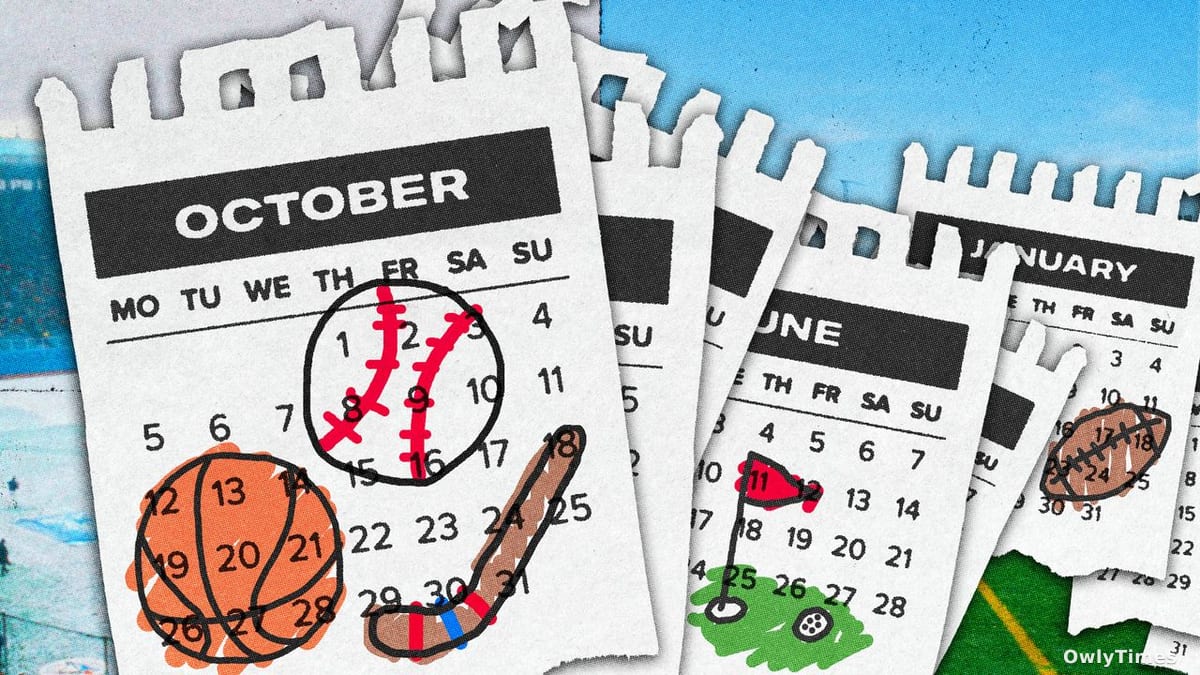

The air in August hangs thick and still, a humidity that seems to mute even the roar of a crowd. It’s the kind of heat that makes you question why anyone invented sports in the first place, let alone dedicated their lives to watching them. This isn’t a complaint, exactly, but an observation that’s become increasingly clear as OwlyTimes attempted the frankly daunting task of ranking all 12 months by their sheer sports-watching enjoyment. The results, as revealed this week, aren’t necessarily shocking – August landed squarely at the bottom – but they illuminate a deeper truth about our relationship with the athletic calendar: it’s not just about what is playing, but when it matters.
The ranking, which prioritizes major American sports coverage, isn’t meant to dismiss the global appeal of cricket or rugby, but to reflect the rhythms of the American sports fan. And those rhythms, it turns out, are deeply tied to cultural moments and societal needs. August’s low ranking isn’t just about the “dog days” of baseball, it’s about a collective exhale. It’s a month built for vacations, for disconnecting, for a deliberate slowing down – a stark contrast to the frenetic energy of March Madness or the high-stakes drama of a January NFL playoff run. This isn’t a failure of the sports calendar, but a reflection of our own human need for ebb and flow.
This piece references the gq.com report.
The Illusion of Constant Content
The paradox of being a sports fan in the 21st century is that there’s always something on. As the article points out, “If sports is your favorite show, there’s always new episodes.” But quantity doesn’t equal quality, and the sheer volume of content can dilute the impact of any single event. July, for example, suffers from a complete absence of the “big four” American sports, leaving fans to scavenge for excitement in Wimbledon, the Tour de France, or NBA free agency. These are compelling events in their own right, but they lack the cultural saturation and widespread appeal of, say, a Super Bowl Sunday. The article notes July contains the only stretch of the year where zero of the four major men’s sports are active, a void that highlights just how much of our sporting identity is tied to these behemoths.
This reliance on a few key sports raises a critical question: what happens when those sports falter? The NFL, for instance, faces ongoing scrutiny over player safety and declining viewership among younger demographics. A significant disruption to the NFL season – whether due to labor disputes, health crises, or a shift in cultural preferences – would send shockwaves through the entire sports landscape, leaving a void that even March Madness might struggle to fill. The ranking reveals how heavily the American sports calendar leans on a handful of events, making it vulnerable to unforeseen circumstances.
Beyond the Scoreboard: Sports as Cultural Barometer
The ranking isn’t just about identifying the “best” months for sports; it’s about understanding how sports reflect and shape our cultural values. September, consistently ranked high, benefits from the return of football, a sport deeply ingrained in American identity. NFL games aren’t just athletic competitions; they’re social rituals, family gatherings, and a source of communal pride. The article’s author even admits a personal bias towards September, attributing it to the “morale boost” of football’s return. This isn’t simply fandom; it’s a recognition of the emotional and psychological role sports play in our lives.
October, crowned the champion of sports months, embodies this perfectly. The rare “sports eclipse” – the overlap of MLB playoffs, NBA/NHL seasons, and NFL action – represents a peak of athletic abundance. But it also speaks to a broader cultural appetite for entertainment and competition. The fact that this overlap is a “nightmare fuel for sports-agnostic partners” is telling. It highlights the tension between dedicated fandom and the demands of everyday life, a tension that plays out in households across the country. October isn’t just a great month for sports; it’s a test of relationships.
The Shifting Sands of the Sports Landscape
The ranking also reveals a subtle but significant shift in the sports landscape. The increasing prominence of women’s sports – the WNBA and NWSL – is gradually filling the gaps in the calendar. While August remains a relatively quiet month, the growing popularity of these leagues is providing a compelling alternative for fans. The article acknowledges this, noting that the WNBA and NWSL seasons “start to heat up around this time.” This isn’t just a matter of filling airtime; it’s a sign of a broader cultural shift towards greater inclusivity and representation in sports.
However, the ranking also underscores the enduring dominance of men’s sports. The focus on “major media coverage in America” inherently privileges these leagues, potentially overlooking the vibrant and growing communities surrounding women’s sports and international competitions. The challenge for the industry is to broaden its scope, to amplify the voices of underrepresented athletes, and to create a more equitable and inclusive sports ecosystem. The fact that a Summer Olympics is needed to “save” August speaks to this imbalance.
This ranking isn’t a definitive judgment, but a snapshot of a dynamic and evolving landscape. It’s a reminder that sports aren’t just about wins and losses; they’re about cultural significance, societal trends, and the enduring human need for connection and entertainment. As we move forward, the question isn’t just what will be on TV, but who gets to play, whose stories get told, and how we can create a sports calendar that truly reflects the diversity and dynamism of our world. Will the continued growth of women’s sports fundamentally alter these rankings in the years to come, or will the established order remain largely intact? That’s the game we should all be watching.

