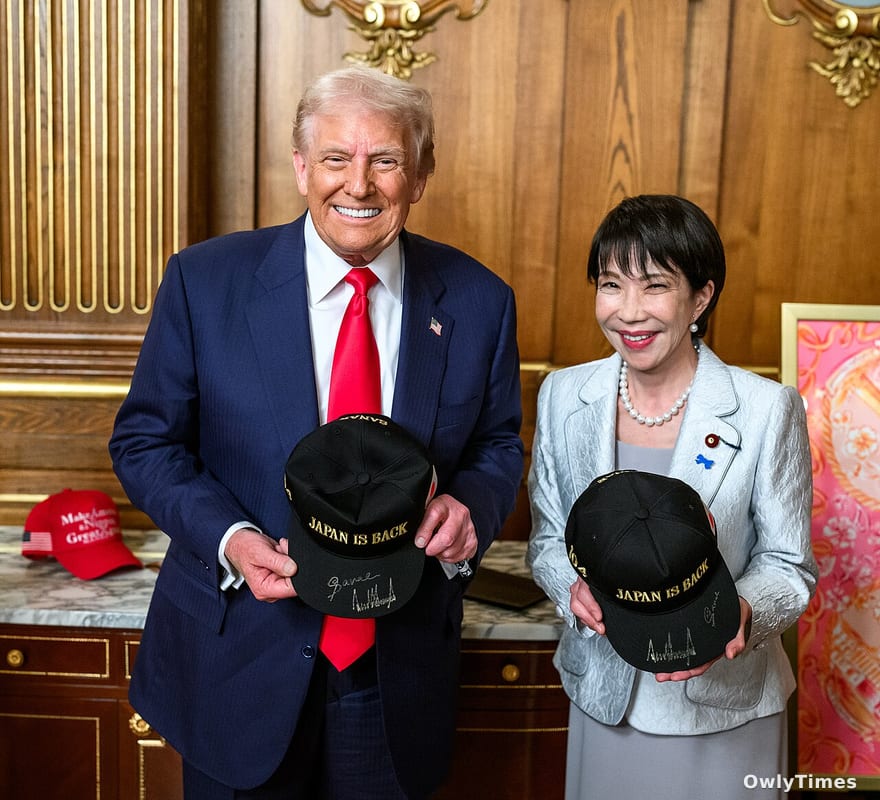

The Image of Strength: How Sanae Takaichi Redefined Japanese Electoral Politics
Sanae Takaichi’s February victory wasn’t simply the election of Japan’s first female prime minister; it was a calculated realignment of power, predicated on exploiting a fundamental shift in how young Japanese voters engage with politics. While established political analysis focused on potential ideological swings, the strategic calculus at play was far more granular: a recognition that in the digital age, political success increasingly hinges on capturing attention, not necessarily articulating detailed policy platforms. Takaichi’s campaign didn’t win on policy specifics, it won on performance – a carefully curated digital presence that resonated with a generation accustomed to scroll-based media and emotionally-driven content.
Drawn from toda.org.
The conventional wisdom regarding Japanese youth – progressive leanings, skepticism towards assertive security policies – proved demonstrably flawed. A segment of digitally active young voters rallied behind a politician advocating constitutional revision and expanded defense capabilities, a phenomenon that defies simple categorization. Ria Shibata, a Senior Research Fellow at the New Zealand Centre for Global Studies, notes the broader trend of identity-driven conflicts shaping regional stability in Northeast Asia, a dynamic Takaichi’s campaign skillfully tapped into. Takaichi’s approval ratings among 18-29 year olds soared, reaching as high as 90% in some surveys – a figure dwarfing those of her predecessors. This wasn’t apathy reversed; it was a redefinition of engagement, where viral images and aesthetic cues often superseded policy briefings.
This shift isn’t isolated to Japan. The success of Donald Trump in the United States, and more recently, figures like Zohran Mamdani, demonstrate a global pattern: the rise of “virtual branding” as the central organizing principle of electoral strategy. Trump’s memorable slogans and emotionally charged posts dominated attention cycles, while Mamdani’s campaign leveraged youth-centered digital branding for rapid mobilization. Takaichi’s team, however, took this a step further, cultivating a ‘sanakatsu’ or ‘sanae-mania’ – framing political support as a form of fandom participation. Hashtags multiplied, “mic-drop” moments went viral, and even her personal accessories became symbolic conversation pieces. This wasn’t organic; it was a meticulously crafted performance optimized for algorithmic reward.
Who benefits and who loses from this new political landscape? Traditional political parties, reliant on established networks and detailed policy platforms, are demonstrably losing ground. The Liberal Democratic Party (LDP), of which Takaichi is a member, has historically benefited from strong organizational structures, but even they were forced to adapt to Takaichi’s digitally-driven approach. The real winners are those adept at understanding and manipulating the attention economy – campaign strategists who prioritize shareability over substance, and politicians willing to embrace the performative aspects of modern politics. The potential loser is informed democratic deliberation itself, as nuance and complexity are sacrificed at the altar of virality. Post-election surveys revealed many first-time voters struggled to articulate policy distinctions, instead citing impressions of “strength,” “change,” and “decisiveness.”
The context of this shift is crucial. Japan’s younger generation has come of age amidst prolonged economic stagnation, regional insecurity, and global volatility. China’s rise, tensions over Taiwan, and North Korean missile launches create a climate of uncertainty. In this environment, Takaichi’s assertive rhetoric – emphasizing national defense and restoring Japan’s “strength and richness” – resonated deeply. This isn’t necessarily a rejection of pacifism, but a generational reframing of peace as deterrence and strategic autonomy. The language of “sovereignty” and “strength” translates far more effectively into shareable digital formats than complex historical debates. This echoes a historical pattern: in times of perceived national vulnerability, voters often gravitate towards leaders who project an image of strength and decisiveness, regardless of the underlying policy details. Consider the rise of nationalist movements in Europe during periods of economic hardship and geopolitical instability – the appeal to national pride and security often trumps nuanced policy discussions.
The election of Sanae Takaichi isn’t an isolated event; it’s a symptom of a broader democratic crossroads. The guiding question for campaigns is no longer solely “What policies do we stand for?” but “What content travels?” This incentivizes simplification, compressing nuance into short-form video and prioritizing aesthetic immediacy. While Takaichi’s leadership will ultimately be judged by her governance – her ability to deliver economic stability and regional security – the immediate impact is a recalibration of the political playing field.
The political chess move to watch next isn’t a policy announcement, but a platform adaptation. Will opposition parties attempt to replicate Takaichi’s digital strategy, sacrificing substance for shareability? Or will they attempt to reclaim the space for substantive debate, risking irrelevance in an attention-driven environment? The answer will determine not only the future of Japanese politics, but the fate of informed citizenship in the digital age.





