
The rhythmic thud of tennis balls echoing against the asphalt of Rodney Square is a sound that defies the usual hum of downtown Wilmington. For most of the year, this space serves as a busy public artery, but for one day, the United States Tennis Association (USTA) transforms the city center into a sprawling, makeshift court. This is the 38th annual Tennis in the Streets, a tradition that has quietly persisted for nearly four decades, offering a rare reprieve from the digital isolation that defines much of modern childhood.
Beyond the Screen: Reclaiming Public Space
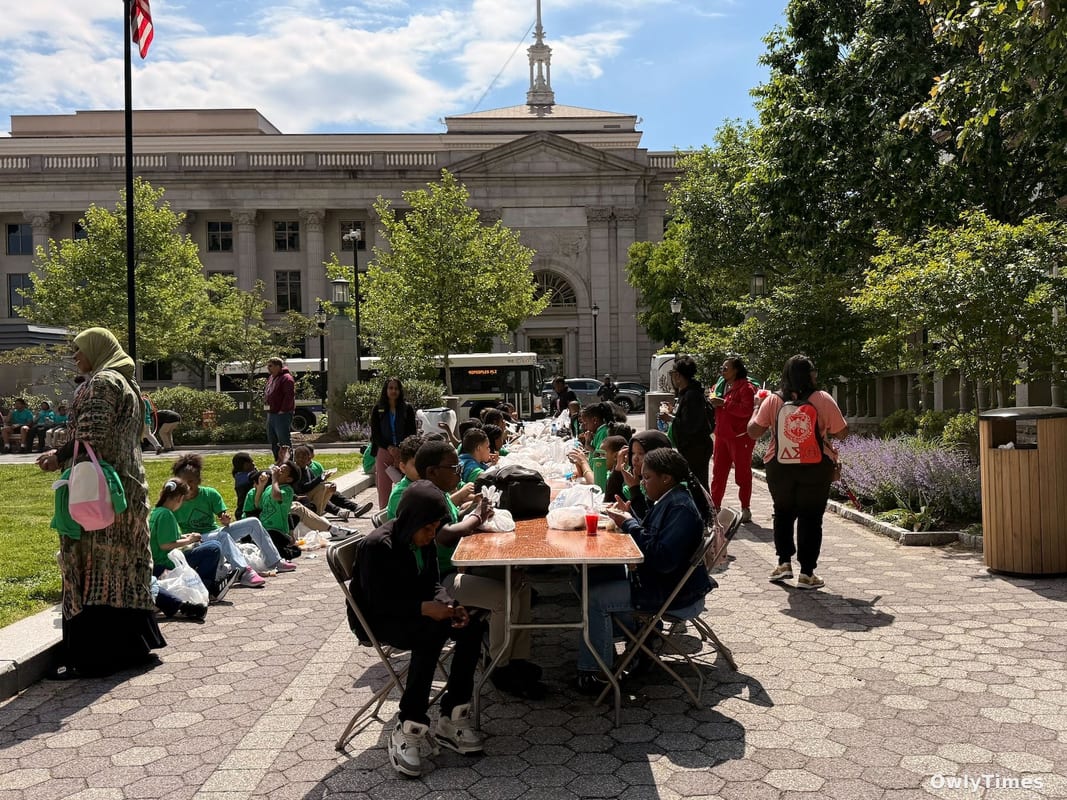
This year, the event drew roughly 500 elementary and middle school students from across the city, including participants from First State Montessori Academy, Stubbs Early Education Center, and Maurice Pritchett Academy. While the music, ice cream, and free T-shirts provide the festival atmosphere, the underlying objective is far more serious. In an era where social media often dictates the flow of youth culture, events like this serve as a necessary physical intervention.
Zahair Alvarez, an eighth grader at The Bayard School, noted that the day provided a vital opportunity to reconnect with peers without the filter of a screen. For Alvarez, the event wasn't just about learning a forehand volley; it was a rejection of the sedentary habits encouraged by the current digital landscape. His perspective highlights a growing tension in youth development: as virtual connectivity rises, the physical, communal friction of sports becomes increasingly difficult to cultivate.
Breaking Down the Barriers to Entry
Despite the popularity of tennis on the global stage, it remains a sport that often sits on the periphery of local youth athletics. Tim Fitzgerald, co-chair of the Delaware District Council for the USTA, observes that sports like basketball, football, and soccer dominate the youth registration landscape. The challenge is not necessarily a lack of interest, but a perceived lack of access.
Fitzgerald points out that cost implications often discourage families from pursuing tennis, a barrier the USTA is actively working to dismantle. By offering free or low-cost programming, the organization aims to reposition tennis as a sport for everyone, rather than a niche pursuit. The goal is to move beyond the one-day spectacle of Rodney Square and create a sustainable pipeline where students transition from a single afternoon of play to long-term participation in local nonprofit programs.
The Cultural Currency of Movement
For students like Sage Mirajh, an eighth grader and basketball player from First State Montessori Academy, the event acted as a social catalyst. She observed that the day motivated friends who had never held a racket to find common ground through a new, shared challenge. This social dimension is the heartbeat of the initiative; it fosters a sense of belonging in a city that, like many others, can feel fragmented by varying family situations and backgrounds.
As the nets are packed away and the streets return to their daily rhythm, the real metric of success will be found in the retention rates of these young athletes. The USTA’s ability to turn this curiosity into consistent community involvement remains the central challenge. The next reading of participation numbers in the USTA’s low-cost programs will determine whether this 38th-year tradition is successfully bridging the gap between a single day of fun and a lasting, athletic habit for Wilmington’s youth.

