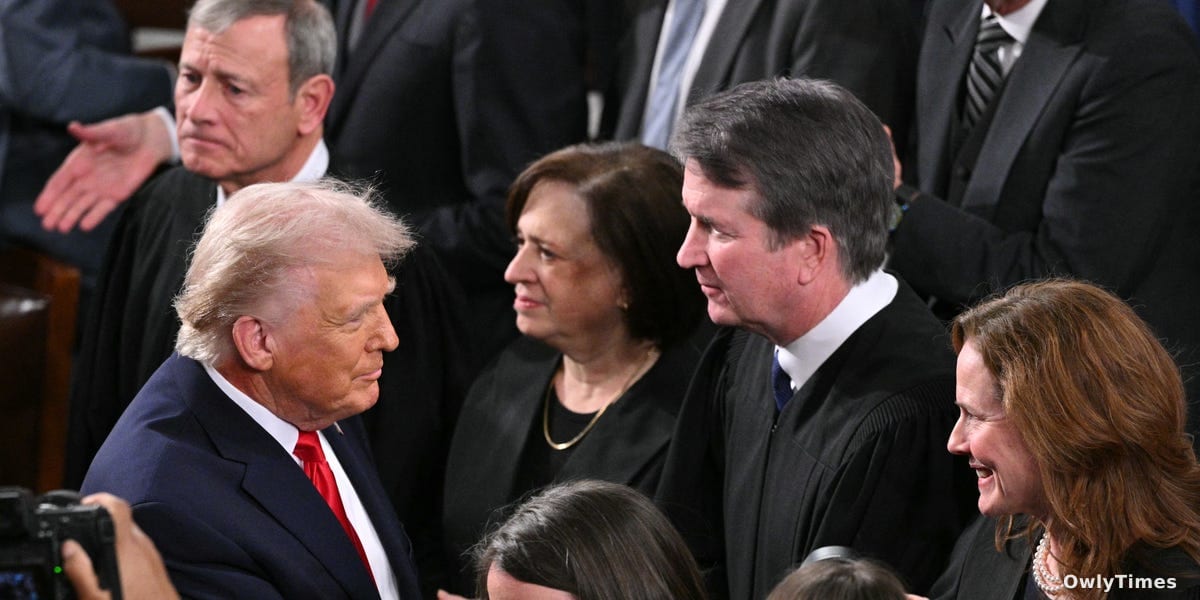

The strategic calculus behind the recent broadside against the Supreme Court is a clear attempt to redefine the expectations of judicial loyalty within the executive branch. By publicly castigating Justice Neil Gorsuch and Justice Amy Coney Barrett, President Donald J. Trump is signaling a shift from a transactional view of appointments to a demand for ideological alignment that transcends the traditional separation of powers. The objective is to apply public pressure on the court’s conservative wing, framing judicial independence as a personal and national liability rather than a constitutional virtue.
The Cost of Judicial Independence
The friction point centers on the court's recent ruling regarding tariffs, a decision Trump claims has cost the United States 159 billion dollars. In his view, the failure of the court to include a specific caveat—that money paid by foreign entities to the U.S. should not be subject to repayment—represents a failure of legal stewardship. The argument posits that these justices, despite their Republican nomination, are prioritizing an appearance of impartiality over the administration's stated economic interests.
Who benefits from this public critique? The executive branch gains a powerful lever to influence future deliberations, effectively putting the judiciary on notice that dissent will be met with political fallout. Who loses? The institutional legitimacy of the Supreme Court, as the President’s framing suggests that the court’s internal logic is secondary to the political mandates of those who appointed them. This dynamic mirrors the historical tension seen in the 1930s when the executive branch clashed with the bench over the scope of federal authority, highlighting the perpetual struggle between a mandate-driven presidency and a deliberative judiciary.
Challenging the Bench on Birthright Citizenship
The rhetoric extends beyond trade policy to the volatile issue of birthright citizenship. Trump describes the current practice as an "unsustainable, unsafe, and incredibly costly disaster," suggesting that the court is poised to rule against his administration’s preferred outcomes. By contrasting the perceived wavering of his appointees with the steadfastness of Democratic-appointed justices, the President is attempting to shame the conservative wing into adopting a more partisan approach to jurisprudence.
The numerical context provided by the administration—citing a landslide election victory, including wins in all seven swing states and a win in U.S. counties by a margin of 2,750 to 525—is intended to reinforce the idea that his judicial appointees are ignoring the will of the electorate. This strategy creates a binary: either the justices align with the "common sense" of the executive agenda, or they risk being labeled as obstacles to the national interest.
The Shift in Political Strategy
The underlying contradiction here is the President’s stated desire for loyalty versus his rejection of the "court packing" narrative. While he claims he does not want loyalty for himself, he explicitly demands it for the country, a distinction that allows the administration to weaponize patriotism against judicial decisions it finds unfavorable. The assertion that Republican justices oppose him to appear "independent" or "above it all" suggests that the administration perceives the court's internal culture as a structural threat to its policy goals.
The next signal to watch will be the specific language used in the upcoming ruling on birthright citizenship. The administration’s public framing has already set the stakes: if the court issues a negative ruling on this issue, it will be treated by the President not as a legal interpretation, but as an economic catastrophe. Whether this pressure campaign results in a shift in judicial posture or further solidifies the divide between the two branches will be determined by the court's next major opinion on this matter.





