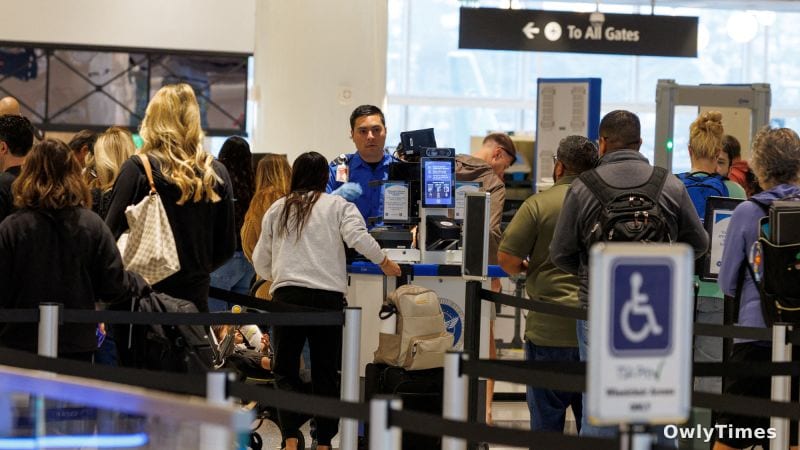

The strategic calculation behind the current partial government shutdown isn’t simply a disagreement over border wall funding; it’s a deliberate leveraging of essential personnel classifications to force a negotiation on terms favorable to the Executive Branch’s immigration enforcement priorities. While headlines focus on delayed TSA paychecks, the more revealing detail is who continues to get paid – and why. The prioritization of funding for Immigration and Customs Enforcement (ICE) and Customs and Border Protection (CBP), bolstered by the $165 billion “One, Big, Beautiful Bill” signed last summer, isn’t a coincidence. It’s a clear signal of the administration’s core objectives and a demonstration of its willingness to use the disruption of essential services as a bargaining chip.
The Uneven Burden of Essential Status
The immediate impact is stark: approximately 61,000 Transportation Security Administration (TSA) employees will receive partial paychecks covering only the second week of February, with the prospect of no further payment until a funding agreement is reached. Johnny Jones, secretary/treasurer of the American Federation of Government Employees TSA Council 100, predicts “TSA officers in food bank lines in a couple of days,” a grim forecast underscored by reports of colleagues already resorting to payday loans. This isn’t merely a hardship for individuals; it’s a calculated risk. The administration is betting that the public pressure generated by potential airport delays – a direct consequence of a demoralized and financially strained workforce – will compel Democrats to concede. However, this strategy reveals a fundamental contradiction: the administration simultaneously claims the border is secure enough to warrant reduced funding for certain programs, yet simultaneously leverages the threat of travel disruption to gain political leverage.
Reporting from CNN informs this analysis.
The disparity in funding is telling. While TSA struggles, $75 billion was allocated to ICE and $64 billion to CBP through the aforementioned legislation. This isn’t simply about funding border security; it’s about funding a specific approach to border security – one characterized by increased enforcement and, as evidenced by the recent shootings in Minneapolis, a willingness to operate with a degree of latitude that has proven fatal for US citizens. The White House and Senate Democrats are currently negotiating reforms to these operations following those incidents, and the Democrats’ insistence on changes before releasing further funds is the core of the impasse. The administration’s willingness to allow a shutdown, and to disproportionately impact TSA employees, demonstrates the high value it places on maintaining its current enforcement posture.
A Historical Echo of Shutdown Tactics
This tactic of selectively funding agencies during a shutdown isn’t new. The Clinton administration employed a similar strategy in 1995-96, prioritizing essential national security functions while allowing other agencies to experience significant disruption. However, the scale of the funding disparity in the current situation – and the explicit link to the administration’s signature policy priorities – is noteworthy. The “big, beautiful bill” wasn’t simply a funding mechanism; it was a pre-emptive strike, creating a financial cushion for the agencies most central to the administration’s agenda and, crucially, providing leverage in future negotiations. The temporary suspension, and subsequent reversal, of the TSA PreCheck program further illustrates this point – a demonstration of control, quickly walked back when public outcry mounted.
The Cost of “Essential” Work
The shutdown plan reveals that over 90% of Department of Homeland Security (DHS) employees will continue working, with over 93% of ICE and CBP personnel remaining on the job. This raises a critical question: what constitutes “essential” work? While securing the border is undoubtedly a priority, the administration’s definition of essential appears heavily weighted towards enforcement and less towards the broader security functions performed by TSA. Ha Nguyen McNeill, performing the duties of TSA administrator, testified before a House subcommittee that many TSA employees live paycheck to paycheck, highlighting the vulnerability of those deemed “essential” but lacking the financial security to withstand a prolonged shutdown. The guarantee of back pay, enshrined in a 2019 law, offers little immediate relief to those facing eviction or struggling to afford basic necessities.
The political chess move to watch next isn’t whether a deal will be reached – it’s how the administration will respond if Democrats secure significant concessions on immigration enforcement reforms. Will the administration accept those changes, or will it seek to circumvent them through executive action, potentially triggering another showdown? The funding structure established by the “One, Big, Beautiful Bill” provides a powerful tool for the Executive Branch, and the willingness to wield it, even at the expense of essential workers, signals a long-term strategy of prioritizing enforcement above all else. The question is whether Congress will allow that strategy to dictate the terms of the debate.





