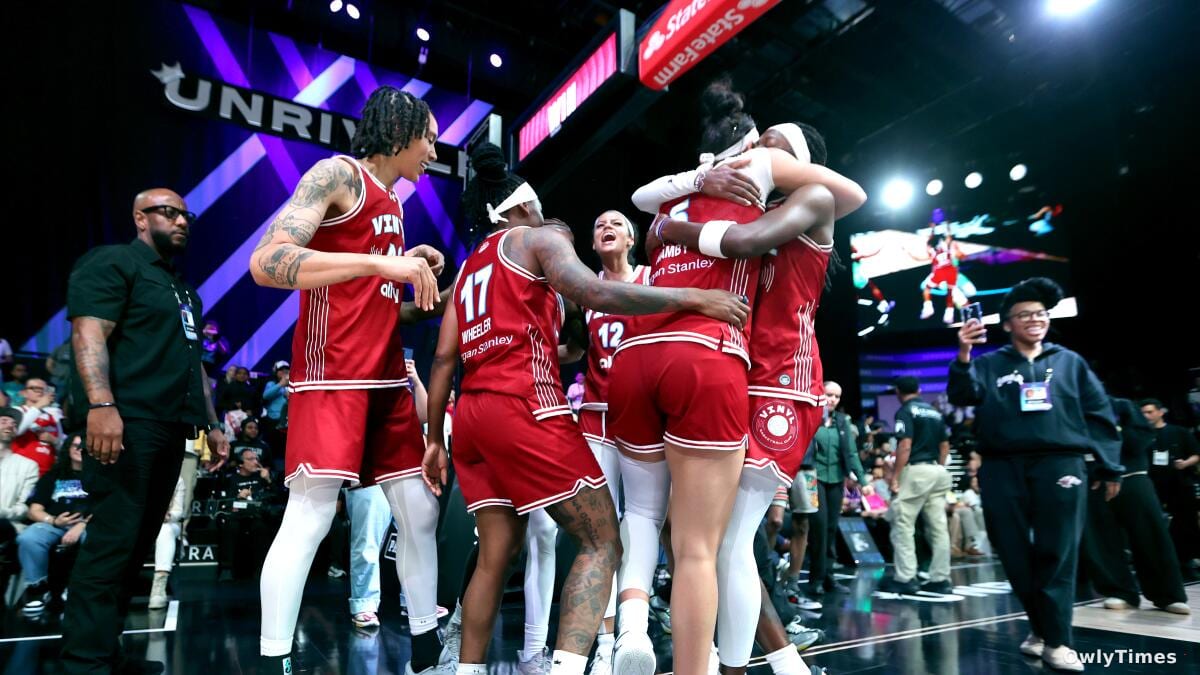

The eruption in Medley, Florida wasn’t a political rally or a concert, but a spontaneous pile-on of relief and exhilaration. Dearica Hamby’s game-winning shot against the No. 3 seeded Laces wasn’t just two points on the board; it was a validation of Vinyl’s improbable playoff run, a testament to a team that clawed its way into the Unrivaled semifinals as the sixth seed. The image of Erica Wheeler, Rhyne Howard, Brittney Griner, Saniya Rivers, Rae Burrell, and Hamby herself collapsing into a joyous heap speaks to something bigger than basketball—a hunger for opportunity and a defiance of expectations that’s rapidly defining this new league.
The Underdog Narrative Takes Center Stage
Unrivaled, in its short existence, is already proving to be a fascinating case study in how to disrupt a sports landscape. While the WNBA grapples with issues of visibility and player compensation, Unrivaled has positioned itself as a haven for stars, offering a $600,000 prize pool for the championship-winning club – a figure that dwarfs many traditional women’s basketball awards. But the league isn’t just about the money; it’s about the format. The 3-on-3, fast-paced style, coupled with the playoff structure, has created a breeding ground for upsets. Vinyl’s journey, culminating in their 82-69 victory, is a prime example. They were the last team to clinch a playoff spot, yet they’ve managed to topple higher-ranked opponents, fueled by Hamby’s clutch performances and Rhyne Howard’s scoring prowess – she dropped 30 points in Saturday’s win. This isn’t just a feel-good story; it’s a direct challenge to the established hierarchies within women’s basketball.
Drawn from the Los Angeles Times.
Beyond Individual Stats: A League Built on Versatility
While individual brilliance is certainly on display – Paige Bueckers’ 29-point performance leading Breeze past last year’s champion Rose is another example – Unrivaled’s success hinges on a different kind of athleticism. The league rewards versatility. Dominique Malonga’s 17 rebounds and game-winning free throw for Breeze aren’t just stats; they represent the value of a player who can dominate the boards and deliver under pressure in a condensed game. This emphasis on all-around play is reflected in the end-of-season awards. Aliyah Boston, named Defensive Player of the Year, isn’t just a shot-blocker (leading the league with 29 blocks in 14 games); she’s a rebounding machine (136 total) and a force in transition. Her improvement from her first Unrivaled season – jumping from 5.9 points and 0.4 blocks to 18.9 points and 2.1 blocks – demonstrates the league’s ability to elevate players and showcase their full potential.
The Coaching Factor and the Rise of New Leadership
The impact of coaching shouldn’t be overlooked. Roneeka Hodges’s selection as Coach of the Year after leading Phantom to an 11-3 record in her first season is a significant moment. It signals a shift towards recognizing strategic acumen and player development within this new league structure. Hodges isn’t just a tactician; she’s a leader who has clearly fostered a winning culture within Phantom. This is particularly noteworthy given the league’s emphasis on player empowerment and collaborative decision-making. The success of coaches like Hodges suggests that strong leadership can thrive even within a framework that prioritizes player agency. Chelsea Gray’s individual achievements – becoming the first Unrivaled player to surpass 600 points, 200 field goals, and 100 assists – also highlight the league’s ability to cultivate individual narratives alongside team success.
What’s Next for Unrivaled and Women’s Basketball?
The semifinals, set to take place at Barclays Center in Brooklyn on Monday night, promise to be a showcase of Unrivaled’s best. Phantom and Mist, earning automatic berths, will face off against Vinyl and Breeze, respectively. But the real question isn’t just who will win the championship. It’s whether Unrivaled can maintain this momentum and continue to challenge the status quo. Will the WNBA respond with similar innovations in format and player compensation? Will other leagues attempt to replicate Unrivaled’s success? The league’s ability to attract viewership and sponsorship will be crucial. More importantly, will Unrivaled’s model prove sustainable, or will it ultimately be absorbed into the existing sports ecosystem? The coming months will reveal whether this league is a fleeting phenomenon or a genuine catalyst for change in the world of women’s basketball.

