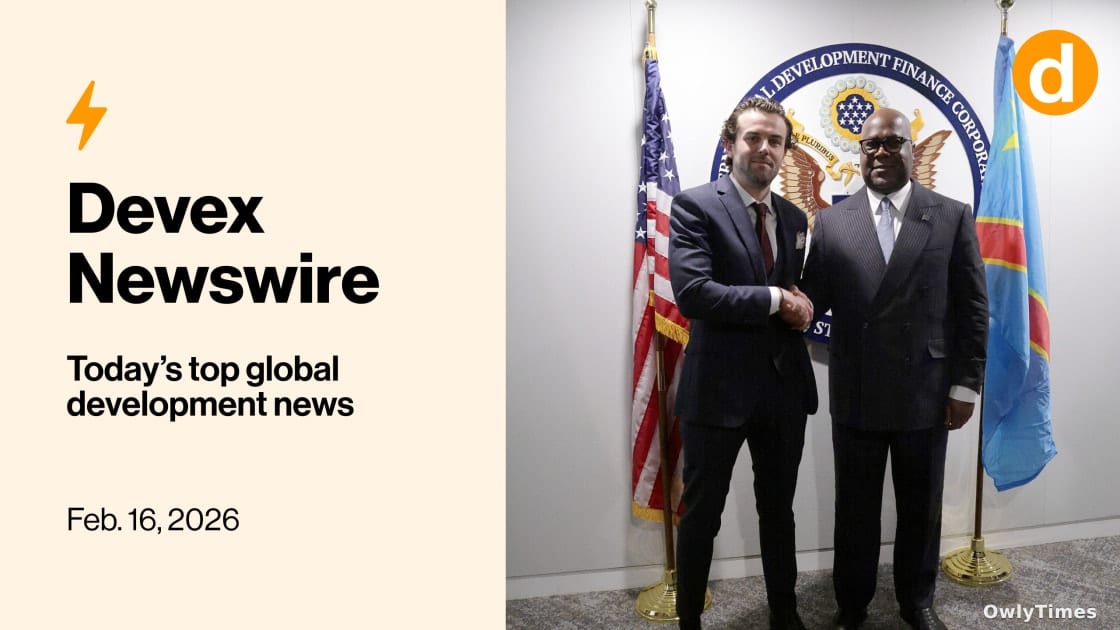

The DFC’s New Calculus: Development or “America First”?
The U.S. International Development Finance Corporation (DFC) is undergoing a significant transformation, and the question isn’t simply how it’s changing, but why. With a portfolio now exceeding $200 billion – a substantial leap from its $60 billion cap – the DFC, under the Trump administration, is poised to deploy capital with “greater precision and speed.” But this increased firepower comes with a crucial caveat: a sharpened focus on aligning investments with the President’s foreign policy objectives, raising concerns about a potential shift away from traditional development mandates towards prioritizing “America First” economic gains. This isn’t merely a budgetary increase; it represents a fundamental recalibration of how the U.S. approaches international development finance, and the implications are far-reaching.
Based on the original devex.com report.
Background & Context: From OPIC to DFC and Beyond
To understand the current moment, it’s essential to trace the DFC’s lineage. It was created in late 2019 by consolidating the Overseas Private Investment Corporation (OPIC) and the Development Credit Authority (DCA). The initial intent was to modernize U.S. development finance, offering a broader range of tools – including equity investment – and a larger capacity to address global challenges. However, the expansion under the Trump administration has introduced a distinctly transactional element. This represents a departure from the post-World War II consensus that prioritized development as a strategic imperative in its own right, fostering stability and goodwill alongside economic benefits.
The increase in the DFC’s investment cap is particularly noteworthy. Doubling, then tripling the previous limit signals a willingness to engage on a scale previously unseen. This isn’t simply about doing more of the same; it’s about fundamentally altering the scope and ambition of U.S. development finance. Previous administrations, while also seeking returns, generally framed development as a core value. The current emphasis, as articulated by Conor Coleman, DFC’s head of investments, is on “driving the president’s foreign policy objectives” while delivering a return to the U.S. taxpayer. This prioritization is a key indicator of the shift.
A Strategic Reorientation: Fewer, Larger Deals
The DFC’s new strategy, as detailed by Coleman, involves a move towards “fewer transactions each year, but bigger ones,” potentially reaching $500 million for individual infrastructure projects. This signals a deliberate move away from a broad-based approach that included smaller investments in sectors like agriculture and healthcare. While Coleman assures these sectors won’t be abandoned entirely, they’ll likely be integrated as “package investments” supporting larger, strategically aligned projects.
This shift is significant for several reasons. Larger projects often require more complex due diligence and carry greater risk. They also tend to favor established companies with the capacity to manage such undertakings, potentially excluding smaller, local businesses that are crucial for sustainable development. Furthermore, the focus on infrastructure aligns with the administration’s broader emphasis on tangible, visible projects that can demonstrate immediate economic impact – a narrative that resonates with the “America First” agenda. The expansion of the Office of Foreign Policy to serve as an “umbrella” for investment decisions underscores this strategic alignment.
What This Means: Implications for Stakeholders
The DFC’s reorientation has implications for a wide range of stakeholders. For developing countries, the potential benefits of large-scale infrastructure projects are undeniable, but they come with the risk of increased debt burdens and a loss of control over development priorities. The emphasis on projects aligned with U.S. foreign policy could also lead to a situation where investments are directed towards countries deemed strategically important, rather than those with the greatest need.
For the private sector, the DFC’s increased risk appetite and exploration of tools like securitization could unlock new investment opportunities, particularly in emerging markets. However, the focus on larger projects may create barriers to entry for smaller businesses. For the U.S. taxpayer, the promise of a return on investment is appealing, but it’s crucial to assess whether these returns justify the potential trade-offs in terms of development effectiveness and long-term stability. And for the broader development community, the shift raises concerns about the erosion of traditional development principles and the potential for aid to be used as a tool of geopolitical leverage. The comments from leaders at the Munich Security Conference, highlighting the interconnectedness of security and development, serve as a counterpoint to this potentially narrower focus.
Looking Ahead: Navigating Uncertainty
The DFC’s trajectory remains uncertain. While Coleman insists the agency can “do both” – pursue development and strategic interests – the emphasis on the latter is undeniable. The coming months will be crucial in determining whether the DFC can successfully navigate this tension. Key indicators to watch include the types of projects the agency prioritizes, the level of engagement with local communities, and the transparency of its decision-making processes.
It’s also important to consider the potential impact of a change in administration. A new president could reverse course, re-emphasizing development as a primary goal and potentially scaling back the focus on “America First” investments. However, the DFC’s expanded capacity and the institutional changes implemented under the Trump administration will likely have a lasting impact, regardless of who occupies the White House. The question isn’t simply whether the DFC will prioritize development or strategic interests, but how it will define those terms and balance competing priorities in a rapidly changing world.