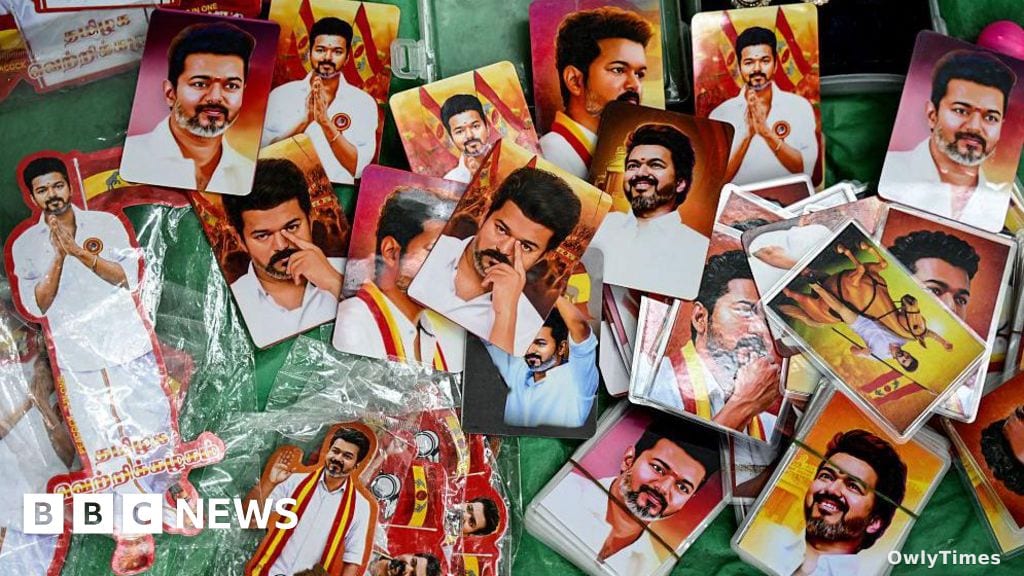

The strategic calculus behind C. Joseph Vijay’s entry into Tamil Nadu’s political arena is not merely a pivot from cinema to governance; it is the deliberate conversion of long-cultivated fandom into a disciplined, grassroots electoral machine. By transforming fan clubs into the Vijay Makkal Iyakkam welfare network as early as 2009, Vijay moved to secure a foundation that bypassed traditional party structures. The result of this methodical buildup was realized on Monday, when his party, the Tamilaga Vettri Kazhagam (TVK), secured 108 seats in the 234-member assembly. In a political ecosystem long defined by a rigid duopoly between the Dravida Munnetra Kazhagam (DMK) and the All India Anna Dravida Munnetra Kazhagam (AIADMK), Vijay has effectively shattered the established order, even while falling 10 seats short of the 118-seat threshold required for a majority.
The Calculus of Charisma and Coalition
Who benefits from this seismic shift? Primarily, the younger electorate and those disillusioned by the "jaded" performance of legacy parties. According to pollster Pradeep Gupta of Axis My India, the surge toward Vijay is most pronounced among voters aged 18 to 39, who comprise approximately 42% of the state’s electorate. By contrast, the losers in this equation are the incumbent DMK and the AIADMK, both of which now face a reality where their decade-long dominance is no longer the default setting of Tamil Nadu politics. Vijay’s challenge is now the pivot from populist campaigner to coalition-builder, a necessary transition to bridge the 10-seat gap and secure his path to the chief minister’s office.
Historical Echoes in a Modern Arena
The parallels to the past are inevitable, yet the context of this disruption is distinct. Observers draw immediate comparisons to the late matinee idol MG Ramachandran, who famously broke from the DMK to form his own party and ascended to the chief ministership in 1977. However, Vijay operates in a state that has seen 11.2% growth in 2024-25 and maintains some of India’s most robust social indicators. While Ramachandran emerged from the mid-century ideological fervor of the Self-Respect Movement, Vijay is navigating a landscape where the appetite for change is fueled by a restlessness that persists despite—or perhaps because of—the state’s relative stability.
Contradictions in the Campaign Narrative
Vijay’s rise is marked by a notable tactical contradiction: a performer who built his brand on the secular, rationalist traditions of Dravidian cinema is now engaging in a highly visible turn toward religious institutionalism. By visiting prominent temples and churches in the weeks following the vote, Vijay appears to be hedging his bets against the governing Bharatiya Janata Party (BJP), which he has identified as his primary ideological adversary. Critics, including author and analyst Nilakantan RS, argue that this suggests a reliance on "virality" as currency rather than administrative policy. With his final film, Jana Nayagan, currently tied up in legal disputes with India’s film classification board, the actor-turned-politician has effectively tethered his future to the volatile intersection of celebrity image and political authority.
The Next Chess Move
The immediate trajectory of this power shift depends on the mechanics of legislative survival. With the TVK holding 108 seats, the next reading of the assembly’s support will show whether Vijay can successfully court independent legislators and smaller parties to cross the 118-seat majority threshold. This negotiation period will test whether the "verve" identified by social scientist Shiv Visvanathan can be translated into the durable, mundane compromises required to govern a state that is as economically sophisticated as it is politically fickle.





