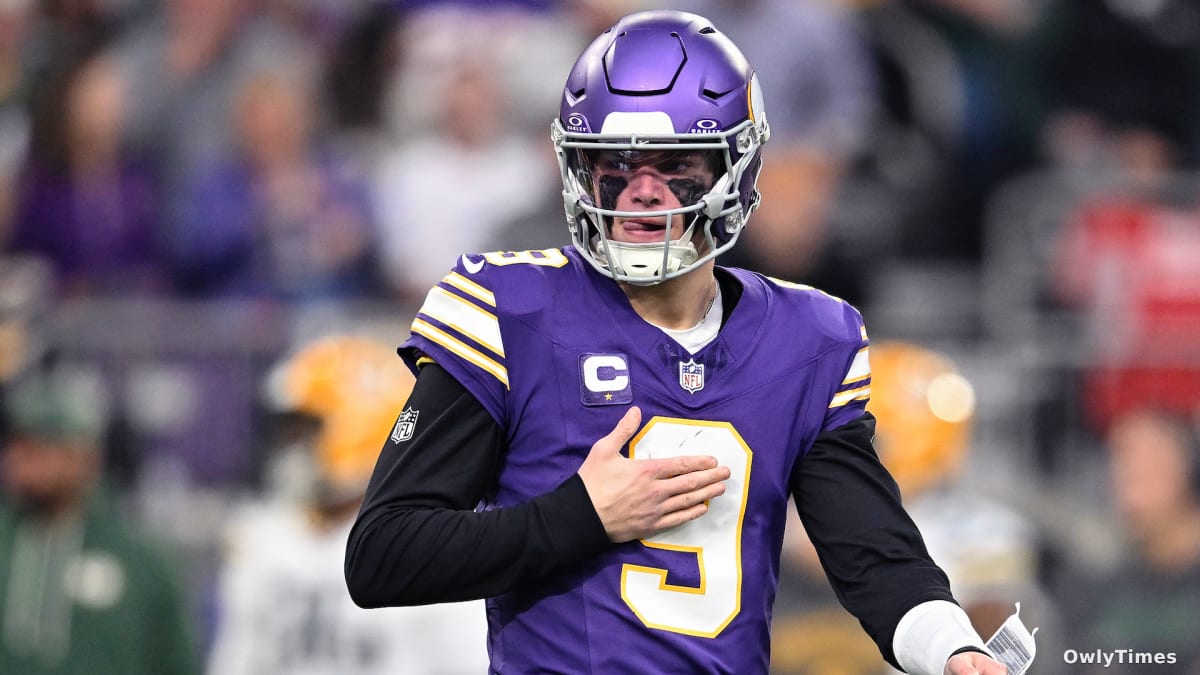

The fluorescent lights of the NFL Combine in Indianapolis cast a stark glow on the carefully constructed narratives of hope and potential. But beneath the practiced optimism, a quiet tremor ran through the Minnesota Vikings’ contingent this week. It wasn’t about draft prospects or free agency targets; it was about J.J. McCarthy, the quarterback they staked their immediate future on just last year, and the unsettling possibility that “future” might not be as long as they once believed. The Vikings aren’t publicly admitting a crisis, but the carefully worded statements from executive vice president of football operations Rob Brzezinski and head coach Kevin O’Connell reveal a franchise grappling with a rapidly shifting assessment of its most important player – and a looming question of whether they overreacted to the promise of a Michigan pedigree.
The Shifting Sands of Quarterback Confidence
Just twelve months ago, the Vikings traded up to select McCarthy at No. 10 overall in the 2024 draft, a move widely interpreted as a bold declaration of their quarterback’s future. The price was steep – a significant investment of draft capital – and the expectation was that McCarthy would quickly establish himself as the franchise cornerstone. His rookie season, however, was a mixed bag. While he went 6-4 in his ten starts, throwing for 1,632 yards, 11 touchdowns, and a concerning 12 interceptions, the performance hardly screamed “franchise savior.” The numbers themselves aren’t disastrous in isolation, but consider this: the average completion percentage for first-round quarterbacks in their first year is around 60%, McCarthy landed at 58%. The Vikings, having hitched their wagon to a young quarterback, watched as Sam Darnold – a name synonymous with quarterback inconsistency – led the Seattle Seahawks to a Super Bowl appearance, a painful reminder that sometimes, the safe, experienced hand delivers more immediate results.
Drawn from CBS Sports.
Beyond the Box Score: A Franchise in Flux
Brzezinski’s comments this week weren’t a full-throated endorsement of McCarthy, but a calculated hedging of bets. “What we do know is we need a level of baseline quarterback play for us to be effective,” he stated, a phrase that subtly undermines the initial confidence in McCarthy’s potential. The Vikings aren’t necessarily looking to replace him, but they are demonstrably exploring all options. This isn’t simply about performance; it’s about risk mitigation. McCarthy is signed through 2027 with $21.8 million guaranteed, a substantial financial commitment for a player whose future is, at best, uncertain. The team’s willingness to consider alternatives – including veterans like free agent Aaron Rodgers, the potentially available Kyler Murray, or even navigating a deal for Daniel Jones – signals a level of anxiety that wasn’t present a year ago. O’Connell’s acknowledgement that the “timeline is in a different place for all of us” is a particularly telling admission, hinting at a reassessment of McCarthy’s developmental curve.
The Darnold Effect and the Veteran Quarterback Market
The success of Sam Darnold with the Seahawks is a critical, if unspoken, factor in the Vikings’ current predicament. Darnold, once considered a bust, found a stable environment and flourished, proving that a change of scenery and a supportive system can unlock potential. This success has undoubtedly broadened the Vikings’ perspective, making them more open to considering veteran options. The current free agent market is surprisingly robust, with established quarterbacks potentially available. The Indianapolis Colts’ situation with Daniel Jones is particularly intriguing; if they don’t franchise tag him, he could become a viable, if imperfect, option for Minnesota. The possibility of Kyler Murray becoming available adds another layer of complexity, though his reported lack of communication with the Cardinals raises red flags. The Vikings are facing a classic NFL dilemma: patience with a young, unproven quarterback versus the pursuit of immediate competitiveness with a veteran.
What This Means for the Quarterback Landscape
The Vikings’ uncertainty surrounding J.J. McCarthy isn’t just a Minnesota story; it’s a microcosm of the broader challenges facing teams in the modern NFL. The pressure to find a franchise quarterback is immense, leading to aggressive draft-day maneuvers and often unrealistic expectations. The league is littered with cautionary tales of high draft picks who failed to live up to the hype. The Vikings’ situation highlights the inherent risk in betting heavily on potential, especially in a league where quarterback play is paramount. The team’s willingness to publicly acknowledge their exploration of alternatives sends a message to the rest of the league: even a significant investment doesn’t guarantee a future. The question now isn’t if the Vikings will explore other options, but how far they’ll go. Will they bring in a veteran to compete with McCarthy, potentially accelerating his development through competition? Or will they actively pursue a trade, signaling a complete loss of faith in their initial investment? The answer will not only define the Vikings’ next few seasons, but will also shape the conversation around quarterback evaluation and the ever-increasing pressure to find “the guy” in a league obsessed with the position.