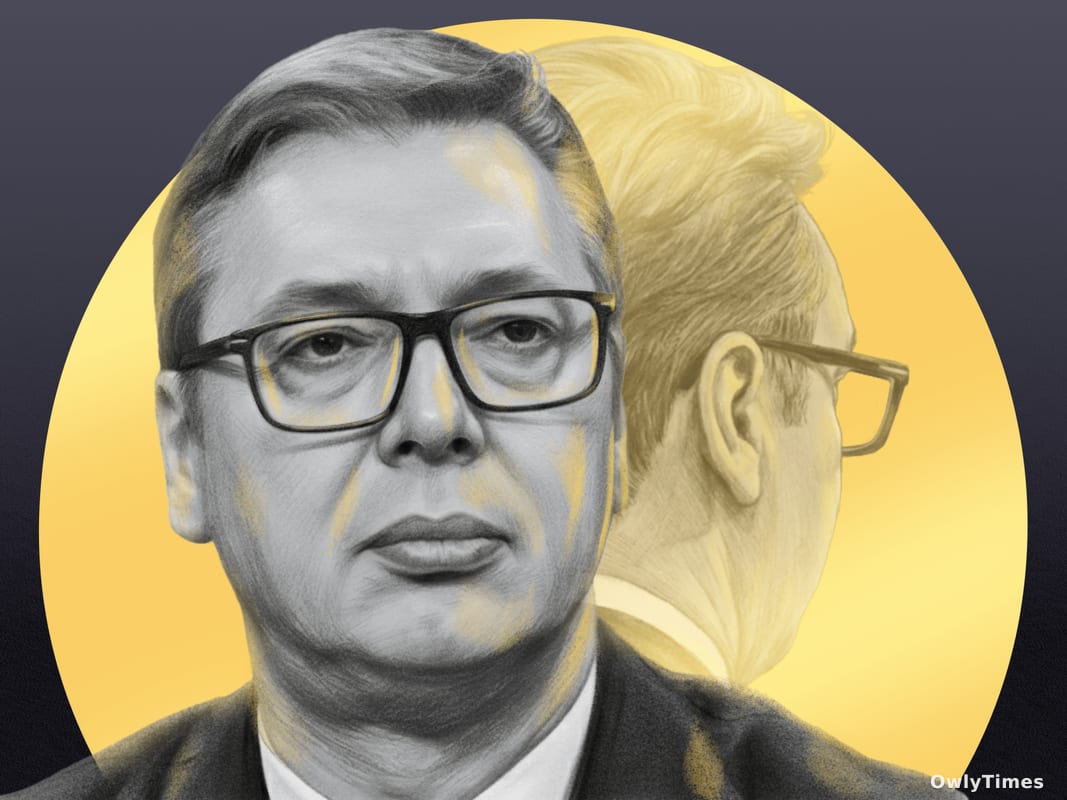

The calculus began not in a parliament or polling station, but in a football stadium. On May 13, 1990, the match between Red Star Belgrade and Dinamo Zagreb in Zagreb’s Maksimir Stadium wasn’t simply a sporting event; it was a pressure test for a Yugoslavia already fracturing along ethnic lines. Among the Red Star fans traveling to the game was a young law student named Aleksandar Vucic, a detail that reveals far more than a youthful enthusiasm for football. The riot that erupted – instigated, as Vucic himself later recounted, by Serbian gangster Zeljko Raznatovic, alias Arkan – wasn’t a spontaneous outburst of hooliganism, but a prefiguration of the violence to come, and a formative experience for the man who would dominate Serbian politics for decades. Understanding Vucic’s enduring power requires recognizing that his ascent wasn’t despite this past, but because of it – a strategic leveraging of nationalist sentiment and a willingness to operate in the shadows that continues to define his rule.
The immediate fallout of the Maksimir riot – broken barriers, hurled chairs, and escalating ethnic clashes – foreshadowed the brutal disintegration of Yugoslavia. But the long-term consequence was the political education of Aleksandar Vucic. His own account, detailing the shift from a football rivalry to a Serb-Croat conflict, isn’t a confession of guilt, but a demonstration of political acuity. He understood, even then, the potency of ethnic division as a tool for mobilization. This understanding fueled his early career with a far-right group advocating for a “Greater Serbia,” and culminated in a chilling 1995 threat to kill hundreds if external powers intervened in the Bosnian War – a statement he has never fully retracted, despite later gestures towards reconciliation. Who benefits and who loses from this carefully cultivated ambiguity? Vucic benefits by maintaining a grip on nationalist voters, while the victims of past conflicts, and the prospect of genuine regional stability, consistently lose out.
This pattern of strategic ambiguity echoes a historical precedent: the rise of Josip Broz Tito after World War II. Like Vucic, Tito consolidated power by exploiting existing divisions, albeit along different lines. Tito suppressed nationalism to forge a multiethnic Yugoslavia, while Vucic utilizes nationalism to maintain control. The key difference lies in the long-term vision. Tito’s project, however authoritarian, aimed for unity; Vucic’s appears to prioritize personal power, even if it means perpetuating instability. The family history of Vucic – fleeing the Ustase, Croatian fascists, in Bosnia – provides a crucial context. The trauma of his family’s experience instilled a deep-seated distrust of Croatian nationalism, a sentiment he has repeatedly invoked throughout his career. This isn’t simply personal grievance; it’s a foundational narrative that justifies his political choices to a significant segment of the Serbian electorate.
See the original Al Jazeera story for the full account.
The economic improvements under Vucic’s leadership – unemployment down, wages up – are undeniable. Since 2012, unemployment has fallen from 24 percent to single digits, and wages have more than doubled. However, these gains are inextricably linked to Serbia’s deepening relationship with China, which has invested billions in infrastructure through the Belt and Road Initiative. This reliance on Chinese investment, while boosting the economy, creates a new form of dependency, potentially trading long-term sovereignty for short-term economic benefits. Simultaneously, Vucic maintains a delicate balancing act with the West, negotiating EU membership while refusing to sanction Russia and consistently voicing pro-Russian sentiments. This isn’t a principled stance, but a calculated maneuver to appease both constituencies and maximize his leverage. The recent judicial overhaul, criticized by the EU for undermining the rule of law, exemplifies this strategy: Vucic publicly defied Brussels, signaling his willingness to prioritize domestic control over European integration.
The ongoing anticorruption protests, sparked by the November 2024 Novi Sad railway station collapse, represent the most significant challenge to Vucic’s authority to date. The allegations of corruption surrounding the disaster, coupled with the deployment of football hooligans and alleged criminals to counter-protest, expose the deep entanglement between the state, organized crime, and Vucic’s inner circle. The involvement of figures like Petar Panic, a long-time associate of Vucic, is not an anomaly, but a symptom of a systemic problem. This echoes the post-Milosevic era, where organized crime flourished in the vacuum of state authority. Vucic’s response – pardons for some protesters, arrests of others – is a classic tactic of divide and conquer, designed to dissipate the momentum of the movement. But the protests persist, fueled by a growing disillusionment with a system perceived as rigged and corrupt. The question now isn’t whether Vucic can suppress the protests, but whether he can maintain control long enough to secure a favorable outcome in the upcoming elections.
The political chess move to watch next isn’t a grand diplomatic gesture or a sweeping policy announcement, but the timing of those elections. Will Vucic call for a vote before the protest movement can consolidate its support, or will he gamble on weathering the storm and hoping for a return to stability? The answer will reveal whether he believes his grip on power is secure, or whether he recognizes the growing threat to his long-term rule. The Maksimir Stadium riot wasn’t just a prelude to war; it was a lesson in the power of manipulation and the enduring appeal of nationalist fervor. Aleksandar Vucic learned that lesson well, and his continued dominance of Serbian politics hinges on his ability to continue exploiting it.





