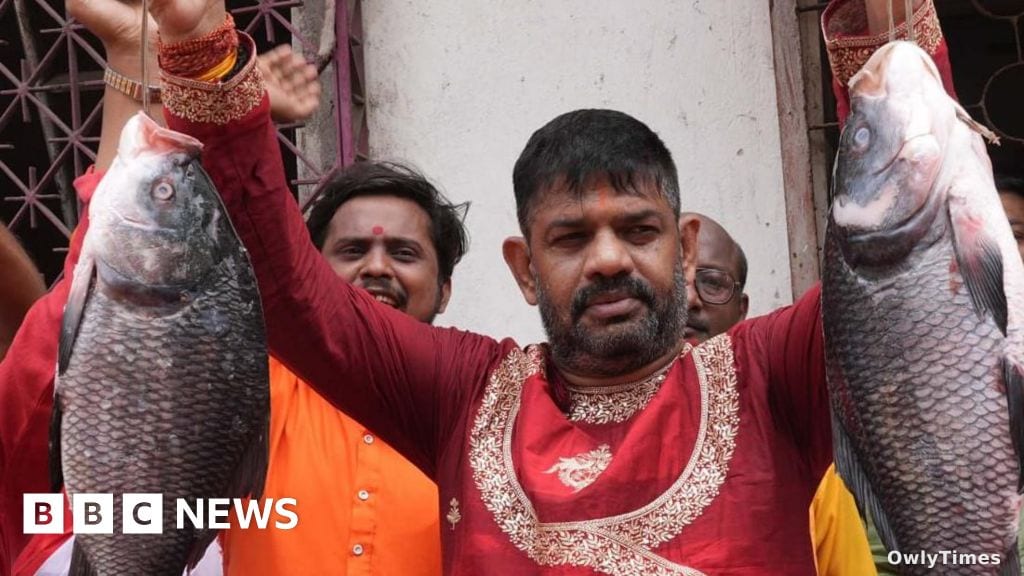

The political utility of the humble fish in West Bengal’s current electoral theater is not a matter of culinary preference, but a calculated response to a profound cultural anxiety. By brandishing fish on the campaign trail, candidates from the Bharatiya Janata Party (BJP) and the Trinamool Congress (TMC) are performing a high-stakes semiotic battle. The strategic calculus here is clear: for the TMC, the fish serves as an impenetrable barrier against what they frame as an encroaching, culturally alien ideology; for the BJP, the fish is a tool of neutralization, used to dismantle the image of the party as an imposition of "moralized vegetarianism" and instead present it as a modern, inclusive force capable of governing a distinct regional identity.
Who benefits and who loses in this piscine posturing? The TMC, led by Chief Minister Mamata Banerjee, gains by framing the election as an existential defense of "Bengal’s way" of life. By casting the BJP as a threat to the dietary bedrock of the state, she effectively forces the opposition into a defensive position, requiring them to constantly validate their cultural credentials. The BJP, conversely, stands to lose if the narrative of "vegetarian imposition" sticks, which is why candidates like Koustav Bagchi and Rakesh Singh have turned to the visceral optics of holding fish at public appearances. Their goal is to render the TMC’s cultural argument obsolete by out-performing their rivals in the ritualistic display of local belonging.
This is a classic political maneuver where symbols are weaponized to mask deeper, more uncomfortable tensions. While Prime Minister Narendra Modi attempts to pivot the discourse toward the economic failure of the state to produce enough fish—citing that even basic needs are sourced from outside—the TMC counters by highlighting the BJP's regional governance records in states like Bihar, Uttar Pradesh, and Rajasthan. The contradiction is stark: a state that is the world’s third-largest fish producer, yet where 65.7% of the population consumes fish weekly according to a 2024 joint study by ICAR and WorldFish, is being treated as a laboratory for identity politics. This reflects a historical precedent of political movements co-opting regional markers of identity to consolidate power, turning the everyday act of eating into a litmus test for political loyalty.
The tension is further complicated by the reality of the food economy. While India’s national fish consumption is rising, reaching over 70% of the population, the political discourse remains fixated on a narrower, more symbolic interpretation of the protein. The BJP’s attempts to neutralize the charge—with Smriti Irani calling the TMC’s warnings "a lie"—demonstrate the party’s acute awareness that they cannot afford to be seen as a cultural outlier in a state where, as writer Samanth Subramanian noted, the hilsa fish is essentially the center court of the culinary world.
The next signal to watch in this campaign will be the outcome of the high-profile contests on May 4. As the BJP’s state President Samik Bhattacharya has explicitly linked the date to a promise of "fried fish" for journalists, the electoral results will determine whether this "fish diplomacy" was a successful strategic pivot or merely a transient theatrical distraction. The upcoming tally will reveal whether voters prioritize the economic critique offered by the Prime Minister or the cultural protectionism championed by the Chief Minister, effectively measuring whether the fish remains a symbol of identity or simply another piece of campaign debris.





