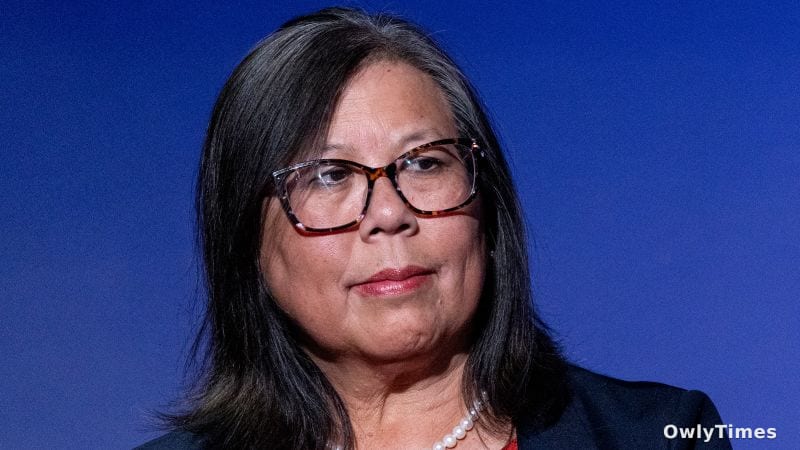

The strategic calculus behind Betty Yee’s exit from the California gubernatorial race is a recognition of the brutal math governing the state’s top-two primary system. In a field where voter attention is fractured and resources are finite, maintaining a campaign that fails to gain traction is not merely a sunk cost; it is a liability for the party’s broader electoral prospects. By suspending her bid on Monday, the former state controller acknowledges that her path to the top two was effectively closed, clearing, at least theoretically, a small amount of political oxygen for the remaining establishment Democrats.
The Consolidation Dilemma
Yee’s departure follows the exit of former US Rep. Eric Swalwell, who withdrew just over a week ago following sexual assault allegations he denies. While Swalwell’s exit was a reaction to a sudden crisis, Yee’s withdrawal is the result of a persistent inability to break through the noise. Since entering the race in 2024, she struggled with fundraising and remained stalled at the bottom of the field. Her attempt to brand herself as “boring Betty”—a candidate focused on solutions over soundbites—failed to resonate in a climate that has historically rewarded high-profile, well-funded disruptors.
Who benefits from this thinning of the herd? The remaining six established Democrats stand to gain if the primary field continues to consolidate, as the party faces a genuine fear of being shut out of the November general election entirely. Because California’s primary sends only the top two vote-getters to the final round regardless of party affiliation, a crowded Democratic ballot risks splitting the vote so thinly that two Republicans could theoretically advance. Conversely, those who lose are the voters who identified with Yee’s specific brand of policy-focused, institutionalist governance, now left without their preferred choice on a ballot that still lists more than 50 names.
Historical Precedents in Primary Volatility
This scramble to avoid a lockout echoes the structural anxieties of the 2008 financial crisis, where the sheer volume of competing interests made it nearly impossible for any single actor to exert control over the outcome. Much like that period of economic uncertainty, the current political environment in California is defined by a lack of central authority. The contest to replace outgoing Democratic Gov. Gavin Newsom remains remarkably unpredictable, with polling from the nonpartisan Public Policy Institute of California conducted in late March and early April showing a tight cluster of candidates including Democrats Tom Steyer and former US Rep. Katie Porter, alongside Republicans Steve Hilton and Chad Bianco.
The Logistics of a Crowded Ballot
The mechanical reality of this election is that the ballot is already set in stone. Despite Yee’s decision to suspend her campaign, election officials confirm that her name cannot be removed from the ballot. This creates a scenario where dead-campaign votes could still act as a spoiler, further complicating the math for the remaining contenders. With mail ballots scheduled to reach voters in early May, the window for the surviving candidates to capture the attention of an electorate that has largely ignored the contest is rapidly closing.
The political chess move to watch next will be the shift in voter support following the May mail-ballot distribution. As ballots hit mailboxes, the next reading of internal polling data will show whether the consolidation of the Democratic field—or the lack thereof—is successfully preventing the party from falling behind the two leading Republicans, Steve Hilton and Chad Bianco, ahead of the June 2 primary election.





