
The Affordability Paradox: Why Governors Are Claiming the Issue, Despite Limited Control
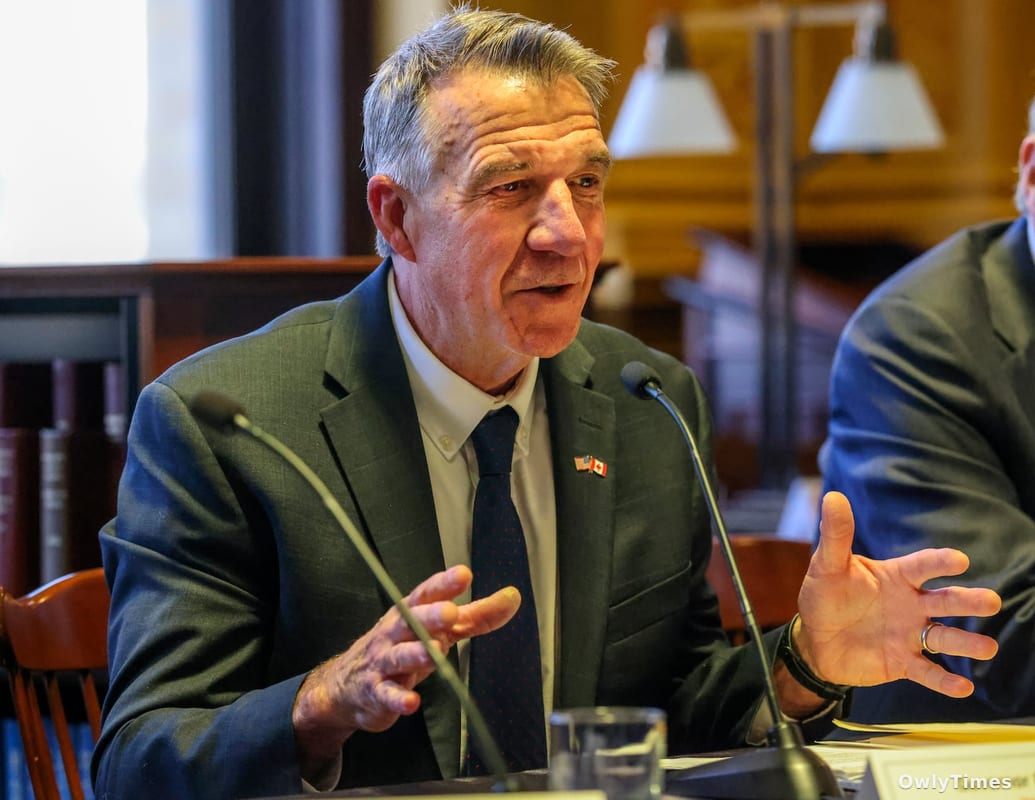
The sudden, near-universal embrace of “affordability” as a core political message isn’t a spontaneous outbreak of empathy, but a calculated response to a shifting power dynamic. While national economic indicators may offer a nuanced picture, the lived experience of a majority of Americans – feeling unable to attain a desired standard of living – presents a potent vulnerability for incumbents. Vermont Governor Phil Scott’s decade-long focus on the issue, culminating in a 74 percent approval rating according to Morning Consult, demonstrates the strategic value of centering a campaign around this anxiety, even when direct control over the underlying causes remains limited. Scott’s success isn’t about solving affordability, but about owning the narrative.
This article draws on reporting from bostonglobe.com.
Scott’s early adoption of the term in 2013, while serving as lieutenant governor and simultaneously running an excavation company and racing stock cars, wasn’t accidental. It stemmed from direct engagement with a constituency often overlooked by politicians – working-class voters voicing concerns about being priced out of their communities. He heard, as he put it, friends and family lamenting that they “just can’t afford it anymore,” and considering relocation to states with lower costs of living. This grassroots understanding allowed him to preemptively identify a growing national sentiment, now confirmed by a recent New York Times poll showing a majority of registered voters unable to afford the life they want, citing education, housing, and healthcare as key barriers. The timing is critical: as the 2024 election cycle heats up, affordability is rapidly becoming the defining issue, eclipsing traditional wedge issues.
The challenge for politicians, particularly at the national level, is that affordability is a multi-faceted problem with no easy solutions. President Trump’s struggle to articulate a coherent message – oscillating between dismissing concerns as a “hoax” and touting the stock market – highlights this difficulty. Despite cooling inflation, 57 percent of Americans disapprove of his handling of cost-of-living issues, according to a Reuters-Ipsos poll. This disconnect reveals a fundamental tension: economic data can be presented to support various narratives, but voters respond to their personal financial realities. Massachusetts Governor Maura Healey, facing reelection, is similarly grappling with high housing costs and energy prices, attempting to demonstrate understanding of voter anxieties through an “affordability agenda.” Who benefits and who loses from this rhetorical shift? Incumbents benefit by appearing responsive, while challengers gain an opening to exploit perceived inaction.
The limitations of gubernatorial power in addressing affordability are stark. As Kristoffer Shields, a historian at Rutgers’s Eagleton Center on the American Governor, points out, national and global economic forces often outweigh state-level interventions. However, governors can pull levers related to housing, utilities, and childcare, as noted by Andre Perry of the Brookings Institution. The key is perception – demonstrating effort, even if tangible results are slow to materialize. Governor Scott’s case illustrates this perfectly. Despite a 35 percent climb in median rents and a 55 percent increase in median home prices in Vermont over the past five years, coupled with only a 15 percent rise in household income, Scott maintains high approval by consistently framing the issue as a battle against Democratic policies and advocating for tax restraint. This strategy, while criticized by Democrats like Representative Robin Scheu and Senate majority leader Kesha Ram Hinsdale, effectively positions him as a defender of the working class against perceived overspending.
The contradiction at the heart of Scott’s approach – acknowledging the affordability crisis while simultaneously opposing measures like minimum wage increases and paid family leave – underscores the political calculus at play. He attributes Vermont’s struggles to demographic shifts – a shrinking working-age population and an aging population placing strain on services – and blames legislative gridlock. His record 57 vetoes, more than a quarter of all issued in Vermont’s history, are presented as evidence of his commitment to fiscal responsibility. But this narrative is contested. Democrats argue his vetoes actively worsen affordability, and point to the 2023 childcare law – enacted over his objections – as a concrete example of progress. This dynamic mirrors a broader pattern: governors are defining affordability on their own terms, often prioritizing tax cuts and limited government intervention, even when those policies may not directly address the root causes of rising costs.
The political chess move to watch next isn’t whether governors can solve affordability, but whether they can successfully deflect blame for its persistence. Specifically, will Governor Scott be able to leverage the upcoming budget negotiations to further solidify his narrative of fiscal responsibility, or will Democrats successfully portray him as an obstacle to meaningful progress? The outcome will not only shape Vermont’s political landscape but will also serve as a test case for how other governors navigate this increasingly crucial issue.





