
$10 Billion Problem: How AI is Becoming the New Wildlife Management Tool
$10 billion. That’s the estimated annual cost of bird strikes to the aviation industry in the United States alone, a figure that’s not shrinking, but accelerating. While traditional wildlife management relies on reactive measures – fencing, relocation, and, tragically, culling – a Syracuse, New York-based company, Flox Intelligence, is pioneering a proactive approach: talking to animals. Founded by Sara Nozkova, Flox Intelligence isn’t deploying zookeepers to train wildlife, but rather leveraging artificial intelligence to understand and influence animal behavior, and a recent $3 million capital raise signals a significant bet on this unconventional solution.
This piece references the Spectrum News report.
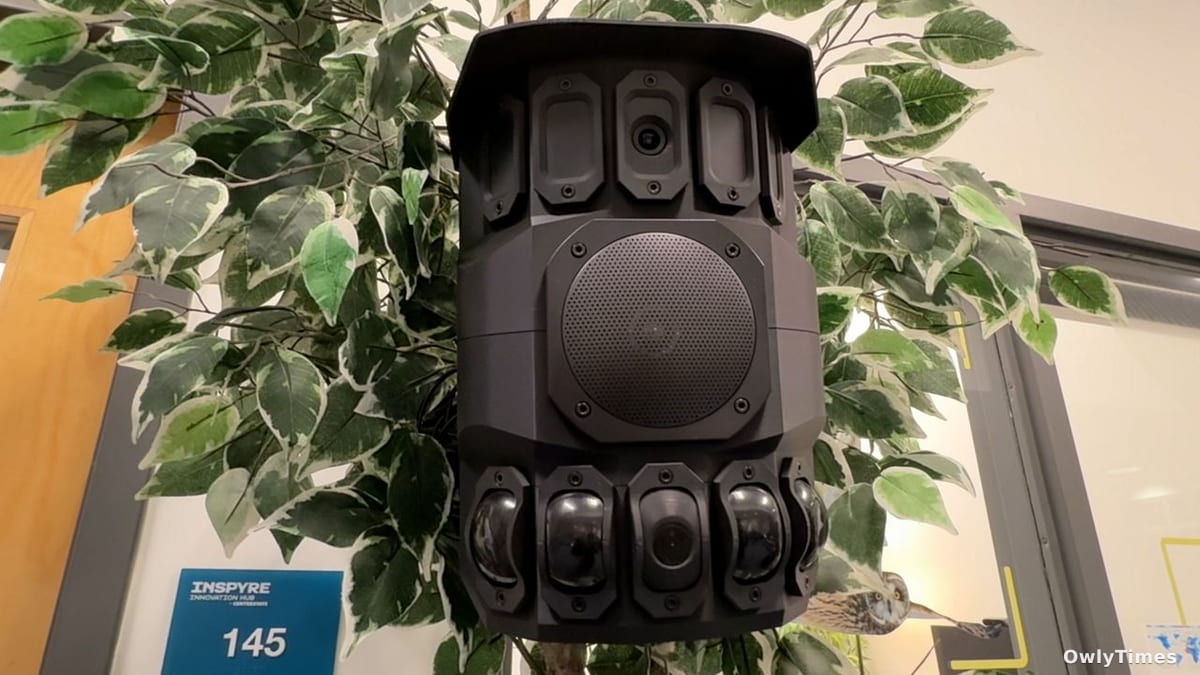
The core of Flox Intelligence’s innovation is the Flox Edge, a battery-operated device that utilizes species-specific sounds to deter animals from high-risk areas like airport runways and train tracks. This isn’t simply playing predator calls; the AI learns from each encounter, refining its acoustic “vocabulary” to maximize effectiveness. This adaptive learning is crucial. The problem Nozkova identifies isn’t just the presence of wildlife, but the changing dynamics of human-animal interaction. “Just in aviation…it's only increasing today because you see both aircrafts and trains, they are getting faster and more quiet. And we as people are taking more and more space from wild animals,” she explained. The increasing speed and silence of modern transportation mean animals have less time to react, increasing the likelihood of collisions. Flox Intelligence’s approach addresses this by actively altering animal behavior before a dangerous situation arises.
From Swedish Railways to Washington Farms: Demonstrating ROI
The business model isn’t built on theoretical promise, but on demonstrated results. Flox Intelligence has been working with the Swedish Transport Administration for several years, quietly proving the efficacy of its technology in a European context. More recently, the company has begun to showcase its versatility in the agricultural sector. A case study in Washington state, highlighted by Nozkova, illustrates a compelling return on investment. While neighboring farmers experienced an average of 20% crop damage due to elk, a farmer utilizing the Flox Edge reported zero damage. At a cost of $3,500 for the device and a $500 annual subscription, the potential savings for farmers facing significant wildlife predation are substantial. This is where “follow the money” becomes particularly revealing. The $3,500 price point isn’t aimed at individual homeowners, but at infrastructure managers and large-scale agricultural operations – entities already absorbing significant costs related to wildlife interactions.
The $3 million in new capital will be instrumental in scaling deployments across North America, capitalizing on the growing awareness of this $10 billion problem. Flox Intelligence’s participation in the Genius New York program, run by CenterState CEO, further validates its potential. Notably, the company was the only non-US entity accepted into the cohort, demonstrating the program’s willingness to invest in globally innovative solutions. This isn’t simply a story about a New York startup; it’s about a global shift towards preventative, AI-driven wildlife management. The company currently has locations around the world, indicating an existing international demand for its services.
Beyond Bird Strikes: The Expanding Applications of Bio-Acoustic AI
The implications of Flox Intelligence’s technology extend beyond aviation and agriculture. The core principle – using bio-acoustics to influence animal behavior – has applications in conservation, habitat restoration, and even urban wildlife management. Imagine using targeted soundscapes to guide migrating animals away from urban centers, or to encourage the repopulation of endangered species in specific areas. The 60,000 animals already deterred from danger by Flox Edge represent a tangible impact, but the potential for broader ecological benefits is far greater. However, a critical question remains: how scalable is this technology? The current cost structure, while justifiable for large-scale operations, may be prohibitive for smaller applications.
What this means for your wallet: While you won’t be buying a Flox Edge for your backyard, expect to see the cost of air travel and agricultural products potentially stabilize – or even decrease – as infrastructure managers and farmers adopt this technology to mitigate wildlife-related expenses. More importantly, watch for the emergence of similar bio-acoustic AI solutions in other sectors. Will we see “smart soundscapes” become a standard feature of urban planning and conservation efforts? The success of Flox Intelligence suggests that the future of wildlife management may be less about building barriers and more about learning to speak the language of the wild.





