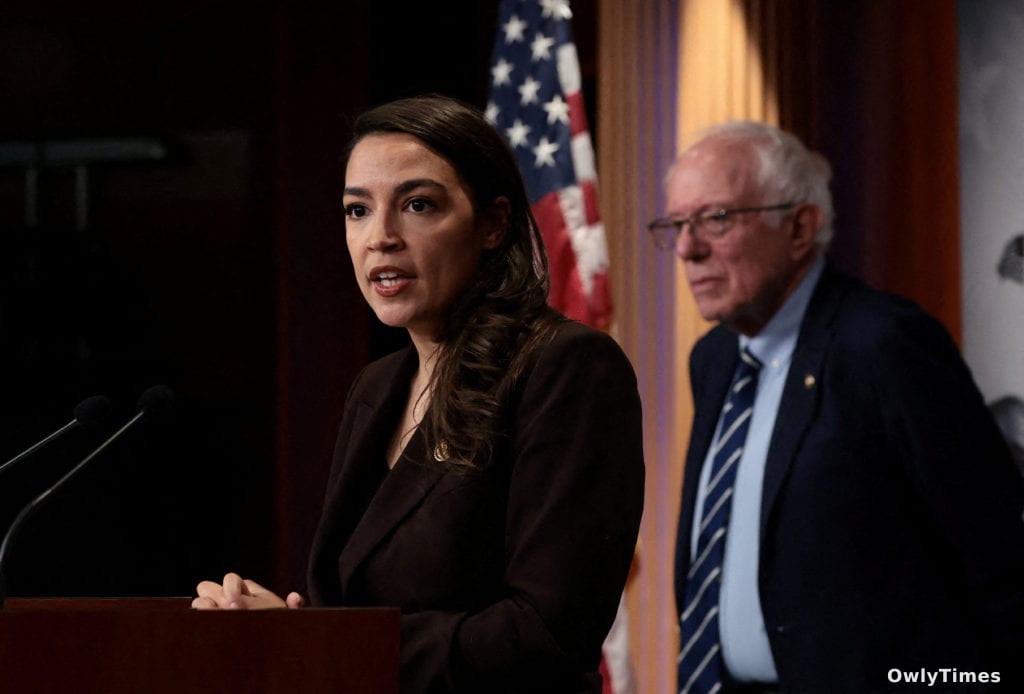

Is the future of artificial intelligence going to be powered by outrage? That’s the question simmering beneath the surface of a symbolic, yet surprisingly potent, bill introduced today by Alexandria Ocasio-Cortez and Bernie Sanders calling for a national pause on new data center construction. The real story here isn’t about halting AI progress – it’s about the rapidly escalating cost of that progress, and who ultimately foots the bill. We’re told AI will revolutionize everything, but nobody’s talking about the fact that it’s already sending electricity rates soaring for families in swing states, and that’s a political problem Silicon Valley can’t simply code its way out of.
The Power Grid as a Political Battleground
The legislation, which faces an uphill battle in Congress, proposes a moratorium on new data centers until federal safeguards are established regarding worker protections, consumer safety, and environmental impact. Let’s be clear: Ocasio-Cortez and Sanders aren’t trying to kill AI. They’re responding to a very real and increasingly vocal backlash. Last year’s elections in Georgia, Virginia, and New Jersey weren’t decided on abstract policy debates; they were decided by kitchen-table issues like rising energy costs. And guess what’s driving those costs? Data centers. A single large data center can consume as much electricity as a small town, and the demand is only increasing as companies race to build out the infrastructure needed for generative AI. The Energy Information Administration reported a 7% increase in national electricity demand in 2025, with data centers accounting for nearly half of that growth – a figure that’s alarming considering overall energy consumption remained relatively flat for the previous decade.
Based on the original PBS report.
Beyond the Server Farm: The Hidden Costs of AI
The concerns extend beyond just electricity. Data centers are also massive water consumers, used for cooling the servers that generate so much heat. In drought-prone regions, this is sparking fierce opposition from local communities. And while tech companies tout their sustainability initiatives, the reality is that much of the power fueling these facilities still comes from fossil fuels. The narrative pushed by the industry is one of innovation and progress, but the lived experience for many Americans is one of higher bills and increased environmental strain. This isn’t a technological problem; it’s a political one. The current system incentivizes companies to prioritize growth and profit over the well-being of the communities they operate in.
A Symbolic Shot Across the Bow
It’s easy to dismiss this bill as a symbolic gesture, given its slim chances of passage. But that’s precisely why it’s significant. Ocasio-Cortez and Sanders are forcing a conversation that the tech industry desperately wants to avoid. They’re highlighting the trade-offs inherent in the AI boom and challenging the assumption that technological progress is always inherently good. The fact that this legislation is gaining traction within the Democratic party – a party traditionally aligned with the tech industry – signals a growing unease about the unchecked power of Big Tech. This isn’t about being anti-AI; it’s about demanding accountability and ensuring that the benefits of this technology are shared more equitably.
What Happens When the Lights Flicker?
The industry’s response so far has been predictable: downplaying the impact and emphasizing their commitment to sustainability. But that’s not going to cut it. The political pressure is only going to intensify, especially as electricity prices continue to rise. Here’s what to watch for: in the next 18 months, expect to see state-level legislation mirroring this federal proposal, potentially leading to a patchwork of regulations that could significantly slow down data center development. More importantly, look for a shift in the public discourse. The question isn’t whether AI is coming – it’s whether we’re willing to pay the price, and who gets to decide what that price is. If the lights start flickering more often, and the bills keep climbing, the outrage will only grow louder.





