
Are we truly ready for the energy demands of artificial intelligence, or are we already looking to the stars for a solution? That’s the audacious question posed by Cowboy Space Corp., a newly rebranded outfit that just lassoed $275 million in a Series B funding round, led by Index Ventures. The real story here isn't just another space startup raising a hefty Series B; it's a stark, almost desperate, admission that our terrestrial infrastructure is buckling under the weight of AI's insatiable appetite.
When Earth's Grids Can't Keep Pace
Forget the glitzy headlines about AI's latest capabilities for a moment and consider its dirty secret: it’s an energy hog of unprecedented proportions. Cowboy officials, in a May 11 statement, minced no words via X: "Earth's energy grid can't run at the pace of AI. We can." They point to a stark reality for anyone building large-scale AI infrastructure on our home planet: "In major US markets, average grid connection lead times for new data centers can run five to seven years, or more." Meanwhile, demand continues to skyrocket. This isn't just a Silicon Valley problem; it's a looming bottleneck that could slow down innovation and impact everything from smart cities to medical diagnostics, as the sheer power requirements strain existing utilities and delay new projects.
The Rocket as a Data Center
Enter Cowboy Space Corp., formerly known as Aetherflux, established in 2024 by Robinhood co-founder Baiju Bhatt. Their solution? Launch solar-powered AI data centers directly into orbit. But this isn't your grandma's satellite constellation. Cowboy Space is proposing a "first-principles departure from the traditional [satellite] constellation model," as Bhatt stated. They plan to use a homegrown rocket whose upper stage doubles as a data center, forming a "one-piece deal" that acts as a 1-megawatt hub once in orbit. Think of it less like a rocket carrying cargo and more like a rocket becoming the cargo, a modular, self-sufficient computing node powered by the sun. This unique engineering, detailed in a report by Space.com, is designed to swiftly deploy their planned "Stampede" constellation to meet global AI computing demands.
Betting Big on Off-World Compute
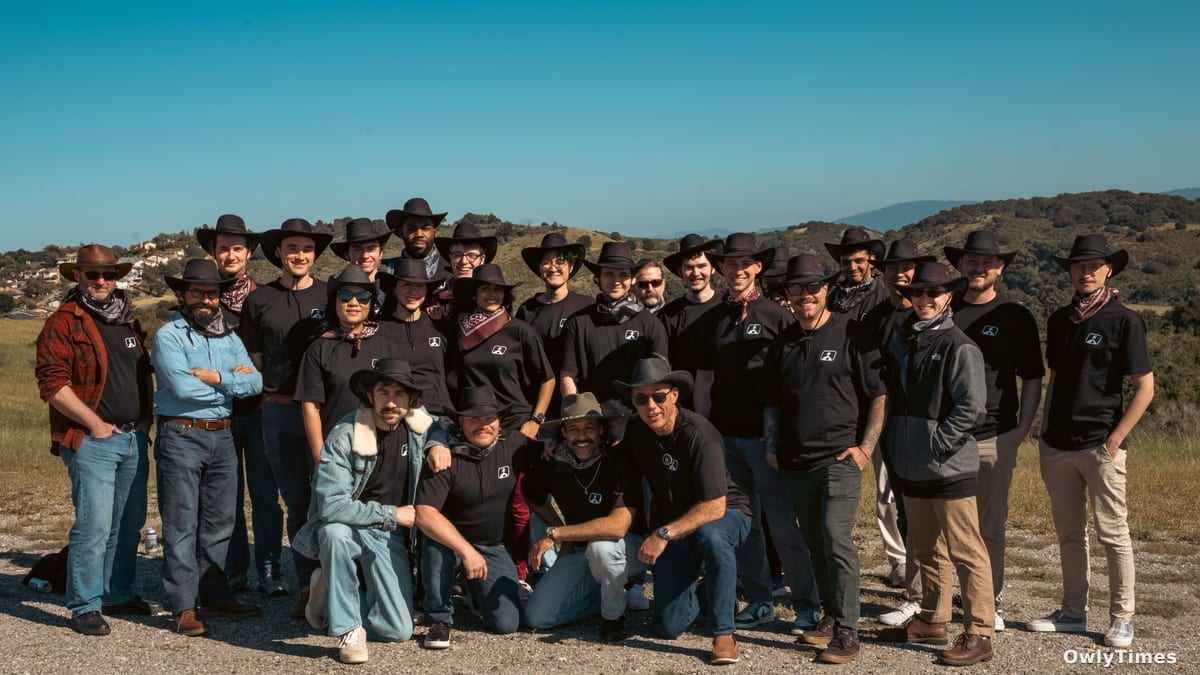
The $275 million investment signifies a serious bet on this audacious vision, especially considering Aetherflux raised a $50 million Series A just about a year ago, focusing originally on space-based solar power. The company, based in San Carlos, California, isn't just building rockets; it's building an entire ecosystem. Cowboy Space plans to own its manufacturing chain and establish "dedicated launch sites" to accelerate deployment. The team backing this includes engineers from heavy hitters like SpaceX, Astranis, and Kuiper, with NVIDIA providing an AI-focused chip platform, lending significant credibility to the venture. The involvement of a tech titan like Baiju Bhatt, whose journey from democratizing finance with Robinhood to tackling orbital compute infrastructure is notable, suggests a profound shift in where Silicon Valley sees its next big frontier. You can learn more about Bhatt's background on his Wikipedia page.
Cowboy Space has a busy roadmap ahead. If all goes to plan, their first satellite launch, a demonstration of their ability to beam power from space to Earth, is scheduled for "later this year." A second mission in 2027 will focus on high-speed optical communications, followed by the inaugural launch of their proprietary rocket in 2028. The success, or indeed the struggle, of this initial demonstration will be the first real signal of whether our future data centers will indeed be orbiting above us, rather than sprawling across Earth's increasingly strained landscapes.