
Beyond the Lab Bench: Alma College Students Tackle Ecological Crisis with Synthetic Biology
The headlines proclaim a silver medal for an undergraduate team, a win for small colleges, and a bright future for synthetic biology. But the story emerging from the second floor of Dow Science Center at Alma College is more nuanced – and arguably more significant – than a competition result. A team of students, competing in the 2025 International Genetically Engineered Machine (iGEM) Grand Jamboree in Paris, France, didn’t just build a project; they confronted a stark ecological reality and, crucially, the limitations of applying cutting-edge science to a complex environmental problem. Their work on “Com-bat-ting White-Nose Syndrome” – a devastating fungal disease impacting North American bat populations – highlights a growing trend: the need for interdisciplinary, community-focused approaches to conservation, even as the tools of genetic engineering become increasingly sophisticated.
Based on the original alma.edu report.
Since its discovery in New York in 2006, Pseudogymnoascus destructans, the fungus responsible for White-Nose Syndrome, has decimated bat populations across the continent. Estimates suggest millions of bats have perished, threatening vital ecosystem services like insect control and pollination. While the scale of the crisis is well-documented, solutions have proven elusive. The Alma College iGEM team, led by senior biochemistry major Reagan Keyser and computer science major Joey Colucci, didn’t aim for a cure, but rather a way to slow the spread of the fungus and bolster bat resilience. Their project, as explained by faculty advisor Elie Schwarz, isn’t about a single “fix,” but about exploring the potential of synthetic biology to create a biological system that could support healthier bat populations. This is a critical distinction; many initial reports focused on the “engineering” aspect, potentially overstating the immediate impact of their work.
The iGEM competition itself is a unique crucible for this kind of thinking. Bringing together over 400 teams globally, it demands not just scientific rigor, but also clear communication and ethical consideration. Colucci’s role as co-leader of the team’s “Wiki” division underscores this point. The wiki, a publicly accessible online platform, meticulously documents every aspect of the project – from raw data and lab protocols to outreach efforts and ethical analyses. “Most people don’t realize how much communication goes into science,” Colucci explained, emphasizing that making complex science accessible is a core tenet of the iGEM philosophy. This emphasis on transparency and public engagement is particularly important when dealing with genetic engineering, a field often met with public skepticism. The team’s commitment to documenting their process, and making it available to anyone, is a deliberate attempt to build trust and foster understanding.
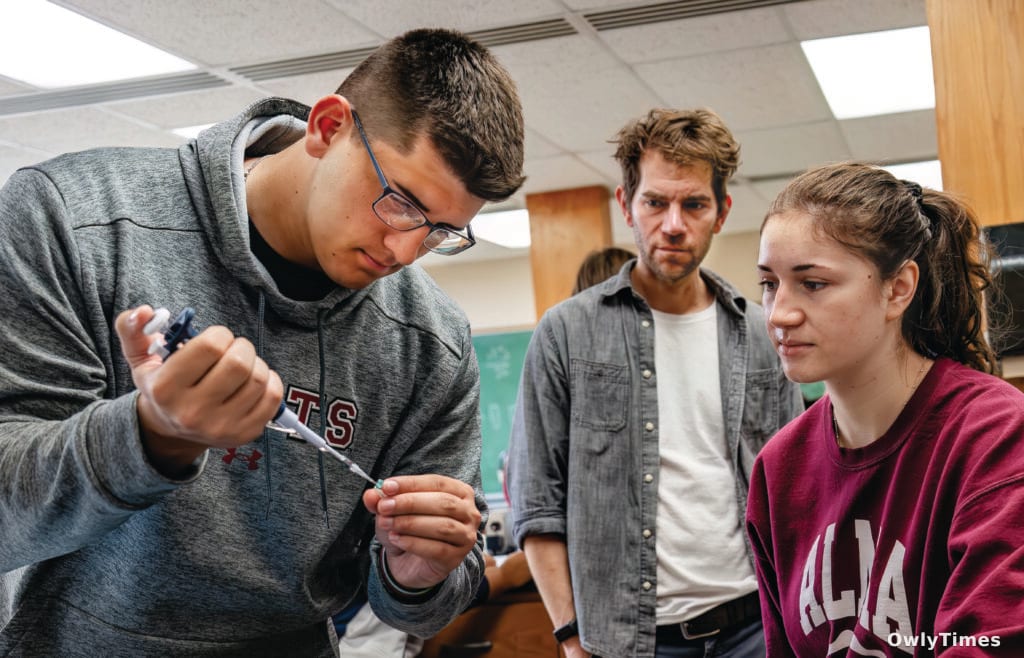
What sets the Alma College team apart isn’t simply their silver medal, but the composition of the team itself. Schwarz highlights the program’s strength in fostering collaboration between students from diverse academic backgrounds – biology, chemistry, computer science, art, and communication all played a role. This interdisciplinary approach is, he argues, essential for tackling complex problems like White-Nose Syndrome. Synthetic biology, by its very nature, requires a broad skillset. It’s not enough to engineer a biological solution; you must also understand the ecological context, communicate the risks and benefits effectively, and consider the ethical implications. This mirrors a broader shift in scientific thinking, away from siloed disciplines and towards integrated, systems-level approaches.
Limitations to Consider
Despite the team’s success, it’s crucial to acknowledge the limitations of their work. The project is, at this stage, largely exploratory. While they’ve identified potential avenues for intervention, translating these findings into a real-world solution will require significant further research and development. The fungus Pseudogymnoascus destructans is a complex organism, and its interaction with bat immune systems is still not fully understood. Furthermore, introducing any engineered biological system into a natural environment carries inherent risks. Unintended consequences, such as off-target effects or disruption of existing ecological relationships, must be carefully considered. The team’s wiki documentation, while commendable, doesn’t eliminate these risks, but it does provide a framework for ongoing monitoring and evaluation.
The iGEM competition, while valuable, is also a compressed timeframe. Students have a limited amount of time to design, build, and test their projects. This necessitates a focus on proof-of-concept rather than comprehensive validation. The silver medal, therefore, represents a promising start, not a finished product. It’s a testament to the students’ ingenuity and dedication, but it’s also a reminder that scientific progress is often incremental and iterative. The team’s work, as Keyser notes, aligns with the principles of translational research – bridging the gap between basic science and real-world application – but that bridge is often long and arduous.
The next steps for the Alma College iGEM team, and for the broader field of White-Nose Syndrome research, involve refining their engineered biological systems, conducting more rigorous testing in controlled environments, and exploring potential delivery mechanisms. A critical question remains: how can these interventions be deployed effectively and sustainably in the wild? Will it require targeted treatments for individual bats, or broader ecosystem-level interventions? And, perhaps most importantly, how can we ensure that these interventions don’t inadvertently harm other species or disrupt the delicate balance of the ecosystem? The success of this project, and others like it, will depend not only on scientific innovation, but also on careful planning, responsible implementation, and ongoing monitoring. We should watch for further publications from the team detailing the specific genetic modifications they explored and the efficacy of those modifications in laboratory settings – a crucial step before any field trials can be considered.